


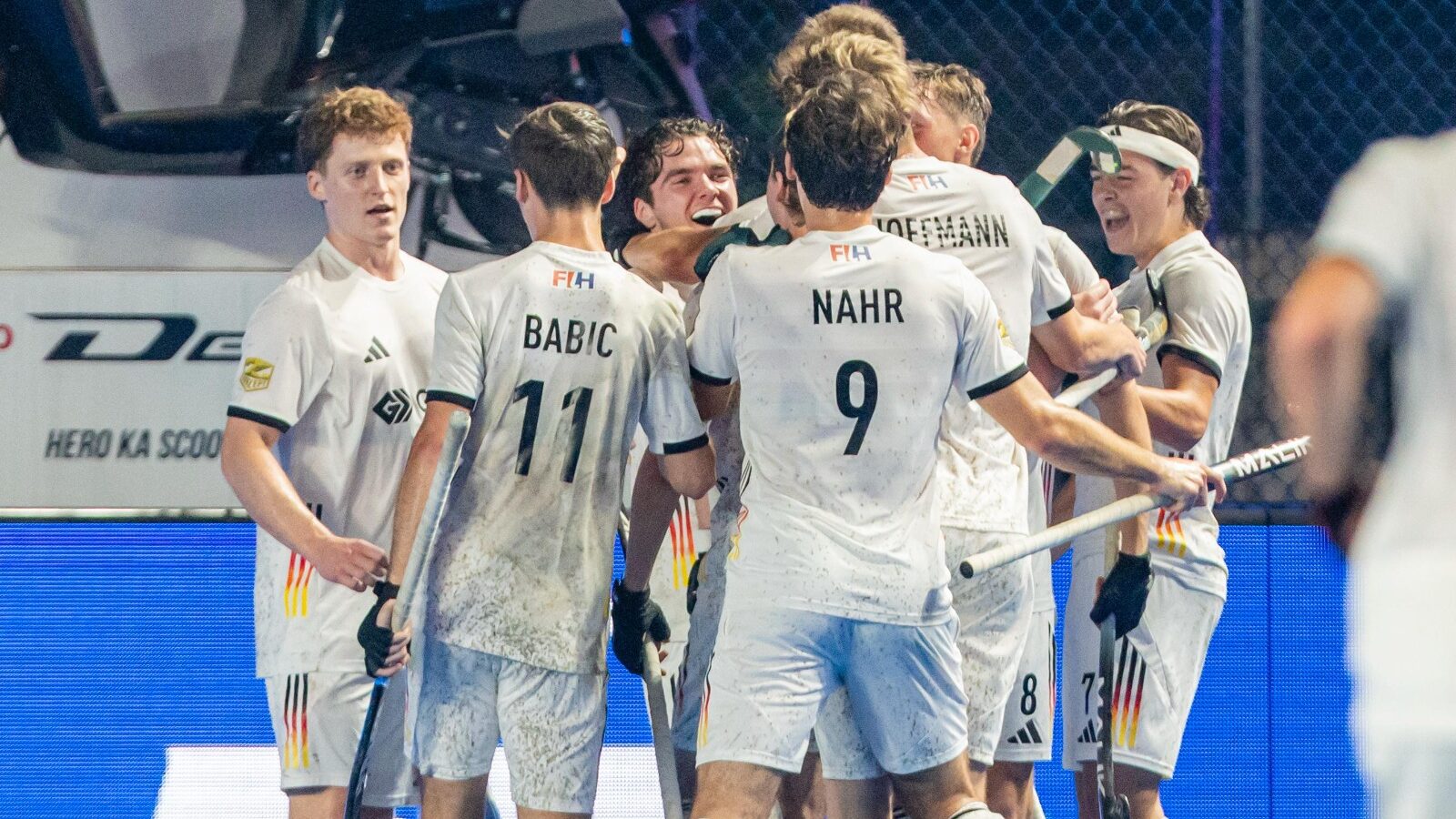
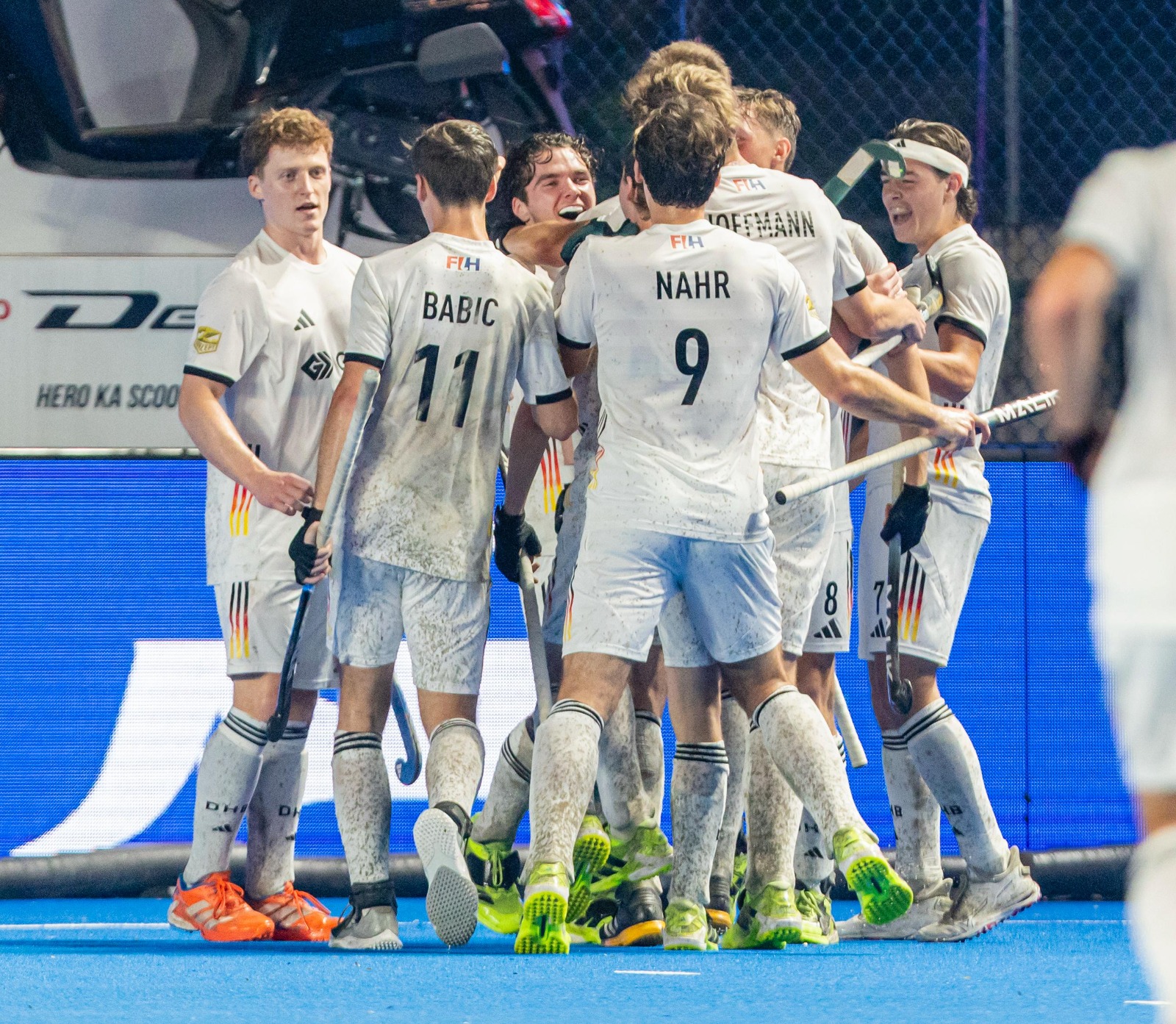
In the semi-final clash against the hosts, with 12 minutes left in the game, Ben Hasbach retrieved a high aerial pass just outside India’s 23-metre line and accelerated into open space, using his dribbling skill to beat goalkeeper Bikramjit Singh on the right edge of the D and net an exquisite diving goal to give Germany a 5–0 lead. The in-form German produced pure artistry – arguably one of the best goals of the tournament – brilliantly supported by his midfield, with all Indian defenders blocked near the centre line. This moment exemplified how the German boys have not only outclassed their opponents tactically and physically, but also outthought them.
India looked clueless in key moments of the knockout match, suffering their third consecutive semi-final defeat to Germany at the Junior Hockey World Cup. Germany marched into the final, booking their 10th appearance.
Hasbach wasn’t the only one to find the net. Lukas Kossel scored a brace, while Wex Titus and Jonas von Gersum also registered their names on the scoresheet. The seven-time junior world champions started their campaign against South Africa, followed by wins against Canada and Ireland, finishing the round-robin stage with an unblemished record. The quarter-final victory against France was their first true test. After a tight 2–2 draw, they held their nerve and executed the shootout with precision before thrashing hosts India 5–1 in the semi-final.
The engine room of the German machine’s success is their high-press attacking game, characterised by disciplined marking and off-the-ball running in the opponent’s half, helping them create high-quality chances for clinical finishes. Their rigid defensive structure is combined with slow and controlled half-turns in midfield, forced opponents into errors and denied them opportunities to break into Germany’s 25-yard area. A major pillar of their dominance has been goalkeeper Jasper Ditzer, the young custodian who has shown exceptional efficiency under pressure and conceded only four goals in five matches.
Germany have so far demonstrated what true team effort looks like, with tactical maturity and precise execution on the turf. Head coach Mirko Stenzel’s philosophy emphasises tactical discipline, blocking passing lines, and maintaining defensive shape.
The Spanish Challenge
Spain’s colts have displayed impressive stickwork throughout the tournament to enter their first Junior World Cup final. The players, many of whom are short in stature, use a low centre of gravity, short and skilful passing, and excellent ball control. These technical strengths were clearly visible in their midfield play in both the quarter-final and semi-final.
According to Oriel Puig Torras, the coach, Spain’s gameplay is influenced by their footballing culture, specifically Barcelona’s tiki-taka philosophy.
The Spanish boys will now hope to test the seven-time world champions in the summit clash on Wednesday in Chennai.

For all updates on the FIH Jr. Men’s World Cup, follow RevSportz