


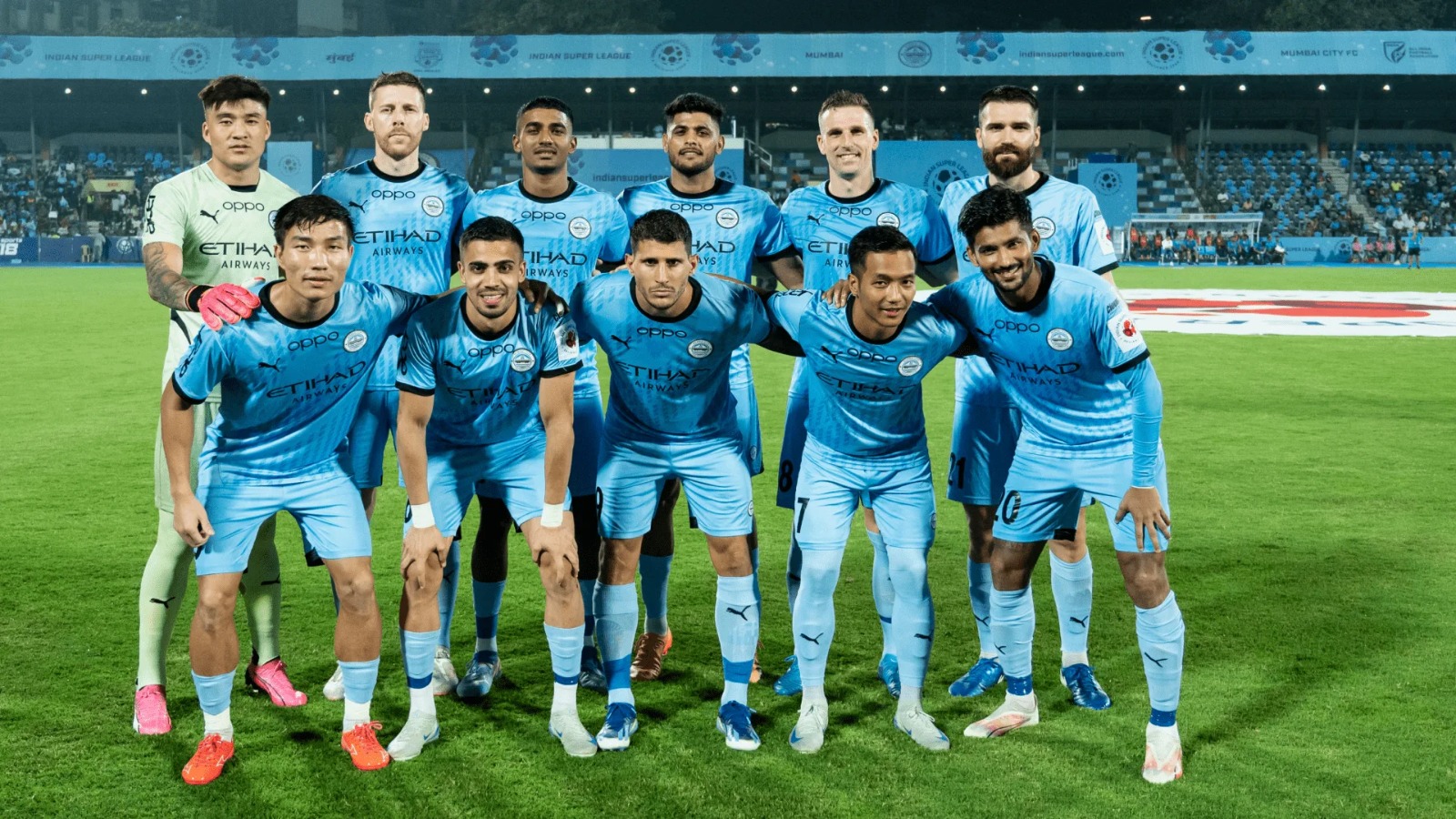
Indian football is facing one of its most turbulent phases in recent years, and the impending exit of the City Football Group (CFG) from Mumbai City FC has only intensified concerns about the sport’s long-term stability in the country.
With the year drawing to a close, there is still no clarity on when the Indian Super League will begin, a competition that traditionally kicks off in September. The uncertainty follows the expiry of the 15-year commercial agreement between the All India Football Federation and Football Sports Development Limited, after which the federation has failed to attract any bids for the commercial rights of the top-tier league. The I-League, too, continues to remain under a cloud, compounding the uncertainty across the domestic football pyramid.
Against this backdrop, CFG, the global football conglomerate that owns Premier League champions Manchester City and has stakes in 13 clubs across five continents is set to withdraw from Indian football. Once the exit process is completed, Mumbai City FC will return to full ownership under Bollywood actor Ranbir Kapoor and businessman Bimal Parekh, who had run the club before CFG acquired a majority stake in November 2019.
Sources close to the club have confirmed that operations will continue under Kapoor and Parekh, but CFG’s departure is being viewed as a worrying signal for Indian football at large.
CFG’s decision comes amid an ongoing governance deadlock. Earlier this month, the AIFF rejected proposals from ISL and I-League clubs that explored alternative, club-led operational models for Indian football. Instead, the federation announced the formation of a three-member committee to “seek a resolution”, the same panel that is scheduled to meet ISL clubs in Delhi on Wednesday.
For many stakeholders, CFG’s exit reflects a deeper structural problem rather than an isolated business decision. The group’s investment had brought a professional, data-driven approach to Mumbai City FC, transforming the club into one of the most competitive sides in the ISL.
However, sources indicate that growing operational costs, the absence of a long-term commercial roadmap, and persistent uncertainty around league governance played a significant role in CFG’s decision to step away.
If a global organisation with experience across Europe, Asia, Australia and the Americas no longer sees value in continuing its Indian project, it raises uncomfortable questions about confidence, credibility and the future investment climate in Indian football. At a time when stability is most needed, CFG’s exit has instead exposed the fragility of the system.
Also Read: AIFF to discuss draft proposal with ISL club representatives in New Delhi on Wednesday