


: AIFF
The year 2025 will be remembered as one of sharp contrasts in Indian football, a season that swung between historic achievements and deep-rooted structural failures. While Indian football celebrated unprecedented success in the women’s game and promising strides at the youth level, the men’s senior team endured one of its most turbulent phases in recent memory. As the year draws to a close, it leaves behind a complex narrative of hope, frustration, resilience and unanswered questions.
Men’s National Team: A Year of Regression
For the Indian men’s national team, 2025 proved to be a bruising chapter. The year began with optimism but quickly spiralled into disappointment as the Blue Tigers endured one of their poorest runs in recent history. A series of underwhelming performances against regional rivals such as Thailand, Hong Kong and Bangladesh led to a sharp fall in the FIFA rankings, with India sliding to 133rd, their lowest position in nine years before ending the year at 142.
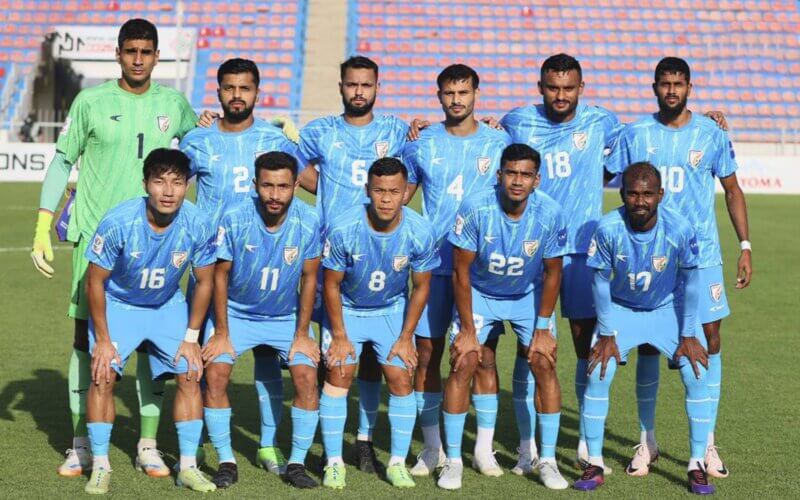
Coaching instability added to the uncertainty. The transition from Manolo Márquez to Khalid Jamil exposed deeper structural issues within the setup, including tactical inconsistency and a lack of long-term planning. Despite sporadic improvements, the national side struggled to find identity or rhythm, raising serious questions about direction and leadership. With no major tournaments lined up in the immediate future, 2025 ended as a year of introspection for the men’s team rather than progress.
Youth Teams Offer Rays of Hope
In stark contrast, India’s youth teams offered glimpses of optimism. The U-23 side, coached by Naushad Moosa, came agonisingly close to securing qualification for the AFC U-23 Asian Cup. A dominant 6-0 win over Brunei wasn’t enough as unfavourable results elsewhere in the group denied them progression. Still, the campaign underlined the promise within the system, provided sustained support and exposure continue.
The U-17 team went a step further. Under Bibiano Fernandes, India booked a place in the AFC U-17 Asian Cup with a memorable qualification campaign highlighted by a historic victory over Iran in Ahmedabad. While the challenges at the continental stage will be significant, the qualification itself marked a major step forward and offered renewed belief in grassroots development.
Women’s Football: A Historic High
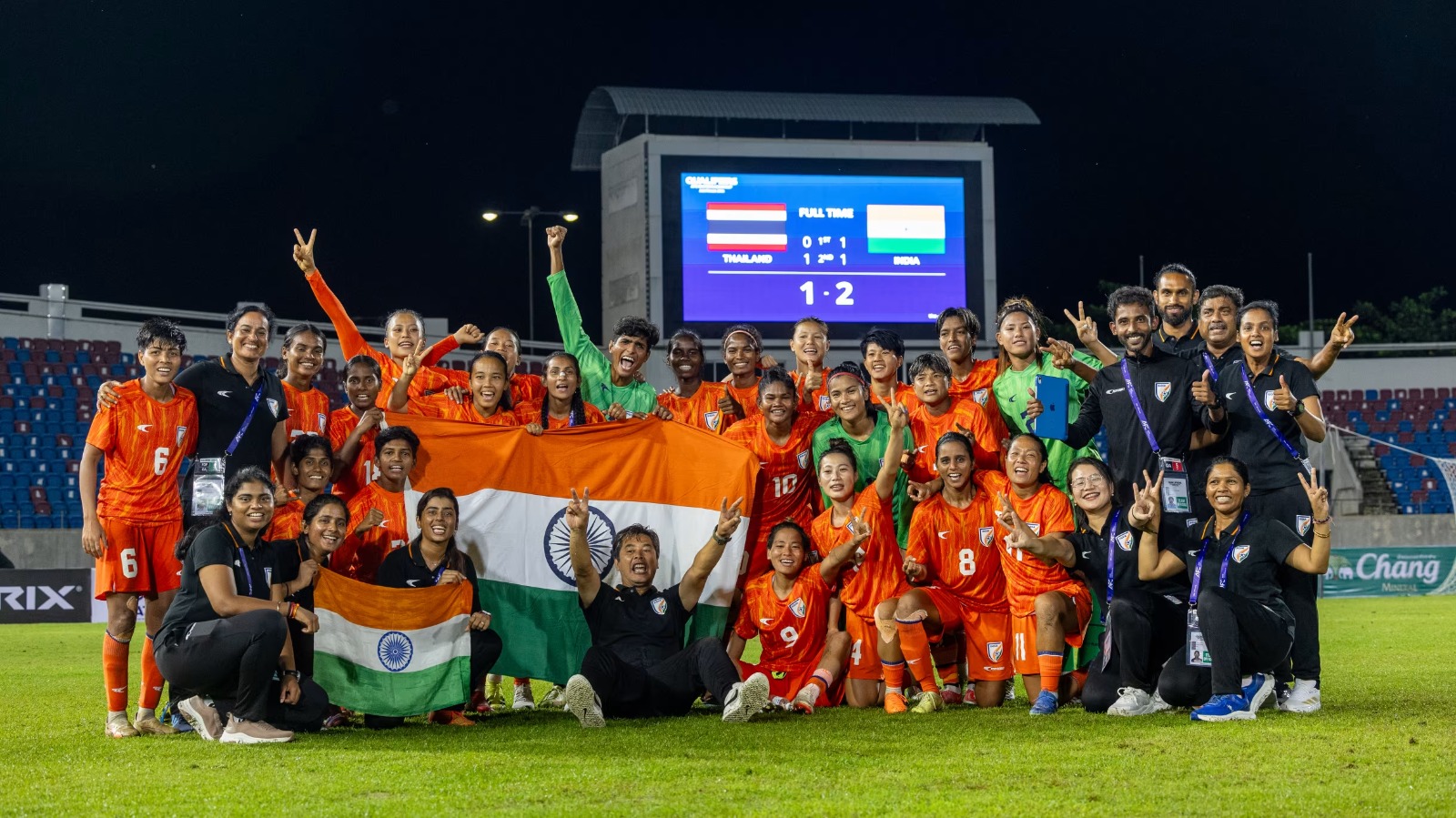
If one area truly defined Indian football in 2025, it was the women’s game. For the first time in history, all three women’s national teams — senior, U-20 and U-17 — qualified for their respective AFC Asian Cups in the same cycle. The senior team ended a 23-year wait to return to Asia’s premier competition, while the youth teams broke long-standing droughts of their own.
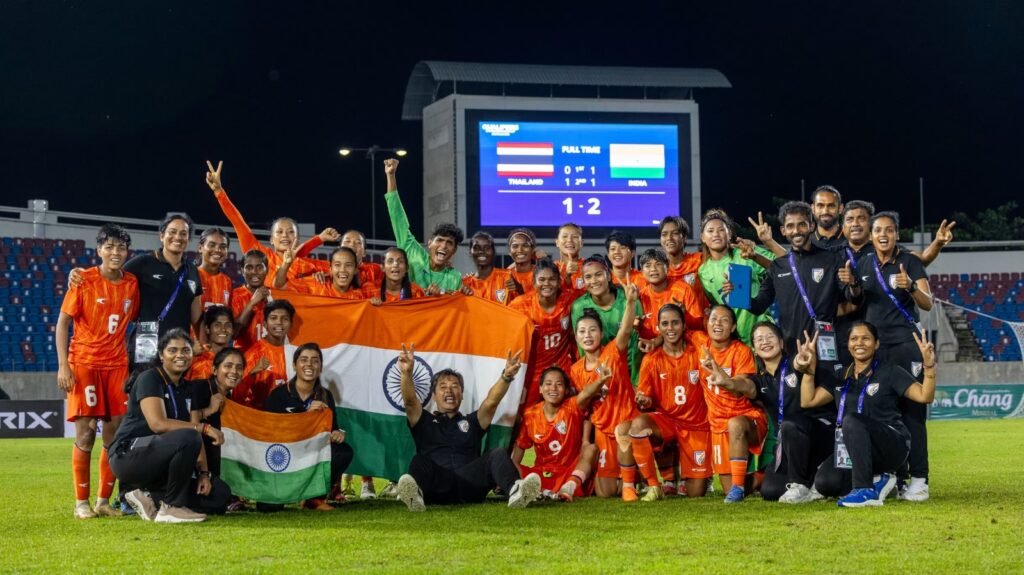
However, this success came despite systemic shortcomings. The Indian Women’s League (IWL), a crucial platform for development, was once again delayed and conducted in a centralized format, limiting competitive exposure. While qualification achievements brought celebration, concerns remain over preparation, infrastructure and sustained support ahead of major continental challenges in 2026.
Mohun Bagan’s Dominance and Continental Disappointment
At the club level, Mohun Bagan Super Giant enjoyed a historic domestic campaign. The Mariners successfully defended their ISL League Shield, rewriting record books along the way. They became the first team to cross the 50-point mark, registered 16 victories, nine home wins, 20 goals from set-pieces, 14 clean sheets and an astonishing 570-minute unbeaten defensive run.
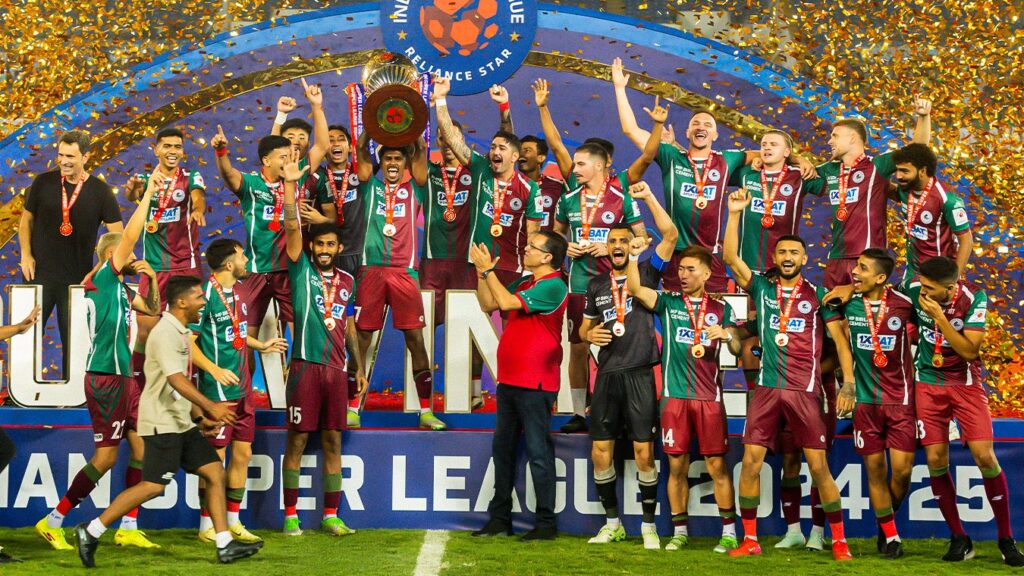
They also completed the domestic double by lifting the ISL Cup, defeating Bengaluru FC in the final. However, the joy was short-lived on the continental stage. The club’s decision not to travel to Iran for their AFC Champions League fixture against Sepahan, citing security concerns, resulted in withdrawal from the tournament. The AFC subsequently handed Mohun Bagan a two-year continental ban and imposed a heavy financial penalty, a blow that overshadowed an otherwise historic season.
FC Goa’s Mixed Campaign and Continental Lessons
FC Goa’s season was defined by resilience and continuity. They lifted the Super Cup in Bhubaneswar and later defended the title successfully in Goa, sealing qualification for continental football for the second consecutive year. Under Manolo Márquez, the Gaurs displayed tactical maturity, especially in knockout scenarios.
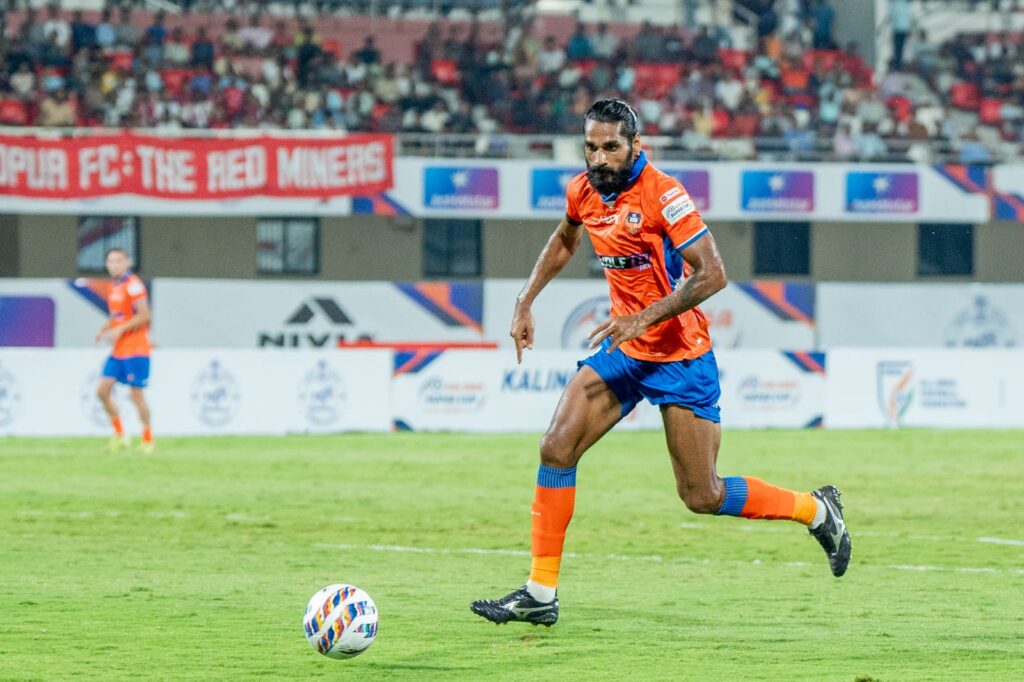
However, their AFC campaign proved challenging. Facing Asian heavyweights such as Al Nassr, Al Zawraa and Istiklol, FC Goa finished their group stage without a point. While results were harsh, the exposure provided invaluable lessons that could shape the club’s continental ambitions in the years ahead.
East Bengal Women Create History
One of the standout stories of the year belonged to East Bengal FC Women. The Kolkata giants etched their name in history by winning the inaugural SAFF Women’s Club Championship, defeating Nepal’s APF FC 3-0 in the final at Kathmandu’s Dashrath Stadium. Under the guidance of Anthony Andrews, the team went unbeaten, scoring 16 goals without conceding across the tournament.
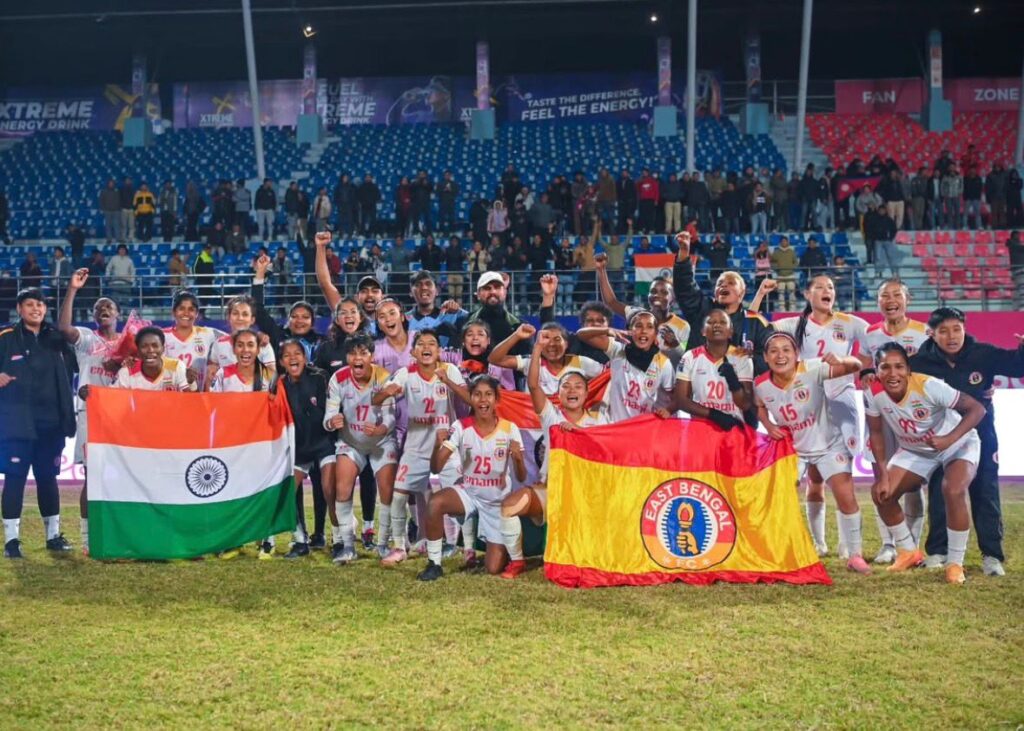
This triumph completed a historic treble — the Indian Women’s League, the Calcutta Women’s Football League, and the SAFF Club Championship — making East Bengal the first Indian women’s club to achieve the feat. Their participation in the AFC Women’s Champions League, though brief, added invaluable international exposure.
Ryan Williams and a Symbolic Shift
Another notable development was Australian-born Ryan Williams acquiring Indian citizenship, making him eligible to represent the national team. With roots in Mumbai through his Anglo-Indian mother and a family legacy in Indian football, his decision marked a rare but significant moment. However, administrative delays mean his debut will only be possible in March 2026, delaying what could be a meaningful addition to the national setup.

Looking Ahead to 2026
As 2025 draws to a close, Indian football stands at a crossroads. The women’s game has surged forward, youth football shows promise, but the men’s senior team remains in transition. The absence of a stable league calendar, repeated administrative uncertainty and delays in the ISL have compounded the challenges.
For Indian football to move forward, consistency and clarity are essential. The league must resume without delay, development pathways need protection, and long-term planning must replace short-term firefighting. Only then can the optimism born in 2025 translate into tangible success in the years to come.
Also Read: ISL Clubs Seek Clarity on Roadmap Ahead of Key Meeting with AIFF