



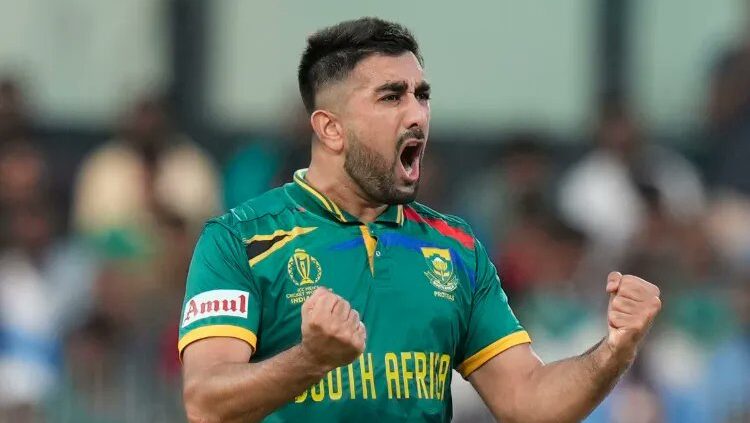

Tabraiz Shamsi’s legal face-off with Cricket South Africa may well be remembered as a quiet but important inflection point in the slow rebalancing of power between players and boards in global cricket.
At the heart of the dispute was a deceptively simple question: how much control does a board legitimately retain over a player who is not centrally contracted and has fulfilled his domestic obligations? Shamsi, a seasoned international cricketer but not bound by a central contract, had been picked in the SA20 auction and later withdrew, with the league accepting his decision and moving on. When he subsequently signed to play in the UAE’s ILT20, CSA issued him a No Objection Certificate but only up to a date that coincided with the SA20 window, effectively forcing him to leave the ILT20 midway through the tournament despite no longer being part of the South African league.
For Shamsi, this wasn’t an abstract administrative issue; it was a direct hit on professional opportunity and earnings. With negotiations going nowhere, he approached the High Court seeking urgent relief. The court’s response was telling. CSA was directed to extend the NOC so Shamsi could complete the ILT20 season, and was also asked to bear legal costs. While framed as interim relief rather than a sweeping policy judgment, the message was unmistakable: administrative discretion cannot override reasonableness, proportionality, and the absence of a binding contract.
Why does this matter go far beyond one left-arm wrist spinner and one tournament? NOCs have become the most powerful lever boards possess in the modern, overcrowded cricket calendar. As franchise leagues proliferate, boards have increasingly used NOCs to protect their own properties, often stretching the concept of “availability” to cover players who are neither contracted nor scheduled for national duty. Shamsi’s case publicly tests that stretch and finds it wanting.
Seen through a wider lens, this is less about rebellion and more about professionalisation. Cricket has quietly evolved into a global gig economy, where players – especially those outside the elite central-contract bracket – piece together careers across leagues and geographies. Yet governance structures still behave as if boards are single employers with moral ownership over a player’s time. The court’s intervention challenges that assumption. It suggests that if a board wishes to restrict movement, it must anchor that restriction in clear contracts and transparent rules, not in loosely interpreted windows or precedent.
The implications are particularly intriguing for India. The Indian system remains the most tightly controlled in world cricket, with overseas league participation by active male players effectively barred. For superstars at the centre of the ecosystem, this control is rarely questioned. But the Shamsi precedent hints at a future pressure point: fringe internationals, uncapped IPL players, or professionals outside annual contracts who may increasingly ask why global opportunities should be closed to them when there is no explicit contractual trade-off. Even if India never sees a courtroom confrontation soon, the logic of the argument has been aired and that alone shifts the conversation.
Elsewhere, boards in England, Pakistan, and smaller cricketing nations face similar tensions. Tightening NOC regimes may protect domestic leagues in the short term, but they also raise the risk of legal scrutiny and player pushback. Shamsi’s case offers a template: challenge the refusal not as defiance, but as a question of fairness, restraint of trade, and professional rights.
What it does signal is a demand for clarity. If boards want loyalty and availability, they must formalise the relationship. If they want flexibility, they must accept player mobility as the cost.
In that sense, Tabraiz Shamsi did not just win the right to bowl a few more overs in Dubai. He helped nudge cricket toward a future where player power is not about confrontation, but about clearly defined rights in a globalised professional sport.

Follow Revsportz for latest sports news