


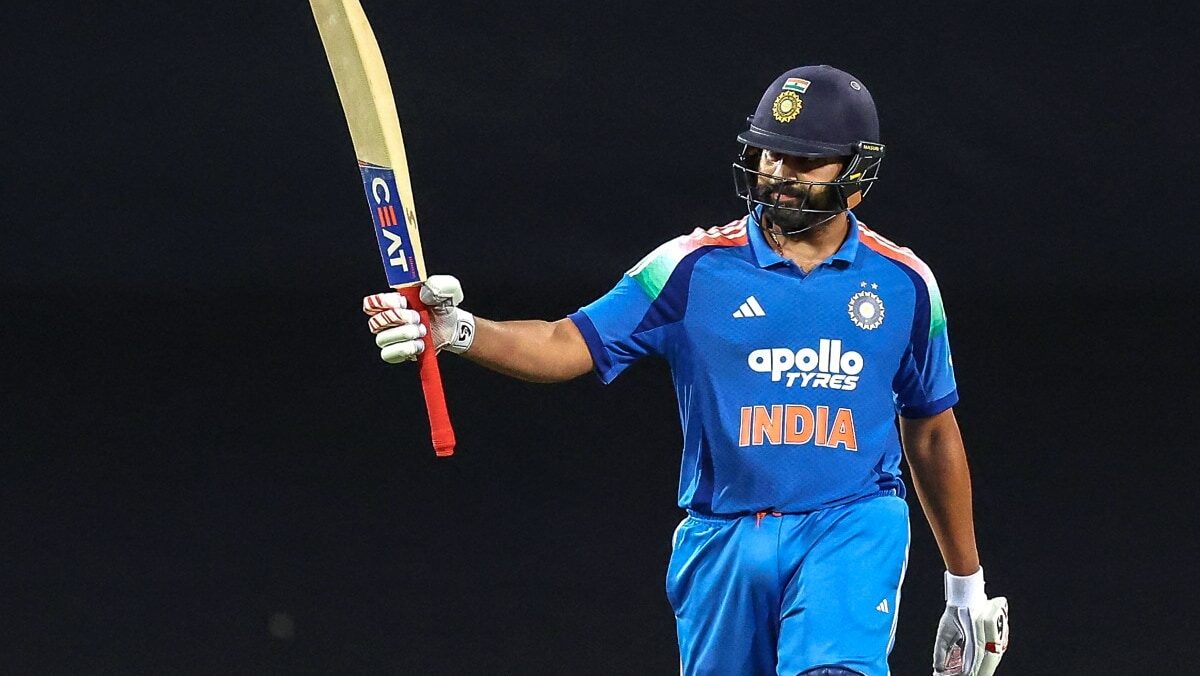
Between 2007, when he made his debut, and 2023, Rohit Sharma had played 235 ODIs, scoring 9,454 runs at 48.73, including 29 hundreds (three double centuries). He used to bat in a certain way, a slow burn with the aim to bat through and explode at the death. His range allowed him, it still does, to make up for a cautious start and in the end, a healthy strike-rate was guaranteed. Then came the 2023 World Cup where the opener decided to lead by example, presenting himself in a new avatar.
Rewind to the 2023 showpiece, Rohit started with a duck against Australia. But he was determined to bat with a different intent, come what may. He was ready to play high-risk cricket and sacrifice his wicket for the team. India revelled in their skipper’s selfless approach, as they adopted a new-age ODI template. Rohit ended up with 597 runs from 11 innings at a strike-rate of 125.94. Virat Kohli’s tally of 765 runs notwithstanding, the captain was the team’s biggest impact player.
Now, as his glorious career has reached the home stretch, Rohit seems to have gone back to the pre-2023 vintage. Since October last year, he has played eight ODIs. It’s a moderate sample size to work with. Rohit isn’t going gung-ho from the outset.
In the first two matches of the ongoing series against New Zealand, Rohit played a couple of cameos. Not much should be read into his scores of 26 and 24 in Vadodara and Rajkot respectively, for the veteran has been batting well and timing the ball sweetly. In the series opener, he still had a strike-rate of 89.65. But in the first 15 balls he played, he scored eight. In Rajkot, the first 15 deliveries yielded nine. In the three-match home series against South Africa also, where the 38-year-old had two half-centuries, Rohit took time before upping the ante.
Ryan ten Doeschate, India’s assistant coach was asked about this after the Rajkot game. “Rohit, I thought tonight particularly, both innings (Vadodara also), was a real new-ball wicket,” Ten Doeschate told reporters. “It didn’t look easy to bat. Over a short period of time if you take the first ODI, he (Rohit) hasn’t been as fluent as he has been and that’s going to be a challenge for him, not playing cricket between series.”
Rohit is no longer the captain and at this stage of his career, he probably has less margin for error. At this moment it might sound preposterous to call his 2027 World Cup participation into question, but things can change quickly in sport. Even with the hardest training possible, Rohit won’t return to his 2019 peak, as that would defy science. But he is still good enough, which is evident, to contribute handsomely.
At the same time, someone like Yashasvi Jaiswal is in the squad, waiting in the wings as a reserve opener and scoring runs whenever he is getting opportunities. There are certain factors and from that perspective, is this change a conscious one?
“I don’t think it’s a conscious approach,” said Ten Doeschate. “He (Rohit) is such a brutal player, but he is actually a touch player at the end of the day. He times the ball. So as soon as the wickets aren’t very good, it’s going to be difficult for him to look in fluent mode like he normally is.”
Another question is, whether not playing enough cricket between international series could adversely affect Rohit’s rhythm?
“He (Rohit) is definitely not the sort of guy to play for himself,” said the assistant coach. “It’s just a combination of the wickets being slightly difficult and maybe just being a little bit short on cricket leading into the series.”
Between the series against the Proteas and the ongoing rubber, Rohit played two Vijay Hazare Trophy matches. Now that he is a one-format player, maybe a couple more would have been better. Ten Doeschate has a point when he speaks about the game time. Then again, it’s the player’s decision. Rohit is the best judge of his preparations.
Follow Revsportz for latest sports news
Also Read Why Shahbaz Ahmed should be Washington’s replacement in NZ T20Is, and the Reddy conundrum