

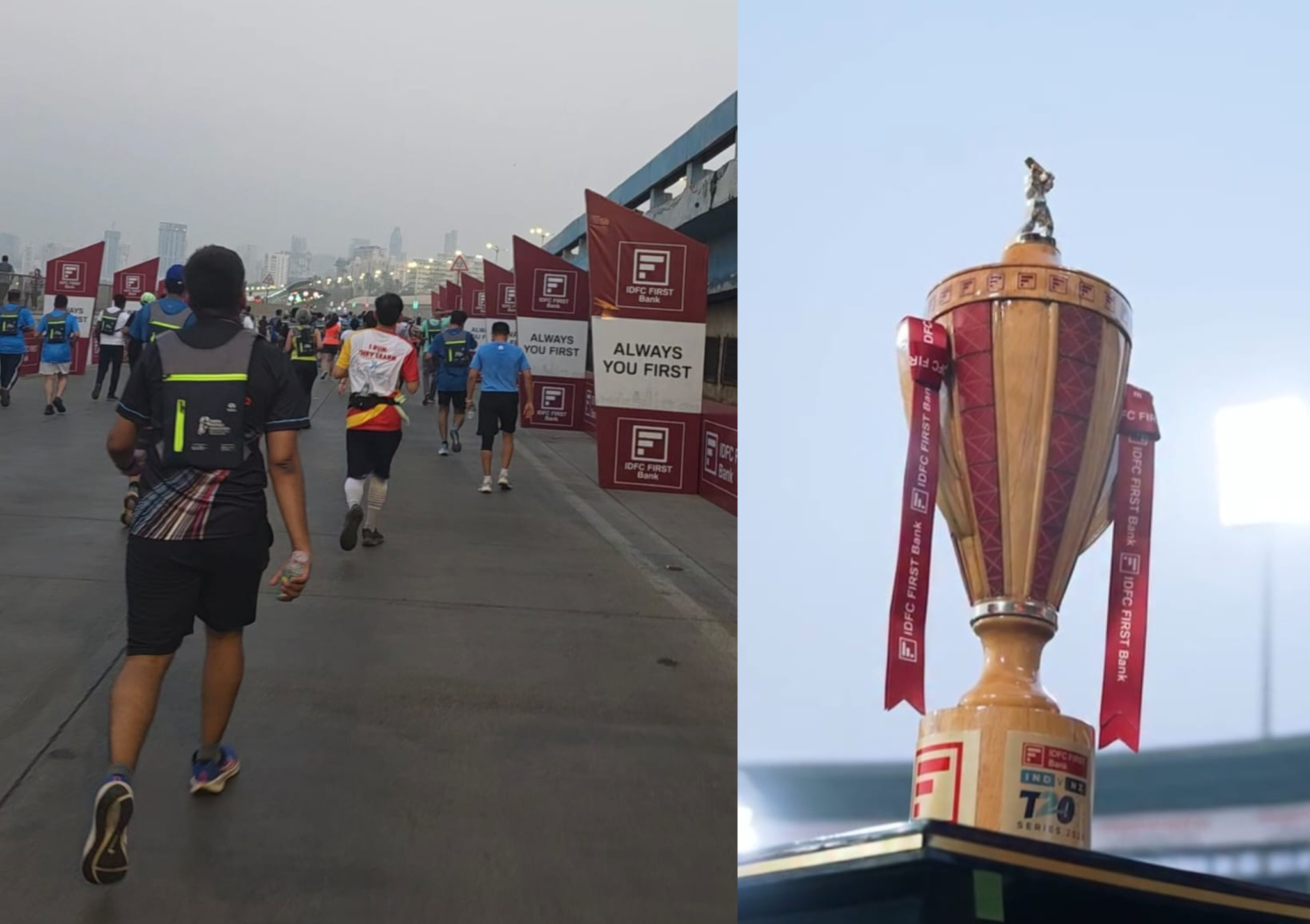
If you are an Indian cricket fan, you will know that the series India and New Zealand are currently competing in is the IDFC First Bank T20 series. During the live broadcast, it is always interesting to read the trivia that appears in the bottom-left corner of the television screen, displayed in IDFC First Bank’s maroon and white colours. Few people, however, know that the trophy the two teams are playing for is unique: it is made from recycled materials — used cricket bats discarded by schools and leather from used cricket balls. It is a fantastic innovation and has added to the legacy of the series.
IDFC First Bank began its association with Indian cricket in August 2023. The country was still emerging from the effects of Covid, and this partnership helped showcase the resilience of the Indian cricket brand at a time when there were lingering apprehensions. In the immediate post-Covid era, questions were being asked: could the BCCI still attract brands for India’s home matches — both white-ball and red-ball? The IDFC First Bank association was therefore a pleasant surprise. Here was a bank willing to invest not only in the IPL, but also in Indian international and domestic cricket at home, across both formats. This association supported Indian cricket at a critical time and, it may be said, helped consolidate the sports sponsorship market.
From IDFC First Bank’s perspective, this demonstrated that it was not seeking short-term gains. Instead, the bank wanted to make a meaningful difference to sport and the wider ecosystem. This approach was in line with its other investments in participatory sport, such as supporting distance running in India, including — but not limited to — the major marathons in Mumbai, Delhi, Kolkata and Bengaluru. These events promote positive impact and healthy lifestyles, and are closely aligned with the bank’s philosophy of building a world-class bank in India, founded on the principles of ethics, digital innovation and social good.
IDFC First Bank has also supported a group of women footballers from the North East. This further reinforces that the bank’s commitment to sport extends beyond glitz and glamour. It is not purely about return on investment; rather, it is about social good and making a tangible difference.
As a professional who hosts most of the Procam marathons, I have met IDFC First Bank’s senior management — V Vaidyanathan, Managing Director and CEO, and Shreepad Shende, Chief Marketing Officer — on multiple occasions. Each time, what stands out is their genuine commitment to sport and their determination to create impact. Seeing a brand invest in participatory sport is always encouraging, especially when IDFC First Bank did so at a time when distance running was not yet a widespread phenomenon in India.
This serves as a strong case study on the use of sport as soft power — demonstrating how ethical brands can leverage sport to reach the masses while also contributing positively to society. With Olympic and Paralympic sport in India poised to turn a corner through the 2030 Commonwealth Games and the 2036 Olympic bid, one can only wish brands like IDFC First Bank continued strength and success.
For more updates on Indian sports, follow RevSportz