



Commentators talk about matches in terms of “dead rubber” or dismiss the context between two weaker teams as inconsequential. Have you thought about it in terms of media value that a broadcaster pays out basis the number of matches and the inventory available irrespective of who is playing?
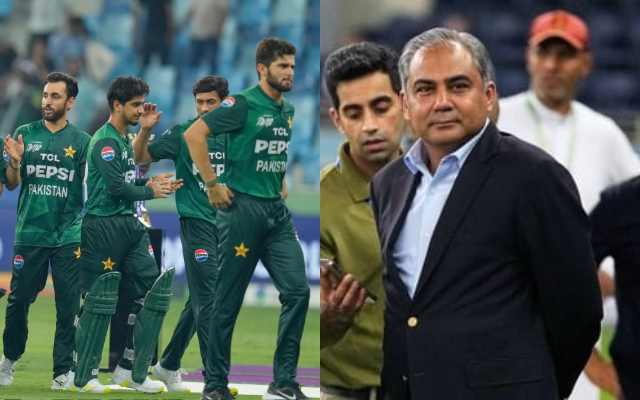
And herein lies a crucial commercial aspect of the Pakistan Cricket Board’s political grand standing on participation in the ICC T20 World Cup, starting in less than two weeks. Broadcasters sell cricket in terms of a bundle… the smaller contests are paired together with the premium ones …read…India Pakistan showdown. Which is why the drama around the tournament is not a political subplot; it is a serious commercial stress test.
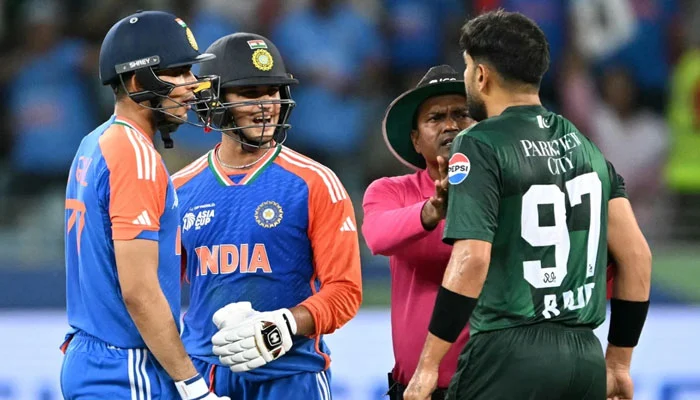
The India-Pakistan match is the load-bearing wall of the tournament’s businss architechture. It typically contributes one-third of the total viewership and drives 40% of the spnsorship and advertisment value. It is also the single biggest trigger for Over the Top streaming sign-ups, app installs and social conversation. Streamers club it as part of the top quartile events that can drive these metrics on par with a Salman Khan movie. Broadcasters treat it akin to a “Dabangg” moment and call it a tentpole property. Everything else in the calendar is priced, bundled and justified through their existence. Remove the tentpole, and the structure does not gently adjust; it collapses!
Let us take a simple broadcaster scenario. Imagine a tournament projected to generate ₹1,000 crore in combined ad, sponsorship and digital revenue. Of this, ₹350 crore is linked directly to India-Pakistan through premium ad slots, sponsorship integrations, branded shows, digital spikes and sponsor activations. The remaining ₹650 crore comes from all other matches combined. Now remove that one fixture.
ALSO READ: False Equivalence: Why Bangladesh and Pakistan Are Not the Same Case
Hold on… contrary to what you would think, the immediate loss is not just the ₹350 crore attached to that game. It is the ripple effect that follows. Advertisers who bought the tournament as a bundle suddenly argue that the promised reach will not be delivered. CPMs are renegotiated. Make-goods are demanded. Sponsors question whether the event still carries the same prestige. Digital platforms see fewer downloads, weaker stickiness, and lower time spent.
If the rest of the tournament loses even 25% of its value because the halo is gone, that ₹650 crore collapses to under ₹490 crore. In effect, a single missing match has now erased more than half the projected tournament revenue!!
For broadcasters, pricing is built on predictability. Rights fees, ad inventories, production budgets, talent costs and marketing spends are all locked months or years in advance. Once sold, those numbers cannot easily be reversed. Which means that when the tentpole collapses, the losses are not limited to the top line. They bleed into cost recovery, cash flow and future bidding strategy.
This is also where the digital layer becomes critical. For OTT platforms, India-Pakistan is not just the most watched match. It is the biggest conversion trigger. A large share of tournament sign-ups happen in the 24 to 48 hours before that game. It is the emotional hook that pulls casual viewers into paid ecosystems.
Take a platform that expected one million new subscribers during a World Cup at an average ARPU of ₹500. That is ₹50 crore in incremental digital revenue. If the absence of the marquee fixture reduces sign-ups by 40%, the platform loses ₹20 crore before the tournament even begins to unfold. Add churn, refunds, and lower engagement for the rest of the event, and the digital business case weakens rapidly.
Broadcasters do not just schedule matches. They build entire ecosystems around them. Special pre-shows. Brand films. Historical packages. Studio programming. Talent-driven storytelling. All of this is planned with India-Pakistan as the emotional centrepiece. When that disappears, large parts of the production pipeline become commercially unusable. You can still air them. You just cannot monetise them at the same rate.
Cricket’s most valuable asset has always been its certainty of spectacle. When that certainty weakens, so does the willingness of the market to pay top dollar. ICC events are beginning to carry geopolitical risk. Over time, this will push brands toward properties that offer commercial predictability over emotional legacy.
For more updates on the T20 World Cup 2026, follow RevSportz