


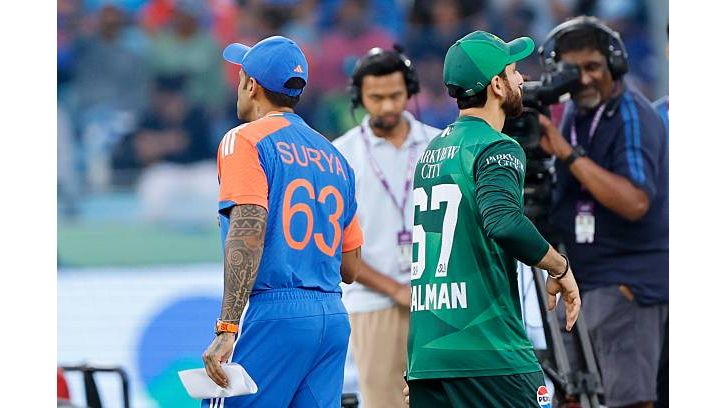
Pakistan have decided to boycott the India game in the forthcoming T20 World Cup, which is just days away. The decision was communicated via a tweet from the official handle of the Government of Pakistan. The plan is clear: the Pakistan Cricket Board (PCB) will suggest that it is a government call and that it had little or no role in it. They will try this tactic to avoid penalties being imposed and to prevent suspension by the ICC.
The truth is, this argument will not cut much ice. Pakistan are still travelling to play in a World Cup that is being hosted by India. The BCCI are the hosts, and Pakistan are participating in a tournament hosted by India. Also, Pakistan were one of the members involved in the process of allocating the tournament to India.
Second, they will play in Sri Lanka, which was always the case under the hybrid agreement. Nothing has changed, so the security argument will not really work for Sri Lanka. If there were a genuine security threat, why are they travelling at all? You cannot realistically claim that players are unsafe in the island nation.
Also read Deleted Messages and Pakistan’s Attempt at Further Drama
Pakistan could have said that the government does not want them to play India. Even that argument does not hold ground, because just yesterday they played India in the Under-19 World Cup and lost. So why did they play that World Cup game? What has changed that they have now decided to boycott a match being played in Sri Lanka? Zimbabwe and Sri Lanka are both neutral venues, and there is no real difference except their geographical locations. How do you justify playing one World Cup game and boycotting the other?
I have been speaking to a number of journalists, and the common thread is that none of them are allowed to speak freely. They are all gagged and cannot utter a word. They fear isolation and also fear that their accreditations will be cancelled going forward if they speak against the decision. Some of them, while speaking off the record, said that the more sensible voices in Pakistan — people like Ramiz Raja — had suggested to Mohsin Naqvi that a boycott could cost Pakistan dearly. But political considerations will always trump cricketing needs, and Naqvi will remain a politician first and a sports administrator second.
A deeper dive makes it apparent that this call has been taken to woo radical sections in Bangladesh ahead of the elections on the 12th. It is meant to signal that Pakistan is with them and that it is not leaving Bangladesh alone. What they do not realise is that, by taking this call, they have ended up alienating the entire ICC. Having effectively sabotaged the tournament, the stance is no longer just against India. Rather, it is now against the entire cricketing world, and there may be no turning back for Pakistan.
It must be noted here that all previous World Cup forfeits were on the basis of security advice – Australia and West Indies not playing in Sri Lanka in 1996, and New Zealand not playing in Kenya in 2003 – or to protest human-rights violations (England not going to Zimbabwe in 2003). Otherwise, no matter how precarious or non-existent political relations between two countries, government interference isn’t tolerated by most sporting bodies.
Iran and the USA played each other in the FIFA World Cup in 1998 and again in 2002, and both Norway and Italy played their recent World Cup qualifiers against Israel after making clear their disapproval of the Netanyahu government. They played simply because they feared sporting sanctions.
ICC sources say the organisation is considering the strictest possible action, and it would not be surprising if things turn drastic for Pakistan cricket in the coming days. While Pakistan may seek to take the issue to the Court of Arbitration for Sport (CAS), chances are that soft-power diplomacy within the ICC will also be deployed against them. In the medium to long term, the PCB may find itself with no wiggle room left.
Follow Revsportz for latest sports news