


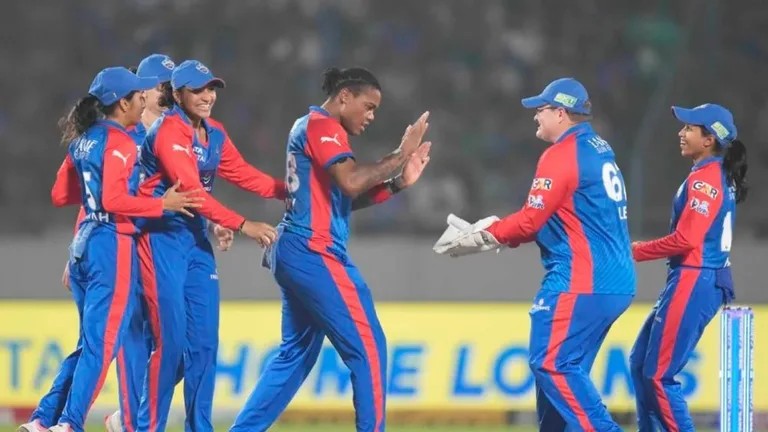
The league stage of the Women’s Premier League 2026 was anything but smooth for Delhi Capitals. Yet, here they are, one step away from the final. Their journey has been defined by a clear pattern: bowlers rescuing situations, batters flirting with control but not quite owning it.
What Worked
A Bowling Unit That Wins Games
If Delhi are still alive in the tournament, the biggest reason is their bowling. Time and again, when totals looked slightly below par or games drifted, the bowlers dragged DC back. Out of the top 10 wicket-takers in WPL 2026, four are from DC. Nandni Sharma and Sree Charani are in the top five with 14 wickets each. Marizanne Kapp has picked up 10 wickets and Chinelle Henry has accounted for nine scalps.
Kapp has been the enforcer up front. Her powerplay wickets have set the tone repeatedly, breaking opening stands and forcing opposition teams into early rebuilding. She hasn’t just picked up wickets, she has taken key wickets.
Then comes the death-overs specialist, Nandini. Her variations, especially the back-of-the-hand slower ball, have made her difficult to line up in the final overs. Batters looking to explode have often found themselves deceived, mistiming into the deep or losing their stumps. Delhi’s ability to control the last five overs has been a tournament-defining strength.
Another tactical shift that paid off was DC bowlers attacking the stumps more in the Vadodara leg. Moving away from defensive, wide lines to straighter, wicket-taking channels brought LBWs and bowled dismissals into play, a sign of a bowling group growing in confidence and clarity.
Collective Batting Contributions
DC haven’t relied on one dominant batter. Instead, different players have stepped up on different nights. Shafali Verma, Jemimah Rodrigues, and others have all played impactful innings at various stages. These weren’t always big scores, but often timely cameos that helped DC chase or reach competitive totals.
This spread of responsibility has kept them unpredictable and prevented collapses from completely derailing seasons.
Growing Captaincy Influence
Jemimah Rodrigues’ leadership has quietly evolved. Her bowling changes, particularly the timing of bringing Kapp back for short, high-impact spells, have directly led to breakthroughs in crunch moments. She has shown better game awareness with each outing, reading situations rather than following preset plans.
What Didn’t Work
Batting Under Pressure
The biggest concern remains shot selection when the game tightens. Too many DC dismissals have come from avoidable strokes rather than unplayable deliveries. Instead of forcing bowlers to earn wickets, DC’s batters have occasionally handed them over.
Starts have not consistently turned into match-defining knocks, a gap that becomes dangerous in knockout cricket.
Lack of a Finishing Anchor
While contributions have come from many, there hasn’t been a single batter consistently finishing innings. Partnerships have promised much but ended just before full control was established.
Fielding Lapses
There have been moments where sharper fielding could have shortened chases or restricted totals further. In tight playoff matches, those extra runs saved can be decisive.
DC’s league stage story is simple: bowlers have been top quality, batters are patchy. If the batting unit finds composure to match the bowlers’ discipline, DC have every tool needed to go all the way. If not, their campaign may once again hinge on whether their bowlers can cover just a little bit more than they should have to.
For more updates, follow REVSPORTZ.