


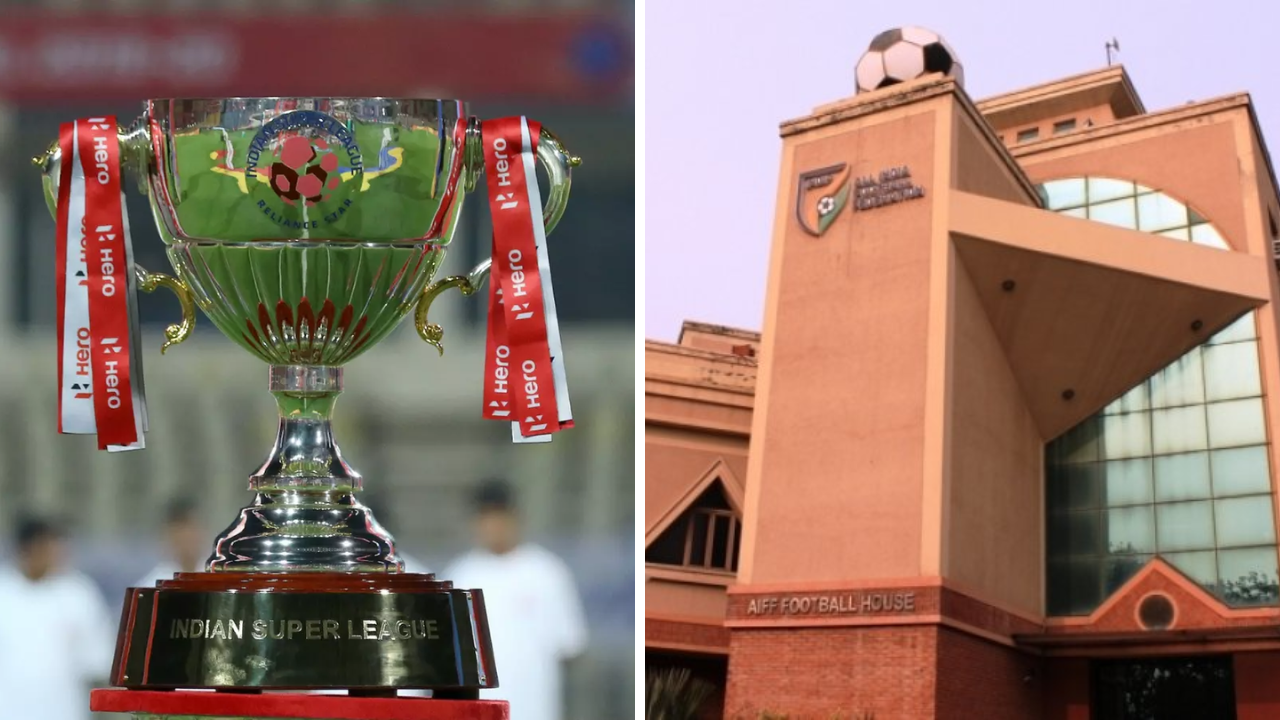
For the first time in several months, the All India Football Federation and Indian Super League clubs appear to be moving towards a common ground. As part of its efforts to stabilise the domestic structure, the AIFF has presented a long-term roadmap for the ISL, largely mirroring the framework earlier proposed by Football Sports Development Limited (FSDL), albeit with certain key differences.
During a virtual meeting on Friday, the AIFF’s three-member committee shared details of the proposed model with representatives of 13 ISL clubs, East Bengal being the only absentee. The proposal outlines a 20-year roadmap under which the league would be owned and operated by the federation in line with the amended AIFF constitution. Each season would run from June 1 to May 31.
The proposed structure introduces an “open league” model with promotion and relegation. Clubs would be required to pay a participation fee of ₹1 crore, while the overall operational budget for the first season has been pegged at ₹70 crore. Under the plan, AIFF would hold a 10 per cent fixed revenue share and contribute ₹7 crore annually, which would be channelled towards youth development and grassroots programmes. Clubs collectively would hold a 50 per cent share, contributing ₹35 crore, while the commercial partner would own the remaining 30 per cent, amounting to ₹21 crore. In addition, the federation would retain another 10 per cent share that would be added to the general revenue pool.
The structure closely resembles the model previously proposed by FSDL during negotiations over the Master Rights Agreement, which had suggested a 60-26-14 revenue split between clubs, the commercial partner and the AIFF respectively. The current proposal, however, slightly reworks those proportions while keeping the core philosophy intact.
One key feature of the plan relates to relegation. Clubs dropping out of the top tier would be required to transfer their participation rights to promoted teams but could retain a portion of their fixed revenue share, provided they continue contributing to the central pool. Such clubs would be entitled to up to two per cent of the central pool, capped at one per cent per season, for a maximum of two seasons.
The clubs are scheduled to meet again virtually to deliberate on operational costs, including the proposed salary cap and other financial obligations, before taking a final call on the format for the upcoming season. Two models remain under consideration — a truncated league played either in a single round-robin format or in two centralised groups.
If consensus is reached, the final proposal will be presented in a joint meeting involving the AIFF, the three-member committee and ISL clubs, following which it will be placed before the AIFF General Body and later submitted to the Sports Ministry and the courts for approval. Should the process move smoothly, the ISL is expected to kick off in early February, marking a long-awaited return of top-tier domestic football after months of uncertainty.
Also Read: A Year of Extremes: Indian Football’s Highs, Lows and Unfinished Business in 2025