

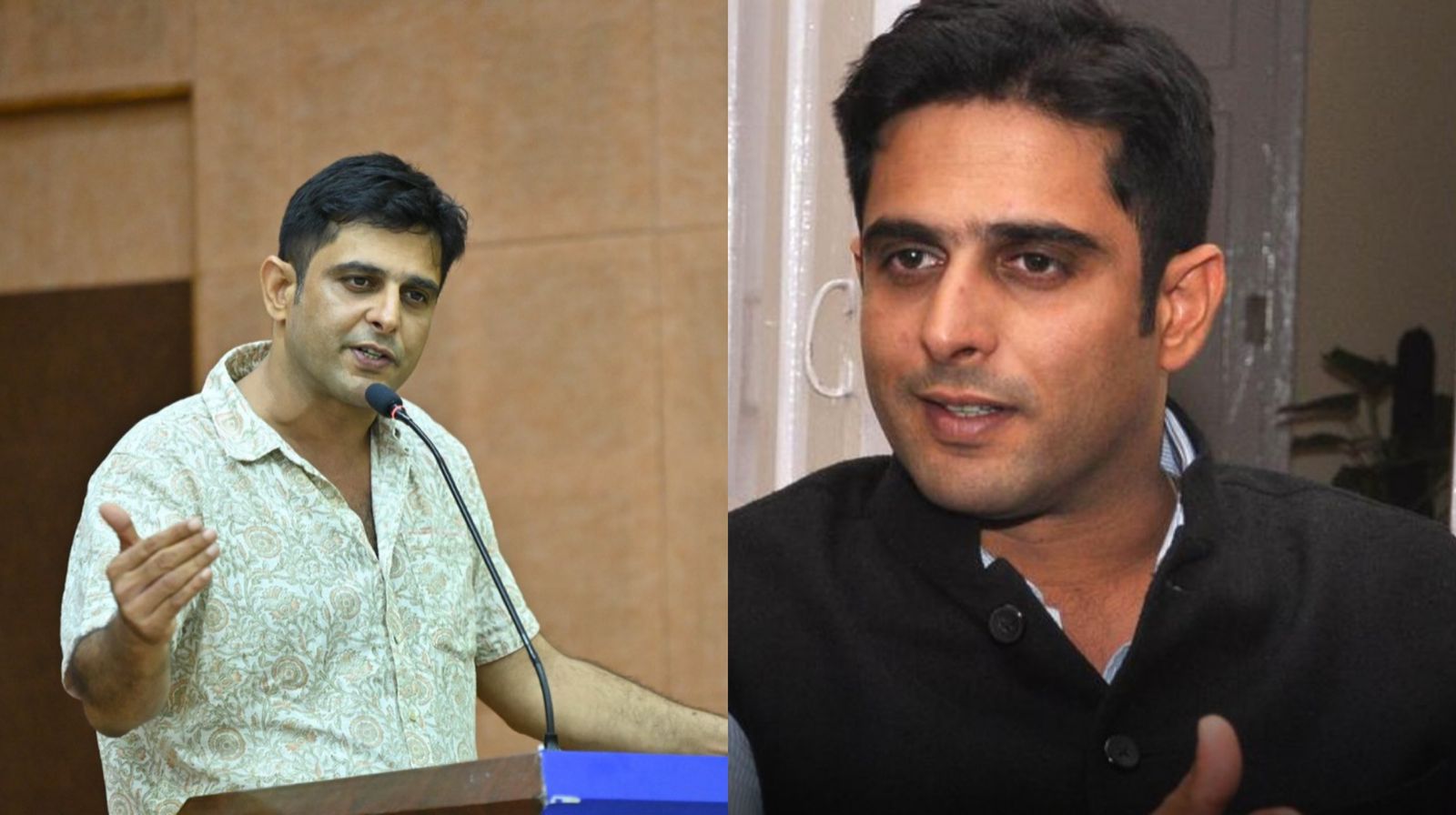
It’s been another golden year for Indian shooting. Following on from multiple medals at the Paris Olympics, Indian shooters distinguished themselves at various global meets, with several stars coming to the fore. With the Asian Games looming in 2026 and one eye firmly on the Los Angeles Olympics (2028), Boria Majumdar, RevSportz editor-in-chief, spoke to Kalikesh Singh Deo, president of the National Rifle Association of India (NRAI), for the first episode of a new season of Backstage with Boria. They spoke of recent gains, the road ahead and establishing shooting as a franchise sport.
Boria: Most successful sport in India in 2025 — World Championship medals, World Cup medals, multiple podium finishes across the year, and the Shooting League of India coming up in 2026. A massive year for shooting. Your thoughts on the sport in 2025?
Kalikesh: Shooting has had a great year. Even after the success at the Olympics, it has carried on consistently across World Cups and World Championships, remaining among the top three countries in the world. Our shooters are excellent, giving us a consistent flow of medals, and we remain one of the strongest contenders for winning medals for India in the upcoming Asian Games or the Olympics.
In that backdrop, the task for us as a federation becomes even more challenging — to ensure that the team stays united, stays focused, and receives the kind of support required to convert a larger number of medals, and more gold medals. That is the key challenge before us as we move into the next Olympic cycle.
Having said that, we are also looking at the Shooting League of India, with the first competition starting from February 16, 2026 for 10 days. This will be the first franchise-based shooting league in the world. The ISSF (International Shooting Sport Federation), the global shooting fraternity, as well as the Indian sports fraternity are all watching it with expectation. Our intent is to meet those expectations and ensure that the league becomes a fun and entertaining platform, giving our shooters more visibility and stronger financial support going forward.
Boria: What’s standing out in Indian shooting is success at both junior and senior levels. So clearly something has been done right. Is it the coaching structure, the professional structure, or something else?
Kalikesh: Absolutely, Boria. If you remember back in the 2012 Olympic cycle, the NRAI (National Rifle Association of India) took charge of the junior program. Since then, there has been a consistent effort to ensure that the depth of Indian shooting gets younger in both age and demography, and we have seen success across the board.
To give you an example, even after the Olympics, the National Games were won by a 13-year-old and the National Championship by a 14-year-old. This speaks volumes about the depth and breadth we have in shooting. It is our responsibility as a federation to ensure a seamless transition from junior to senior shooters by providing the right exposure, high-performance training, and consistent coaching support so they can compete with the best in the world.
One of the most successful new interventions by the federation has been the High-Performance Program. Shooting is as much a mental sport as it is a physical one, and as much a team sport as it is an individual sport. We need to ensure shooters are in the right frame of mind at the right time. We monitor their peaking and resting cycles and create individual performance charts for each shooter.
Every athlete in our national squad receives data-based inputs from the high-performance team. We also ensure continuity between personal coaches and national coaches, with a common minimum program so training remains consistent throughout the year. Like any program, there are challenges, but I am confident we will overcome them and achieve even better results.
Boria: The depth of talent India has in shooting must make you very happy.
Kalikesh: Absolutely. It’s amazing to see how shooting has transformed. We have nearly 95,000 registered shooters, and at every National Championship, over 15,000 shooters compete after progressing through district, state, and zonal levels. This speaks volumes about the depth of Indian shooting.
There was a time when stars like Abhinav Bindra, Gagan Narang, and Vijay Kumar provided the impetus for the sport. Today, Manu Bhaker, Swapnil Kusale, and Sarabjot Singh have carried that legacy forward with their Olympic performances. Stars inspire youngsters, and as a federation, it is our responsibility to provide opportunities for them.
We are connecting with schools to ensure shooting ranges are built at the school level wherever possible. Over 17,000 shooting ranges are now connected or registered with the federation in some way. Our aim is strong grassroots development.
The competition level is now so intense that it is difficult to predict who will top domestic events or trials — and that’s a good thing. It keeps senior athletes sharp, reduces complacency, and reinforces our transparent, merit-based selection policy. If you perform, you make the team. That sense of fairness gives young athletes hope. It’s a mix of athlete effort, infrastructure growth, and a strong grassroots drive by the federation and state units.
Boria: Can you tell us more about the Shooting League of India? What format can we expect, and will top international shooters come to India?
Kalikesh: The entire league will follow a finals format, with full backing from the ISSF. Over 70 top international shooters have already expressed interest. Final participation will depend on schedules and franchise selections.
Each franchise will have a maximum of four shooters and a minimum of two junior shooters. This ensures a mix of global stars, domestic shooters, and young talent. The league is based on mixed-team finals to make it entertaining and engaging.
It will give younger shooters immense confidence, especially in handling finals pressure. We also plan to use technology and immersive elements to expand the sport’s reach. Importantly, broadcasts will explain the technicalities, emotions, and pressure involved so audiences can better relate to both the athlete and the sport.
Boria: Any plans for fan engagement to expand the base?
Kalikesh: Absolutely. Twenty-six medals at the Asian Games, three at the Olympics, and thirteen at the recent World Championship are outstanding achievements. But for the league to succeed as a commercial venture, fan engagement is critical.
We want our franchisees, broadcasters, and stakeholders to stay invested long term. That requires a strong fan base, and we are launching a major fan engagement drive very soon.
Boria: Thoughts on the Asian Games and the road to LA 2028?
Kalikesh: The Asian Games mark the start of the cycle. We won 26 medals last time, and while athlete quotas pose a challenge, we are addressing this through policy planning. I am confident our shooters will perform exceptionally well again.
We are also hosting major international competitions — the Asian Shooting Championship in 2027, a World Cup quota event, and the Junior World Championship in 2028. Our aim is to maximise quota places and improve our medal tally at the LA 2028 Olympics.
Boria: Shooting gives me a lot of hope going into the Olympic cycle. How do you plan to insulate young athletes from pressure?
Kalikesh: While we celebrate the three Olympic medals from the last cycle, we often forget the three fourth-place finishes — medals missed by a whisker. That shows our potential to do even better.
Pressure is inevitable, but our role as a federation is to provide the right mental framework and support. Shooting will continue to be a leading medal-winning sport for India. With strong government backing and continued effort, I am confident India will have an excellent Olympic cycle ahead, including 2028 and possibly 2036.
Boria: Is the federation working to attract more sponsors so shooters can become top earners?
Kalikesh: Absolutely. While market dynamics differ across sports, the success of shooting demands recognition. World Championships are often more competitive than multi-sport events, with nearly 2,000 shooters participating.
Athletes like Sift Kaur Samra may not yet have an Olympic medal, but they are among India’s strongest medal prospects. The league will increase visibility for such athletes and help secure stronger financial backing.
Shooting is not traditionally broadcast-friendly, which is why technology and presentation are key. A lot of thought has gone into ensuring the league hits the bull’s eye and delivers on its promise.
Boria: It has been a wonderful conversation, as always. All the very best.
Kalikesh: With your consistent support, I am confident we will better our performance. Productive and critical inputs are the only way we can better ourselves. Thank you.
Watch the full interview here
#KalikeshSinghDeo Exclusive
“We have nearly 95,000 registered shooters” – @OfficialNRAI president, @DeoKalikesh, speaks on India’s talent pool, the upcoming Shooting League of India, expectations for Asian Games and LA28 and more.
Speaks to @BoriaMajumdar in #BWB_Season06… pic.twitter.com/L88G7A3ZPY
— RevSportz Global (@RevSportzGlobal) December 15, 2025
Follow Revsportz for latest sports news