






“That’s an unacceptable scorecard. I don’t care if it was 50 millimetres of grass,” Matthew Hayden was quoted as saying on the All Over Bar Cricket Podcast. “You need to be better than that. Head, Weatherald, Labuschagne, Khawaja, Carey, Green, they’re all at sea with their basic techniques. The only technical thing I see is coming from our bowlers, who look more technically sound than our batters. Why is that?
“The faceless men in this cricket team are always an issue. Michael Di Venuto has been there for at least five years … we need some generationally different voices that sit in that mentality of how you play. I’m not a fan of him. It’s not a personal thing, I just think it’s been for too long,” he added.
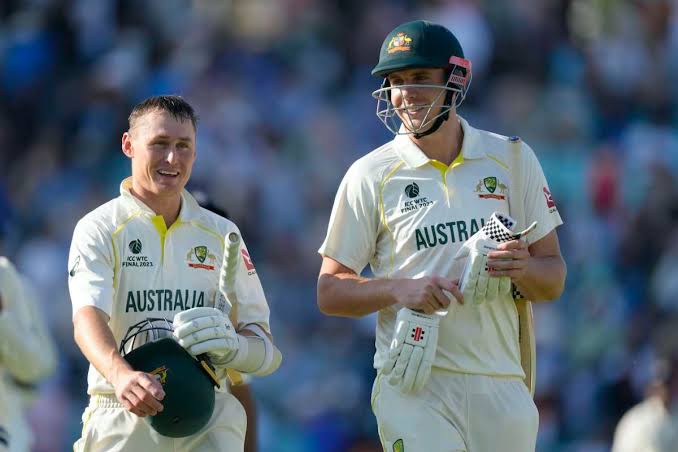
The great Australian cricketer does make a valid point. In the recent past, Australia’s Test batting unit seems to be on a general decline, and that isn’t just related to their collapses at the MCG. Just a mere glance through the batting line-up and you will notice that Usman Khawaja is coming to the fag end of his fine career. Yes, he did make a vital contribution in the Adelaide Test, but in his last 19 games he averages a tad over 31. In this context, leave aside his 232 in Sri Lanka, and there is very little to show for it. His tendency to shuffle across too much and then get opened up on the defence has led to his downfall quite a few times on quicker pitches.
Marnus Labuschagne, the other veteran batter, averages even less than Khawaja in that phase, 26.25. In this period, he has nicked behind to the slip cordon on more than enough occasions. Meanwhile, there is scrutiny over Jake Weatherald’s problems against full-length deliveries. Cameron Green, too, still averages in the low 30s in the longest format.
At present, Australia depend quite heavily on Travis Head to land knockout punches. It is true that Steve Smith is still making vital contributions and Alex Carey is in the form of his life, but when more than half the batting unit is going through a bad patch, it is a cause for worry. A caveat still needs to be brought into the equation here. Over the last four years, wickets in Australia have offered more seam movement. The red Kookaburra ball is also lasting for more overs. To compound the batters’ woes, we are in the wobble-seam era. So, a little bit of leeway has to be given to the Australian batting tribe.
The crux of the point remains that the line-up is ripe for a transition. In that sense, who are the promising batters to watch out for in Australian domestic cricket? Maybe it is Jayden Goodwin. Jayden, the son of Murray Goodwin, looks like a good enough player of pace bowling. To illustrate the point, dissect the highlights package of his knock against Tasmania in the 2023–24 Sheffield Shield season.
On a tricky surface, the left-hander amassed 85 runs, essaying some fine drives, which was juxtaposed with his ability to play with soft hands. However, he is averaging under 30 in the 2025–26 Sheffield Shield for Western Australia. Campbell Kellaway’s and Oliver Peake’s potential is also talked about highly, but they too haven’t really put the runs on the board in the current season. Will Salzmann, the batting all-rounder, is another whose promise is definitely worth keeping an eye on.
How about the much-maligned Sam Konstas? After all, he has regained some of his mojo with a 116 against Queensland. The Australian selectors, though, would be wary of trying out a player who was discarded just a few months ago. So, as a stop-gap option, it could come down to a couple of experienced campaigners in Nathan McSweeney and Matt Renshaw. The duo may not exactly turn out to be the next great batting stars from Australia, but they could give a bit of spine to a creaky batting unit. On the all-rounders’ front, Beau Webster or Cooper Connolly may replace Green, depending on the conditions.
The larger picture to analyse is that Australia are in the same boat as other established Test-playing nations. In the T20 era, young batters may simply prefer to work on their power-hitting rather than stick to the edicts of batsmanship. The point can be further exemplified by how the likes of Jake Fraser-McGurk and Mitchell Owen go about their business. Only time will tell whether the Australian system will still find a way to produce quality red-ball batters.