


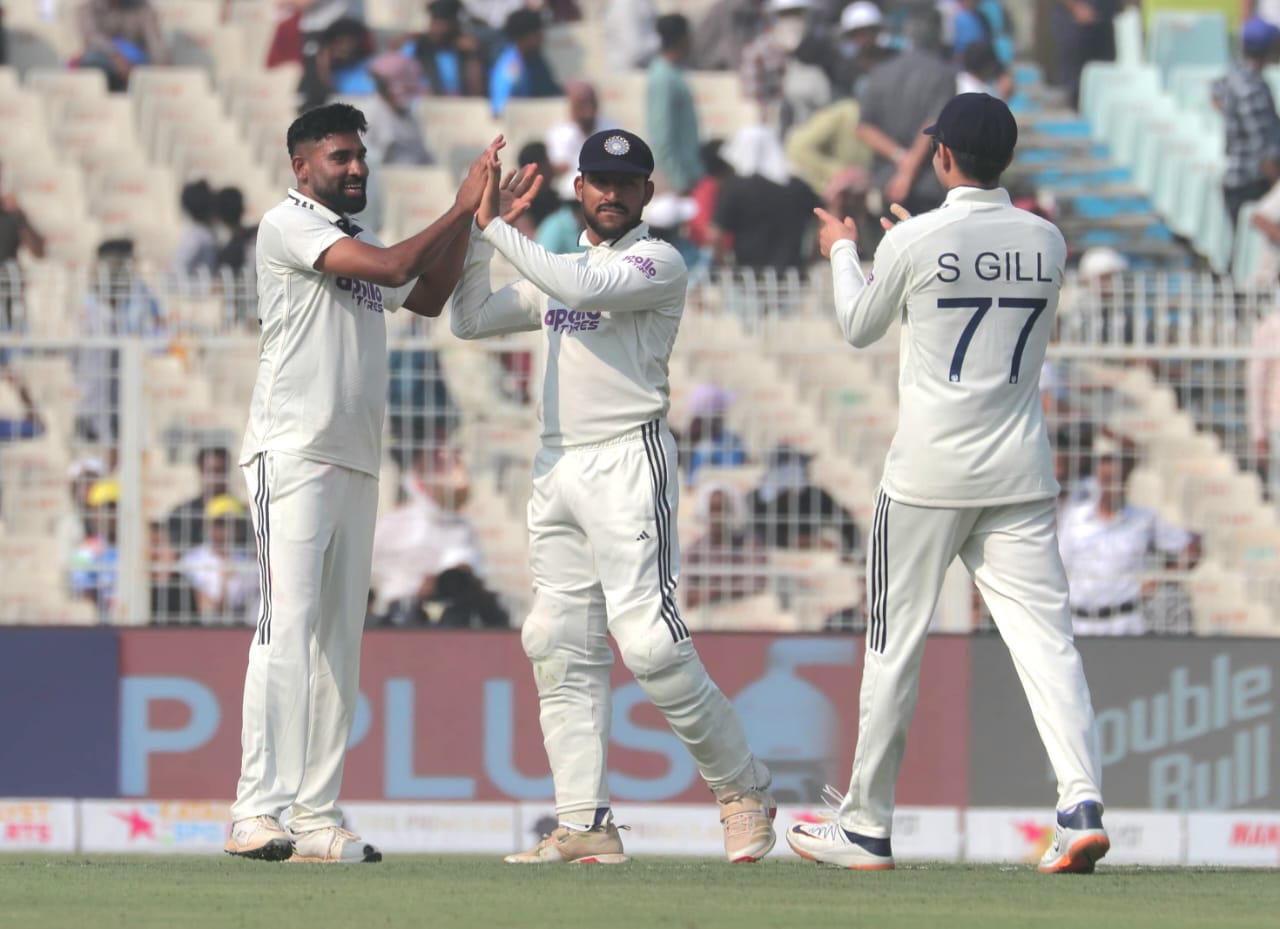
In the last 14-to-15 months, India’s report card in Test cricket doesn’t make for a good reading – Suffered two whitewashes at home, lost a Test rubber in Australia, alongside posting a series victory versus the lowly West Indies. The only silver lining being a drawn series in England. It is true that India are going through a testing transition phase. However, being clean swept at home twice over three series is a red mark in the annals of Indian cricket.
In that backdrop, Shubman Gill’s suggestion of having an extended camp – presumably around 15 days – could prove to be beneficial. For starters, in the changing cricketing landscape, young players coming through the ranks end up partaking in the abridged versions of the game very often. It isn’t just about making technical adjustments for the longest format, but Test cricket also demands a mindset switch.
For instance, the longest format requires a batter to showcase patience, the art of leaving the ball, and more. Meanwhile, for a bowler, it is more about executing your stock ball, rather than sticking to variations. In this day and age, it is perhaps difficult to expect a young batter to possess some of those virtues. In a nutshell, in modern times, a promising batter would mainly look at upgrading his power-hitting skills.
The connecting point to the above-mentioned paragraph is Ravi Ashwin’s critical comment on his podcast. “India has become one of the world’s poorest nations at playing spin as a batting unit.” Here, we are thinking of a country that has produced some of the finest players of spin.
So, hypothetically, how can the present set of Indian batters improve their games against spin? In an extended camp, the batters might look at perfecting their sweeps and reverse sweeps on low-bouncing wickets. In the DRS era, with the spinners eyeing turn at pace, the aforesaid shots have taken prominence. In the DRS era, using the front pad as a second line of defence versus spin on turners is also fraught with more danger. In this context, in a training workshop, the batter can try to play the spinners without using the pads.
Even the Indian spinners can branch out their games by working on aspects of their bowling – varying the pace, using the crease, or perhaps imparting more revs on the ball. Recently, in the Guwahati Test, Simon Harmer and to an extent Keshav Maharaj outbowled the Indian finger spinners on some of those skill parameters. In fact, Harmer even seemed to be outbowling India’s wrist spinner – Kuldeep Yadav – in terms of imparting revs.
Just to throw in a word of caution, an extended camp before a series doesn’t mean that India will chart a turnaround within no time. In summary, there is no magic wand that can rectify all the issues in a jiffy. But it is about a set of players giving themselves the best chance to prepare for the challenges ahead. It becomes even more pertinent when the team is undergoing a long and painful transition.

For more updates, follow REVSPORTZ.