





Ashok Namboodiri
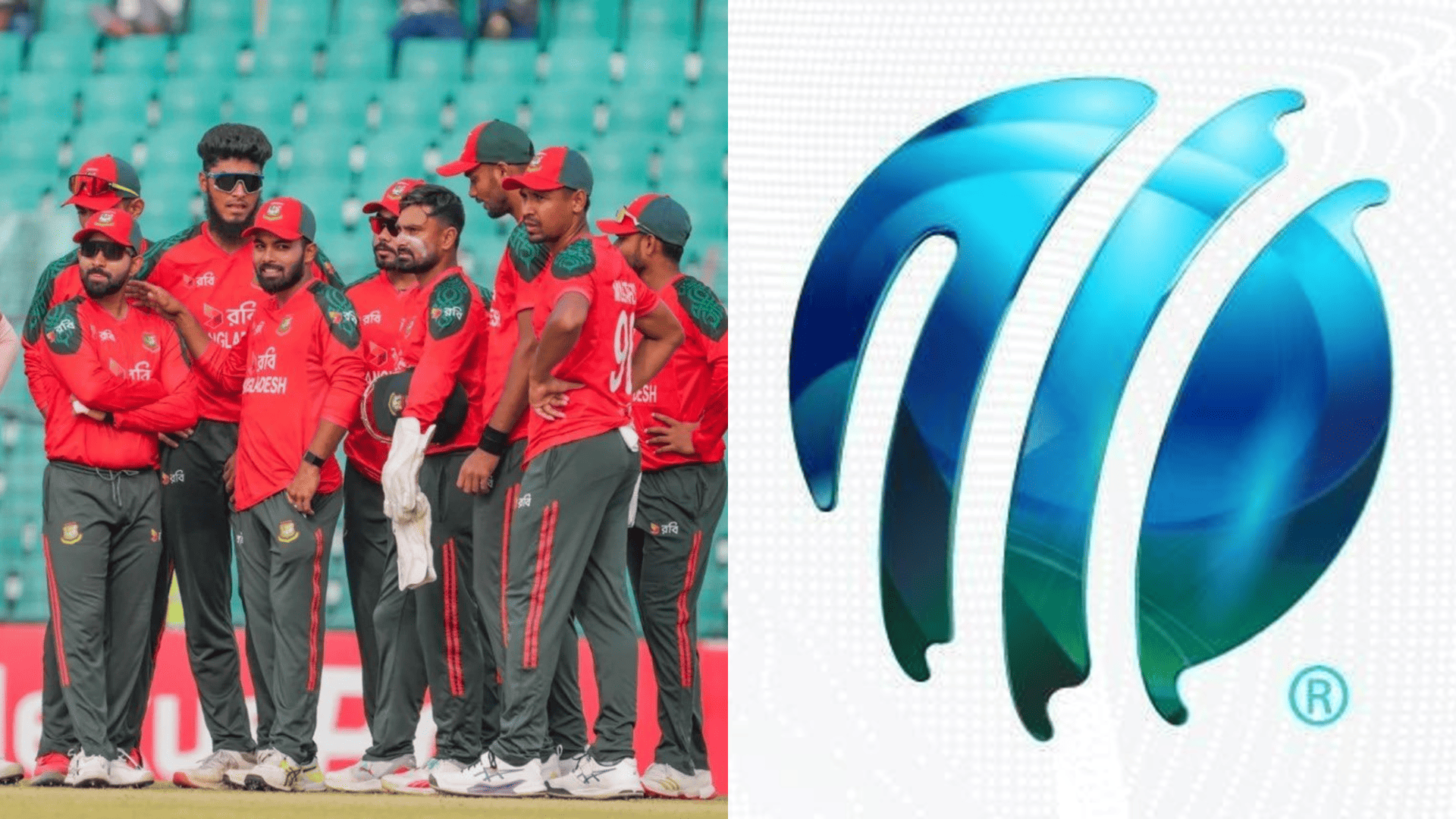
The standoff between the International Cricket Council (ICC) and the Bangladesh Cricket Board (BCB) over participation in the ICC Men’s T20 World Cup has triggered a governance crisis that goes far beyond a single tournament. The ICC’s refusal to alter venues, its rejection of a proposed fixture swap, and the unprecedented 14 – 2 board vote, authorising removal for non-compliance, represent a decisive shift in how global cricket is governed.
At a policy level, this marks the emergence of two schools of philosophy – one that is about governance where institutional rules and commercial stability override political context and the other is one where political considerations are inseparable from sporting participation.
Bangladesh’s refusal to play its scheduled World Cup matches in India was framed as a security concern, but its proposed solution …a venue swap with Ireland’s Sri Lanka fixtures represented something far more disruptive: the expectation that political discomfort should reshape tournament design. The ICC’s flat rejection and its subsequent 14–2 board vote signal a new doctrine. The tournament schedule is no longer negotiable. Participation is conditional on adherence, not preference.
The potential replacement of a Full Member by an Associate such as Scotland is historically unprecedented. It establishes a compliance-based hierarchy rather than a legacy-based one. This is not merely a disciplinary mechanism. It is a redefinition of membership value.
An equally revealing dimension is the aspect of Pakistan providing support to the Bangladesh Cricket Board. This political solidarity between boards points to a future where teams align geographically, tournaments fragment into ideological clusters and there is no place for a neutral stance. Such a model would weaken global broadcasting coherence, dilute commercial scale, and politicise fixtures.
The ICC’s decision to enforce rather than accommodate represents a calculated risk. It assumes that long-term system credibility outweighs short-term disruption. Failure to act would have entrenched a veto culture. Action, however, introduces the risk of fragmentation.
If I were to do some crystal gazing, I would say there could be geo political blocs – first one would be basis governance and commercial axis and could include the SENA countries, India, West Indies, Sri Lanka and the upward aligned associates like Scotland and the Netherlands. A second bloc basis resistance and sovereignty could mean Bangladesh, Pakistan, Afghanistan, possibly Zimbabwe and maybe the UAE, Oman. We would of course also have a non-aligned bloc, perhaps consisting of Nepal, the USA, Canada, Namibia, PNG, Hong Kong.
What’s more important is what this throws up going forward – bloc specific series, invite-only trusted nation events? Would it put a World Cup at risk then? This would also mean broadcaster splits and sponsorship values varying by political reach and not just audience size. Needless to say, the player alliances will also be impacted as fungibility becomes a challenge.
One way or another, the ICC could look at a dual hierarchy – one strong global system or multiple-aligned ecosystems under a loose federation. It is similar to what the United Nations faced post the cold war. A divided cricket world will not collapse. But it will shrink, harden, and politicise. And if that happens, then cricket becomes not a global language, but a regional dialect.
Follow Revsportz for latest sports news