



Harshit Rana. The name itself evokes a gamut of emotions, most of which revolve around him being at the receiving end of extreme trolling. On his part, Harshit seems to have charted a path to shut out the outside noise and focus on improving his game.
In the ongoing India-New Zealand ODI series, Harshit showcased his all-round skills by contributing a vital innings as India chased 301 in the first game, alongside taking a couple of wickets. A look at Harshit’s ODI record reveals his potential – the pace bowler has 22 wickets at a notable strike-rate of 25. But there’s a catch: his economy rate is also high, at 6.06. The key takeaway is that Harshit’s cricketing career is still very much a work in progress.
He does seem to have made progress under Morne Morkel and the coaching staff. One improvement is that Harshit isn’t offering width as often as he used to. Another is his growing ability to think on his feet. His “into-the-wicket” slower balls that stuck on the pitch, judiciously mixed with full and straight deliveries in the Vadodara ODI, spoke volumes about his development.
In the preceding ODI series against South Africa in Raipur, the way he watched Aiden Markram’s feet to deliver a slower ball wide of off stump further illustrated how he is upskilling his game.
The current Indian ODI side has another pace bowler with similar attributes – good pace, a hit-the-deck style, and a bit of swing and seam movement. That bowler is Prasidh Krishna. Like Harshit, Prasidh has faced social media trolling. To some extent, the criticism is valid: his economy rate, like Harshit’s, is 6.05.
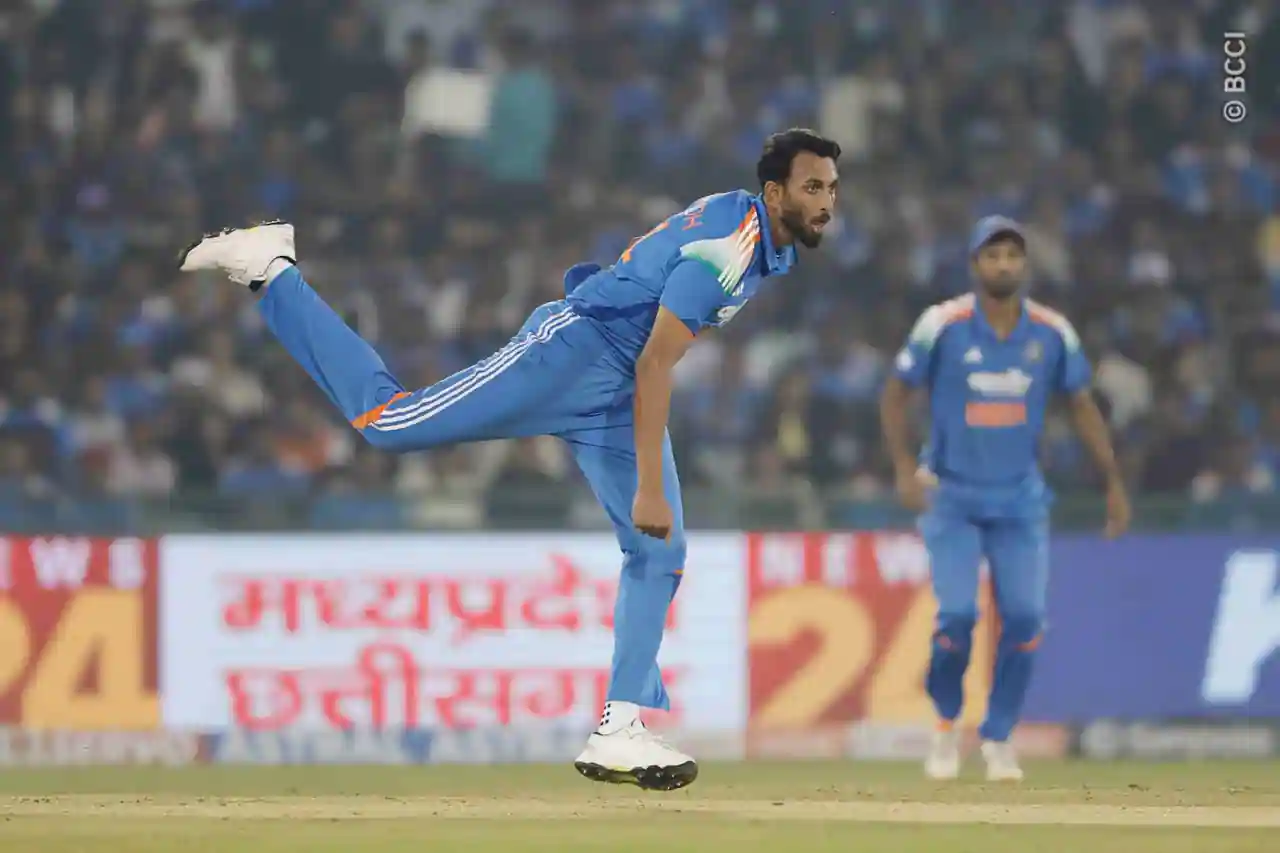
There are more similarities between the duo. Prasidh, too, is a genuine wicket-taker – 39 wickets at an impressive strike rate of 26.7 set the narrative. In the first ODI against New Zealand, he bowled a peach to Mitchell Hay, swinging in the air and nipping back just enough to rattle the stumps.
However, there is a key difference in limited-overs cricket: unlike Harshit, Prasidh is still looking to improve his variations. Neither his loopy slower ball nor his back-of-a-length deliveries seem to trouble batsmen consistently.
Over time, Prasidh has perhaps improved his mindset, yet there’s room for refinement. Take the Vadodara game, for instance, where his attempts to dismiss Daryl Mitchell with a slower back-of-a-length delivery and a quicker short ball proved ineffective. The larger point is that when the old ball is moving, why test the opponent with short deliveries? Even a glance at Shubman Gill’s expressions suggested that the India captain was slightly frustrated with Prasidh for not bowling to the field he had set.
Of the two, Harshit is probably ahead in the pecking order due to his batting ability. Despite a few missing pieces from their bowling jigsaws, the Indian management is backing these two tall, hit-the-deck pacers ahead of the 2027 World Cup in South Africa. The onus is on the duo to find those missing pieces to justify the faith shown in them.