






A 5-0 whitewash usually leaves little room for introspection, but for India, this dominant T20I series was as much about reassurance as it was about reminders. Against a limited opposition, India ticked several boxes, yet some long-standing concerns continue to shadow their preparations ahead of the next global challenge.
The biggest positive from the series was the form of India’s top four. Smriti Mandhana, Shafali Verma, Jemimah Rodrigues and Harmanpreet Kaur all registered at least one half-century across the five matches. Shafali, the Player of the Series, finished with 236 runs, including three consecutive fifties, underlining her growing maturity without losing her natural aggression. Mandhana’s fluent 80 in the fourth T20I was equally significant, while Harmanpreet’s 68 in the final game was a timely reminder of her finishing ability. Jemimah, too, delivered a match-winning knock in the first T20I, adding to the sense that India’s top order is entering the new year with confidence and momentum.
Another major positive was the emergence of Vaishnavi Sharma. Her ability to vary pace, hold the ball till the last moment and adjust her lengths based on batters’ intentions stood out. That level of control is rare and invaluable in T20 cricket, and Vaishnavi’s composure augurs well for India’s bowling depth.
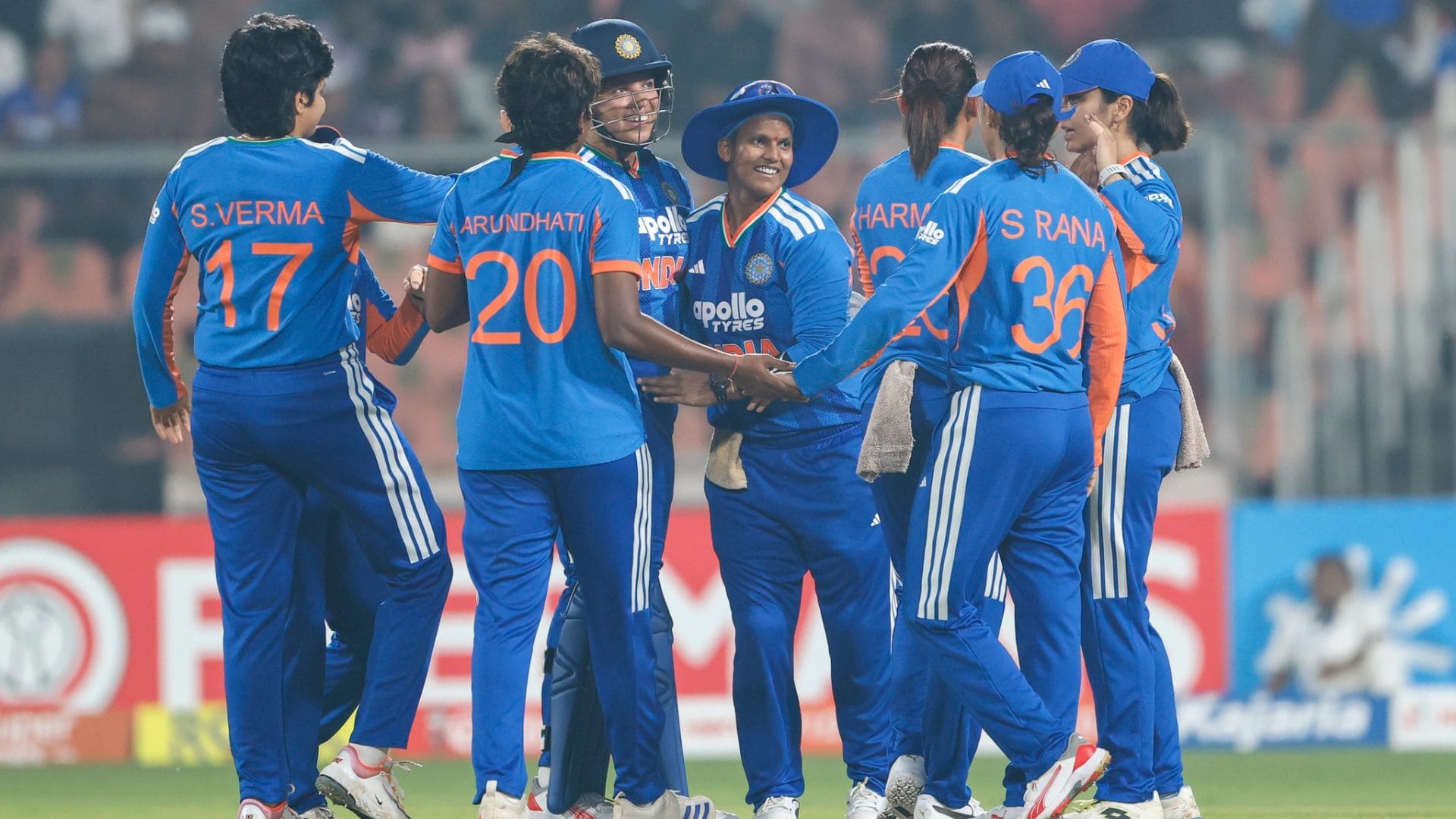
India also benefitted from the consistent contributions of their bowling all-rounders. Arundhati Reddy’s spell in the final match, including the key wicket of Chamari Athapaththu and 27 unbeaten scored off 11 balls, highlighted her growing reliability. Amanjot Kaur impressed with the ball whenever used, reinforcing the sense that India’s bowling line-up is largely settled. Ideally, one more pace-bowling all-rounder would strengthen the squad, especially with English conditions in mind, and the upcoming WPL could provide that answer.
However, not everything was perfect. Fielding remains India’s biggest headache. Dropped catches and misjudgements cropped up repeatedly through the series, with errors from players like Deepti Sharma, Smriti Mandhana, Sree Charani and wicketkeeper Richa Ghosh highlighting an issue that has lingered for many years now. Lighting conditions or dew cannot be used as excuses in modern T20 cricket, and fielding remains an area demanding urgent attention.
The middle order, meanwhile, remains largely untested. With the top four doing most of the scoring, batters like Richa Ghosh and Amanjot had limited opportunities. While dominance at the top is a luxury, India would prefer greater match exposure for their middle and lower middle order before touring Australia and England.
There were also questions around bench strength. Young G Kamalini was given just one opportunity, despite showing promise. With the series wrapped up early, India could have afforded more rotation.
Still, this series will be remembered as a fitting end to a historic year. Fresh off their maiden ODI World Cup triumph, India have finished 2025 on a high. And if one player symbolises that journey, it is Deepti Sharma, who ends the year as the leading wicket-taker in women’s T20Is, a quiet but emphatic statement of her evolution.
The foundation is strong. Now, refinement is key.


Follow Revsportz for latest sports news
Also read Deepti Sharma: The Quiet Constant Becomes Women’s T20I Leading Wicket-Taker