




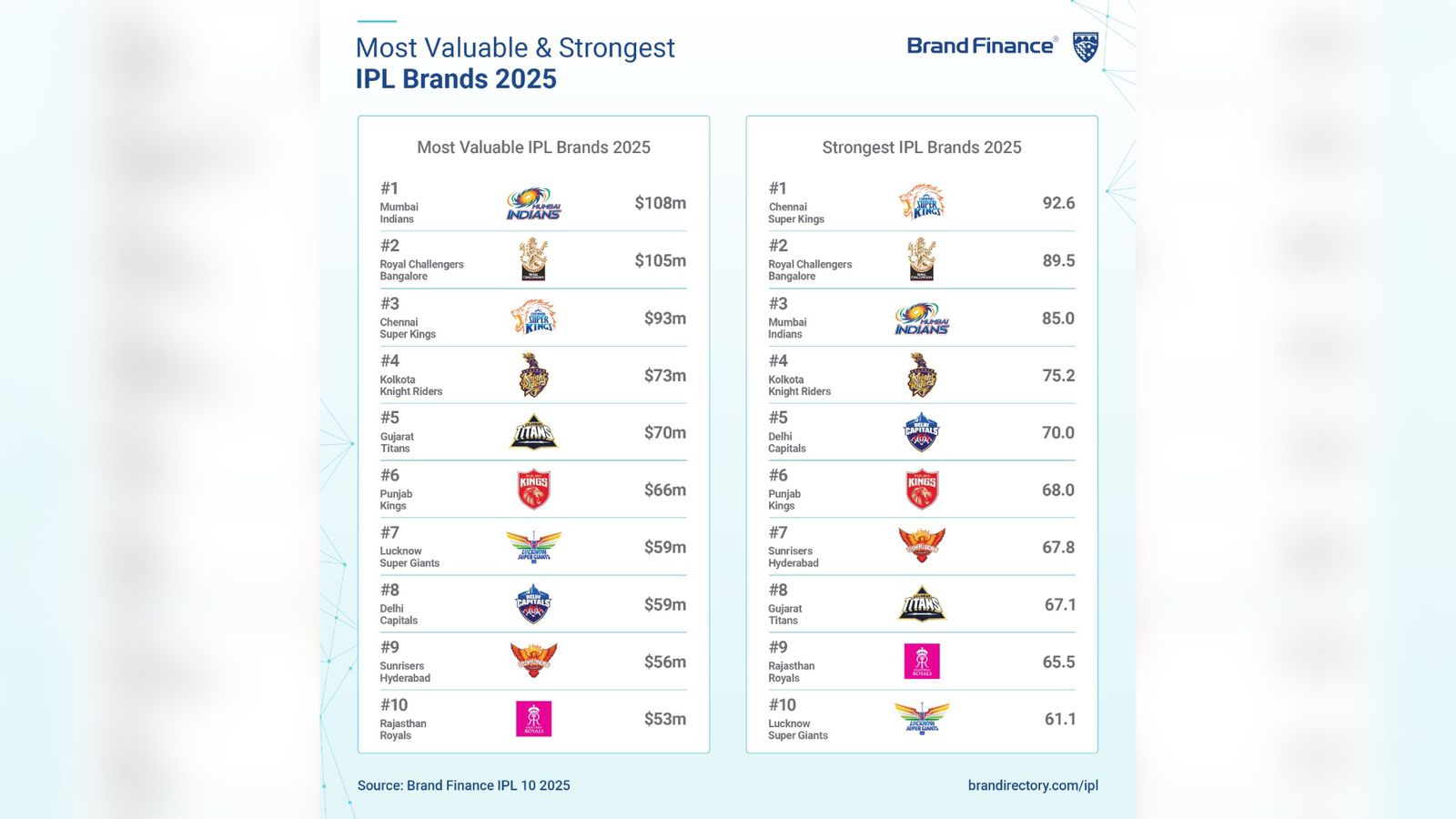

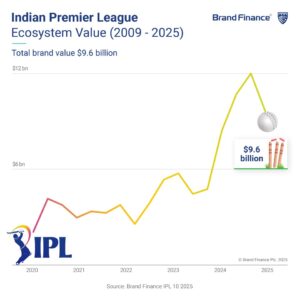
The latest Brand Finance report has delivered the first jolt to the IPL’s booming valuation curve in years — a 20% drop in ecosystem value from $12.0 billion in 2024 to $9.6 billion. For critics, this might look like the bubble wobbling. For investors, especially those circling global sports IP, this is exactly the kind of inflection point from which fortunes are made.
Let’s be clear: this is not a demand crisis. Nor is it a decay in relevance. The primary drivers of the dip are exogenous — geopolitical instability causing suspension of matches, and the uncertainty induced by the mega-auction reshuffle. Both are temporary. What is enduring is the unmistakably upward trajectory of India’s sporting economy and IPL’s cultural dominance.
Even in a disrupted season, the IPL recorded 384.6 billion minutes of watch time online. No global sports league save for the NFL commands this scale of attention across platforms. And the brand still posted its second-highest valuation in history. This is not decline…it’s a reset.
Mumbai Indians top the value charts at $108M, and continue to broaden their fan base through digital-first engagement. Royal Challengers Bangalore have achieved the breakthrough moment once thought improbable — a maiden title after 18 years, vaulting them to #2 in value and #2 in brand strength. Chennai Super Kings, despite on-field hiccups, remain the strongest franchise brand in the league for the third straight year. That loyalty is priceless. These three franchises hold different cultural appeal — blue-collar grit, pop-culture fandom, and legacy leadership. That portfolio effect is what makes IPL a magnet for capital: investors buy into multiple fan psychologies at once.

While the men’s league consolidates, the Women’s Premier League is accelerating with sponsorship revenue up 10-20% at franchise level and over 70 brands betting on women’s cricket already. This is where the runway lies — new fans, new geographies, new advertisers. It is the hedge every PE fund dreams of.
Global private equity has already poured billions into cricket: CVC into the Gujarat Titans, RedBird Capital’s investments in other cricket assets and Multi-club ownership models emerging worldwide. They see what the world is only waking up to: IPL is not India’s domestic league; it is the world’s second-largest sporting economy in the making.
The valuation drop isn’t a warning sign. It’s price discovery. A short-term dip but long-term demand guaranteed by India’s economic surge, new global markets (UAE, SA, USA) adopting the league, digital monetisation just scratching the surface and franchise revenues diversifying beyond matchdays. The real question isn’t whether valuation rebounds; it’s how fast and how high. With the media cycle restructuring looming and new expansion markets in play, this is arguably the best entry window we’ve seen since 2020.
If anything, this dip is the calm before the next storm of growth. As India doubles down on its digital-first fan base, media rights recalibrate to streaming realities, and WPL unlocks new audiences and advertiser categories, the IPL is poised to evolve from a cricket league into a global entertainment asset with multi-billion-dollar adjacencies — gaming, lifestyle commerce, hyperlocal fandom, and AI-driven personalisation.
Private equity will not miss this moment. Expect new capital, new ownership structures, and possibly new franchises to enter the fold. The valuation chart may have bent this year but its long-term trajectory still points only one way: upward, outward, and unmissably global!


Follow Revsportz for latest sports news