



At the outset, let’s be very clear about one thing. The vast majority of fans want to see their sporting heroes perform on the field or court. When they get behind a microphone and start dispensing life advice, the most common reaction is discomfort. When the opinions expressed extend to politics and society, the divide becomes even more stark. Activism cost Colin Kaepernick his NFL career, which included a Super Bowl appearance at the age of 25.
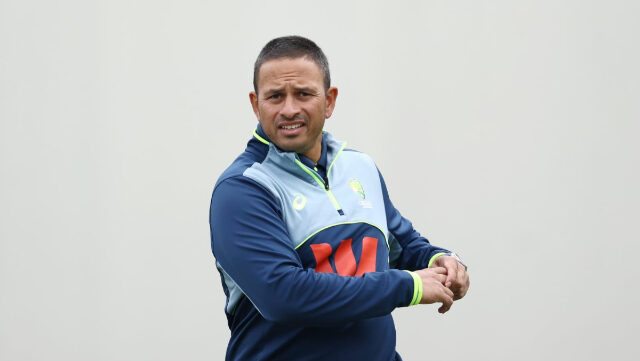
Usman Khawaja has always worn his heart on his sleeve, one reason why so many South Asian immigrants in Australia relate to him. But those forthright and robust views have also put him in the cross-hairs of millions of others who resent how the country has moved so far away from the White Australia policy that held sway for the first half of the 20th century.
Is Australian cricket inherently racist? Probably not. Even Khawaja spoke at his retirement of how much things have changed since he was a young boy growing up and feeling excluded by the larrikin culture that prevailed in Grade cricket and beyond. But is there more to be done? Of course.
This is hardly an Australian problem either. Viv Richards and Gordon Greenidge first played county cricket in England over half a century ago. Richards, in particular, has spoken passionately about the stereotypes that roused him to become the most dominating batter of his age. The late Tony Greig is often singled out for his ‘grovel’ comment, but West Indies’ rage at what he said was a culmination of decades of discrimination and lazy typecasting.
The fervour with which Indian and Pakistani fans failed the infamous Tebbit test in the 1980s, and even later, was a direct consequence of the racism unleashed by Enoch Powell and his followers. It was also an indictment of how excluded most Asians felt in the English cricket establishment. The Azeem Rafiq scandal that tore Yorkshire cricket apart a few years ago was the culmination of years of sweeping big issues under the carpet.
What didn’t sit right about Khawaja’s statements was how he name-checked his teammates to point out media bias. Yes, some of the coverage of his Perth injury was disgraceful – Steve Smith agreed with that assessment on the eve of the Sydney Test – but was there any need to bring in ‘poor Josh Hazlewood’ and ‘poor Nathan Lyon’?
Remember that this is a team that has gone out of its way to make Khawaja feel part of the group. After the Ashes win in 2021-22, Pat Cummins halted the champagne-spraying celebrations so that Khawaja – a practising Muslim – could stand alongside his teammates. And when Australia lifted the World Test Championship (WTC) in 2023, Khawaja mocked Nigel Farage’s criticism of no champagne by posting a picture drinking Diet Coke and talking of a new Australia.
To attribute all of Khawaja’s travails across a 15-year international career to racism would be lazy in its own way. As Smith gently pointed out on the eve of the Sydney Test, there were sound cricketing reasons for leaving him out of games in the subcontinent in the first half of his career. He simply hadn’t worked out an effective method to play spin, and it was only after going back to the drawing board that he became Australia’s most accomplished batter against the turning ball, after Smith.
Khawaja, apart from being a skilful and attractive batter, was a pioneer for Australian sport – the first south Asian and first Muslim to wear the baggy green. It’s not for us to question his lived experiences, which he speaks so passionately about, but hopefully, the post-Sydney celebrations – with or without champagne – will be less about an individual and more about a band of brothers who just keep winning the games that matter, even as they try to change with the times.

Follow Revsportz for latest sports news