


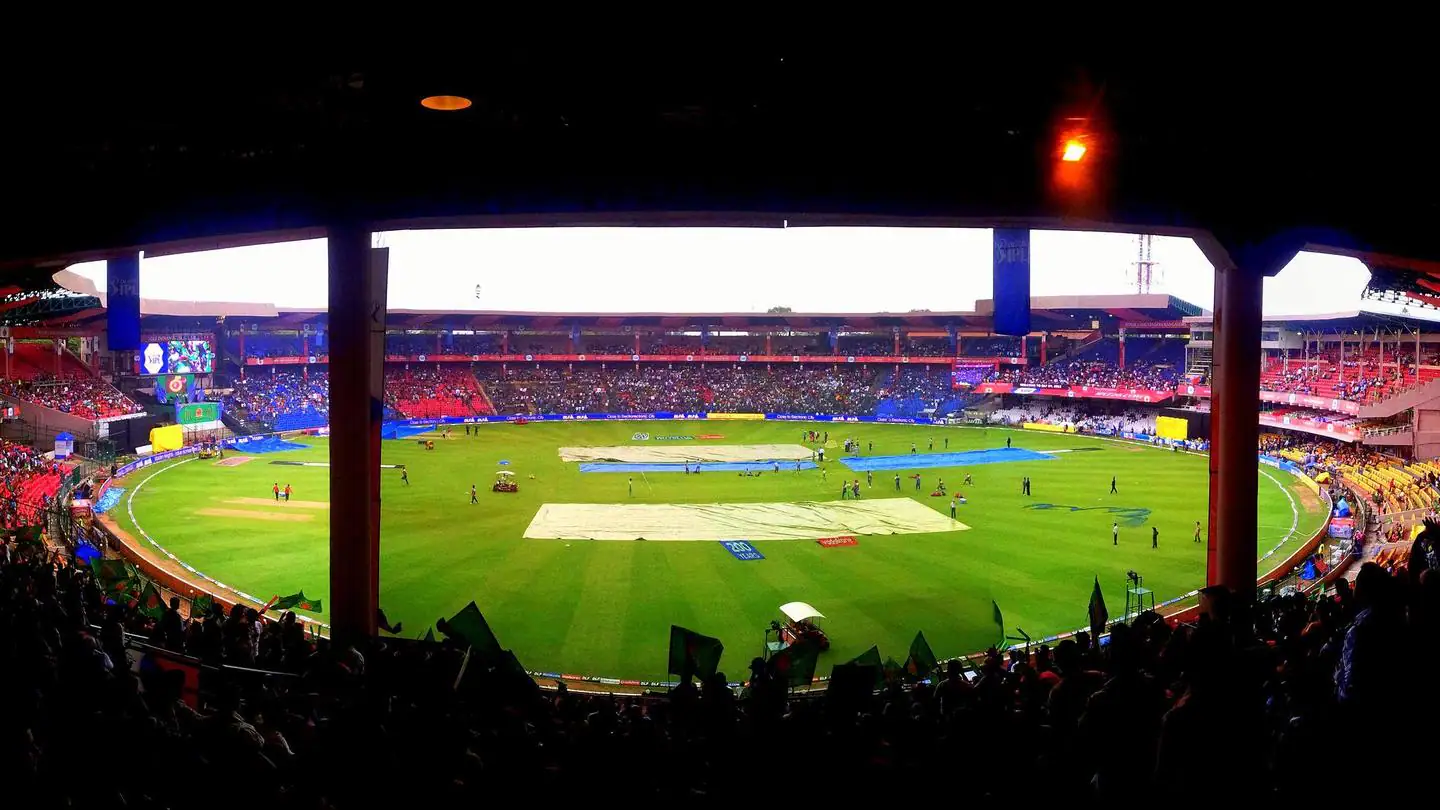
“We are confident that the government will soon accept our request and give us the good news,” Venkatesh Prasad, the newly elected KSCA president, told reporters when asked about international, IPL and domestic matches returning to Chinnaswamy Stadium. In the aftermath of the tragic events during RCB’s victory celebrations near the venue, the iconic ground hasn’t hosted a single cricket match.
With Prasad taking over, there is renewed hope that Chinnaswamy will once again stage major fixtures. But a fundamental question remains: Is a stadium built in the 1970s safe enough for events involving massive crowds?
The Michael D’Cunha Commission had underlined serious concerns, noting: “The design and structure of the stadium was unsuitable and unsafe for mass gathering. Given these systemic limitations, (the commission) strongly recommends that stadium authorities consider relocating events that are expected to attract large crowds to venues that are better suited for such gatherings.”
It further stated: “Until such infrastructural changes are made, continuing to host high-attendance events at the current location poses unacceptable risks to public safety, urban mobility and emergency preparedness.”
It is important to note that the stadium premises were not the only factors blamed for the loss of lives. Poor crowd management and an inadequate police presence also contributed to the unprecedented tragedy. Having visited the stadium on numerous occasions, in different capacities, the writer can attest to the commission’s observations.
For starters, the main gate and most other gates of the stadium open directly onto the busy Queen’s Road. During certain matches, one side of the dual carriageway is closed to heavy traffic, but the side adjacent to the stadium remains open. The result is a massive rush on the footpaths, with residents and cricket fans forced to navigate through moving traffic.
Further along, fans would encounter a peepal tree or two on the footpaths. During an IPL game, it could come down to a balancing act to weave past the trees. And when it rains, spectators might have to run helter-skelter through the traffic to find shelter. There are parking issues as well.
One can imagine the state of the roads outside Chinnaswamy during the victory celebrations. With more than 2 lakh fans streaming towards the stadium, chaos was inevitable. Around half a kilometre away, over-enthusiastic fans were even climbing buses and lorries to catch a glimpse of their heroes.
Now compare this with a modern-day cricket stadium, where vast open spaces outside the venue reduce congestion and provide breathing room for fans to walk and queue comfortably.
In this context, DK Shivakumar, the deputy chief minister of Karnataka, said: “We have no intention of stopping cricket matches at Chinnaswamy Stadium, but we have to think of crowd control measures. We will also have to incorporate Michael D’Cunha Committee suggestions in a phased manner. Venkatesh Prasad has also agreed to it. Our government is committed to organising cricket matches without denting the reputation of the state.
“The newly elected president of KSCA and his team met us today, seeking the government’s cooperation. We will not allow any matches, including IPL events, to be shifted out of Bengaluru. We will have to work together on this,” he added.
A few months ago, the government also considered constructing a new stadium in Anekal, Bommasandra. But building a state-of-the-art venue will take time. For now, the focus of the newly elected KSCA members and the state government is to bring cricket back to Chinnaswamy. For fans, that is undoubtedly good news. But safety concerns linger. With the stadium located in the heart of the city, it is difficult to envisage major restructuring.

For More Sports Related News: Follow RevSportz