


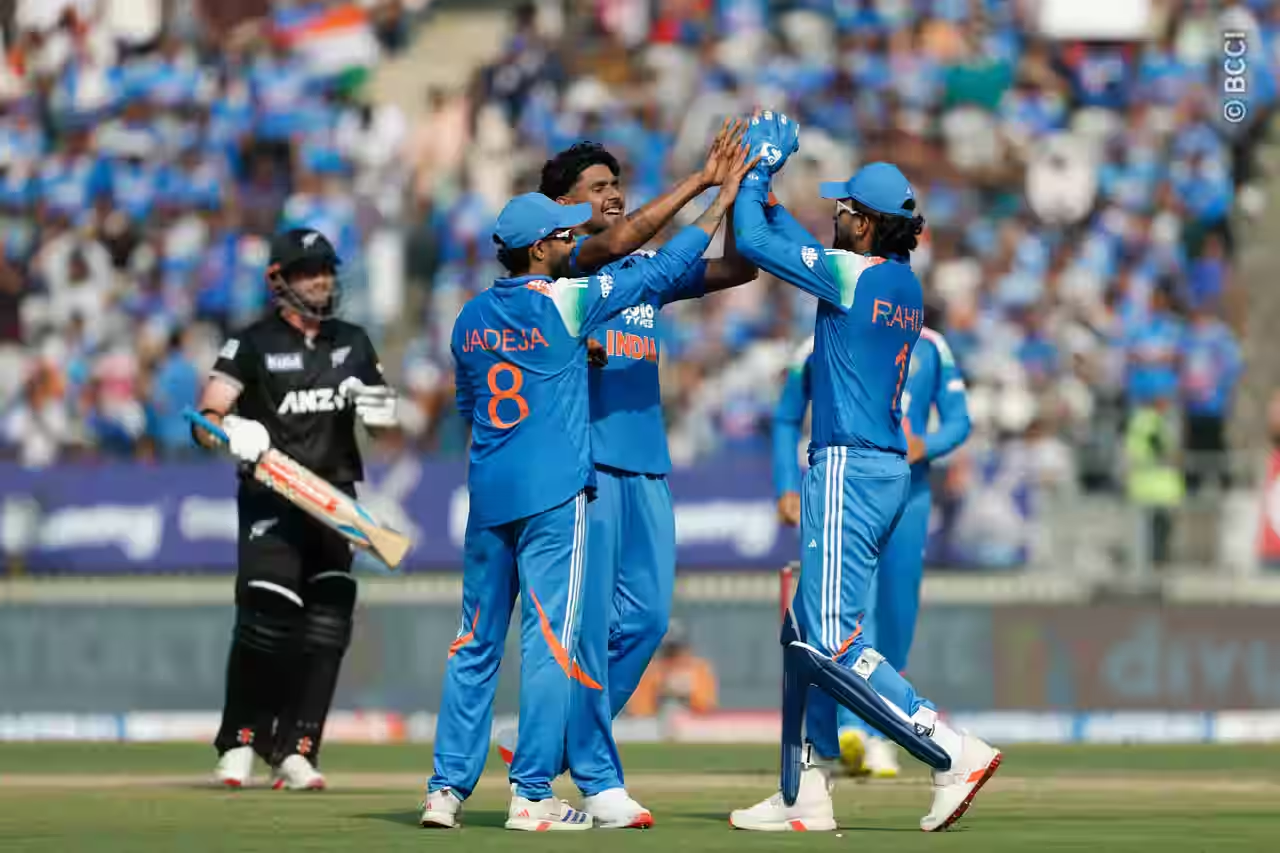
‘The conditions were too much in favour of the batters.’ This is a constant complaint against modern-day ODI cricket. We saw enough evidence of it in the recently concluded India–South Africa series, where, in the first couple of games, both teams ended up with monstrous totals. At times, it makes the sport a bit boring when it is all about a bunch of batters accumulating hundreds. Granted, T20 cricket is more about fours and sixes. However, the 50-over format would be better off with a more even contest between bat and ball.
In that respect, it was a pleasant surprise to note that the pitches laid out for the first two ODIs between India and New Zealand had something on offer for the bowlers. Take into consideration the second ODI in Rajkot: the white Kookaburra ball nipped around for six to eight overs. With a bit of variable bounce also on display, it kept the bowlers interested for large parts of the innings.
Even in the first game in Vadodara, the pitch had just enough assistance for the spinners. With the change in rules relating to two Kookaburra balls being used after the 34th over, there was a hint of old-ball swing as well. The resultant outcome was that the inexperienced New Zealand bowlers were able to put some pressure on the Indian batting unit, and it turned out to be a hard-fought contest.
At a macro level, ODI cricket has bigger problems. It is struggling to compete with the fast-paced nature of T20 cricket. With batters also taking more risks in the shortest format, bowlers are brought into play by default. Simply put, there are more chances of sudden twists and turns in the shortest format of the game. Meanwhile, Test cricket has a rich legacy and history.
Therefore, there is enough for the head honchos at the ICC to ponder when it comes to keeping the ODI flame burning. Rebalancing the equation between bat and ball, at least to some extent, is one of the key elements that could make the format more interesting.