


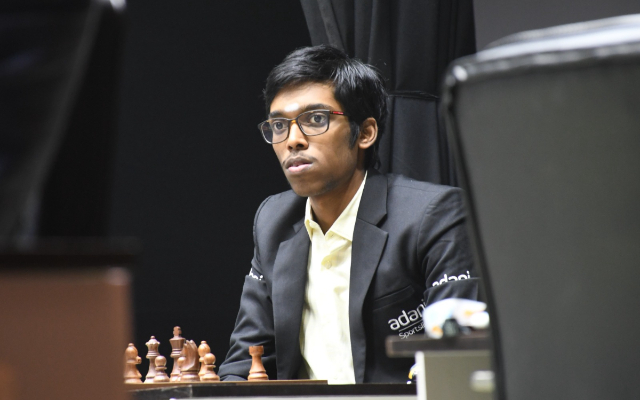
Looking forward to the Tata Steel Masters beginning today (January 17, 6.30 pm IST), R Praggnanandhaa made an observation. “The field this year looks extremely interesting and probably one of the youngest too,” he posted on social media.
The defending champion at the year’s first and one of the biggest classical chess competitions is spot-on. Representing a bunch of Indian youngsters last year, he won this title in Wijk Aan Zee in the Netherlands when he was six months short of 20.
In the 88th edition of this tournament this year, the field is remarkably younger. The average age of the 14 participants is 22.12. This was 25 in 2025. Last year, there were four players aged 30 or above. This time, that number is two.
D Gukesh and Leon Luke Mendonca of India were the youngest players last year at 19. Turkiye’s Yagiz Kaan Erdogomus, who will turn 15 in June, is the youngest in 2026. Eight of the contestants are 23 or below. That’s a super-young field for a super-strong event with an average ELO rating of 2723.28.
This is not an isolated development. For years, some of the most outstanding chess talents have been youngsters. Of late, their surge is unmistakable. The winners of some of the biggest prizes in chess in the last few years were teenagers.
Gukesh was the youngest-ever world champion in classical at 18. Volodar Murzin of Russia became the second-youngest to take the rapid crown at around the same age a few days after that. Uzbekistan’s Javokhir Sindarov won the World Cup last year when he was 19-plus. Divya Deshmukh became the women’s World Cup champion at the same age.
The Indian example explains this phenomenon. Gukesh, Arjun Erigaisi and Praggnanandhaa became global head-turners when they were teenagers. Nihal Sarin was not far behind. The 2024 Olympiad gold was celebrated. It was forgotten that the 2022 bronze was clinched by this bunch, when they were younger. Promising to world beaters – this transformation in the profile of Indian chess players was driven by them.
This is of course not restricted to India. Some of the best players in the world from other countries – Vincent Keymar (No. 4, Germany), Alireza Firouzja (No. 7, France), Nodirbek Abdusattorov (No. 12, Uzbekistan) – are all 22-23. They became well-known when they were teenagers.
This is also the era of some unbelievably young prodigies. Erdogmus made headlines by holding Gukesh to a draw in last year’s Grand Swiss meet. In the same tournament, the 16-year-old Abhimanyu Mishra of USA upset the world champion. Argentine wonder kid Faustino Oro is in reckoning to become the youngest-ever Grandmaster in the world.
The annual event in Wijk Aan Zee is one of the oldest tournaments. This year, it will celebrate the advent of youth challenging notions and changing perceptions. Age is not just a number in chess anymore. It’s an indicator of exuberance and excellence.

For More Exciting Articles: Follow RevSportz