





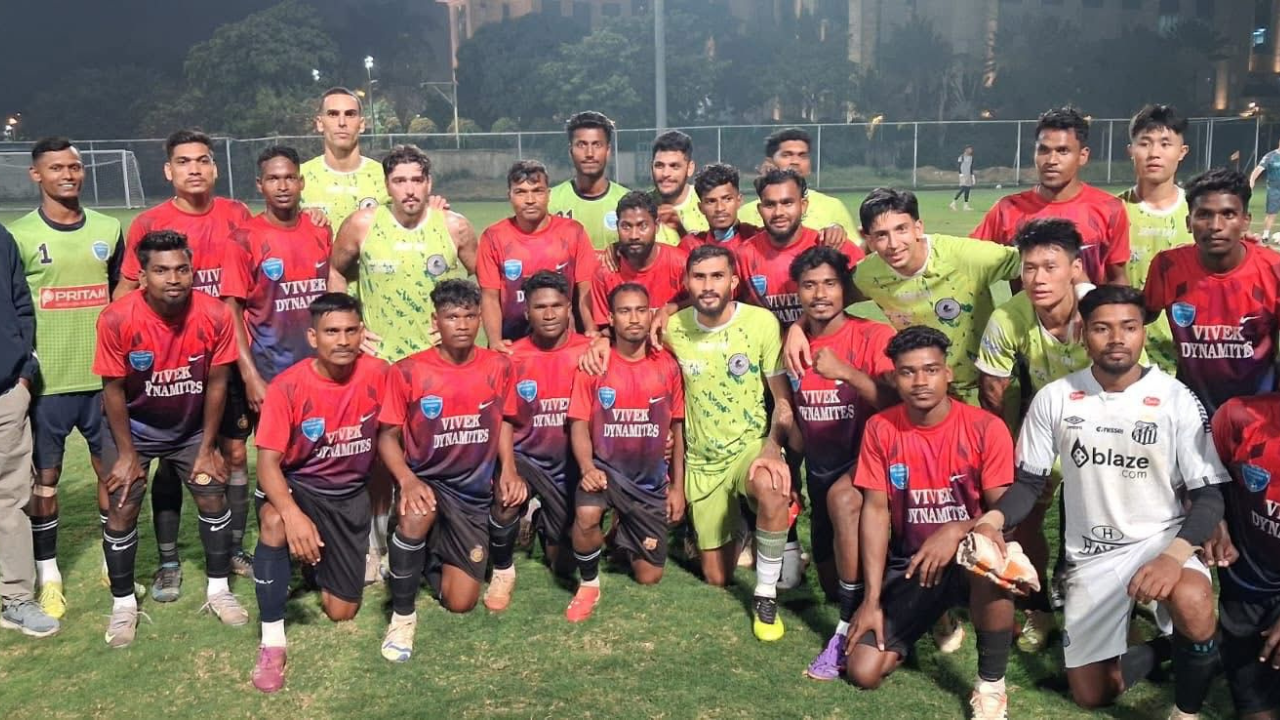
In Manbazar, a remote village in Purulia that falls under the Jangal Mahal belt, football is far more than a sport. Here, it is a dream, an aspiration and, for many children, a possible escape from a life with limited opportunities.
At the heart of this quiet revolution is the Vivekananda Football Academy, a small set-up with a big purpose: to turn raw passion into structured training, and hope into something tangible. What makes the story even more powerful is that girls are not left on the sidelines. They train alongside boys, play with the same intensity and, in doing so, are slowly reshaping the community’s perception of gender equality.
“This is not just the story of an academy,” says one of the coaches. “It is the story of dreams – the dreams of tribal children who want to be seen, heard and supported.”
A Place Where Football Becomes a Daily Routine
Children from distant corners of Purulia – some from villages without even proper concrete roads – come to the academy to train. The age group ranges from eight to 18, and the sight of boys and girls training together has become increasingly normal within the academy premises, even if it still feels unfamiliar to the outside world.
Most of these children come from humble backgrounds. In many households, life follows the same routine every day. Girls wake up early, help their parents with household work and often have little time left for anything else. For years, football was not even a possibility they could imagine.
But things are changing.
Training sessions are now part of their daily schedule. Some children go to school after practice, while others return for training once their classes end. It is exhausting, but the joy of playing keeps them going.
For Gurumani Hembram, one of the academy’s young footballers, the dream is clear.
“I dream of seeing myself wearing the National team jersey,” she says. “I know that if I work hard, my effort will be rewarded. I recently played in the Kanyashree Cup in Kolkata.”
In a region where opportunities are limited and ambitions are often forced to stay small, such words carry weight.
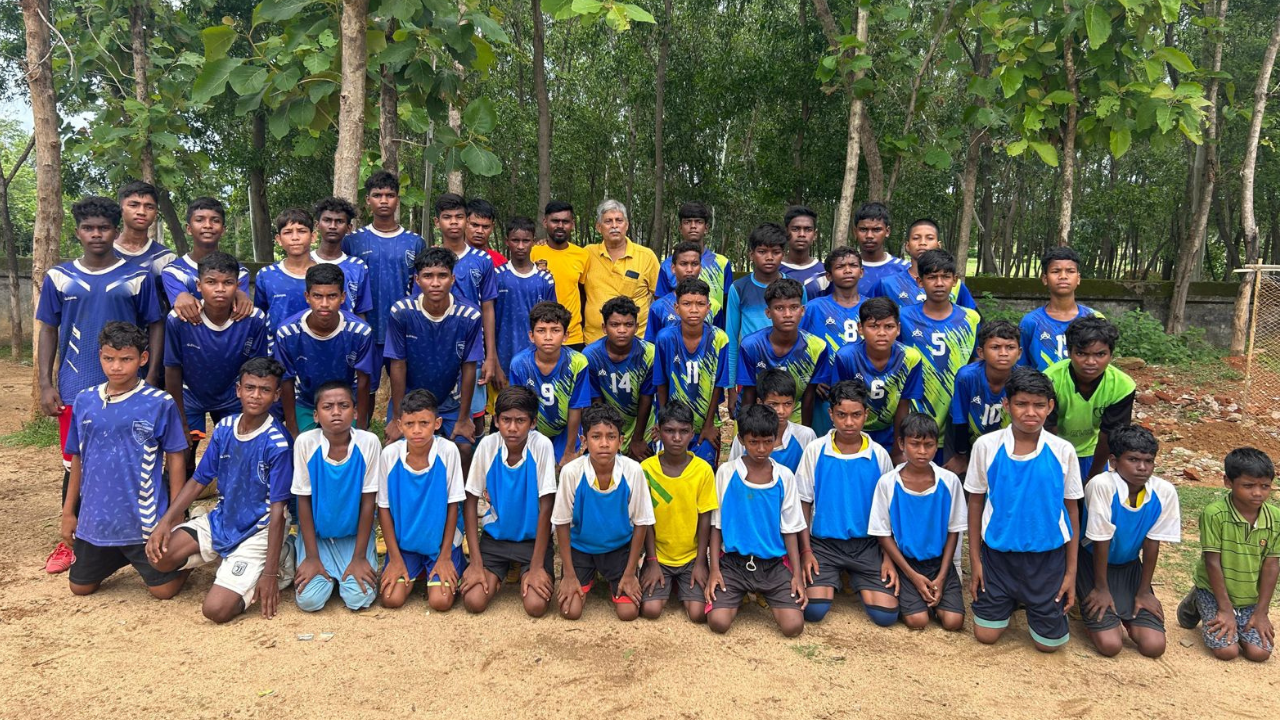
An Academy Born During the Pandemic
The academy’s beginnings were not part of a carefully planned project. It started almost impromptu, driven by a few far-sighted individuals and supported by enthusiastic local youth.
The torchbearer of this initiative is Dr Prasanta Mahato, an orthopaedic surgeon and Assistant Professor at a medical college in Purulia. A football lover since his school days, Mahato led his college team and continued playing regularly in his village.
The turning point came during the Covid-19 pandemic.
With migrant workers returning home and daily life slowing down, village fields became gathering points. Football games began taking place regularly.
“That’s when it struck me,” Mahato recalls. “Why not organise this in a more professional way and start a football academy to provide proper training to aspiring children from the village?”
That thought soon became reality, and since then the academy has continued to grow – not just in numbers, but in purpose.
Training Without Salaries, Driven by Belief
One of the most striking aspects of Vivekananda Football Academy is its commitment despite limited resources. Coaches train children without taking salaries. Their focus extends beyond the basics of football to discipline and character-building.
Training emphasises technical development, team unity, physical conditioning and what they call a never-say-die attitude. The aim is not just to produce footballers, but resilient individuals.
Mahato understands that football cannot be taught through passion alone.
To become a footballer, a child needs kits, proper nutrition and basic essentials that many families cannot afford. Mahato and his team do their best to arrange whatever support they can.
This is why the academy has become more than just a training ground. For many children, it has become a second home.
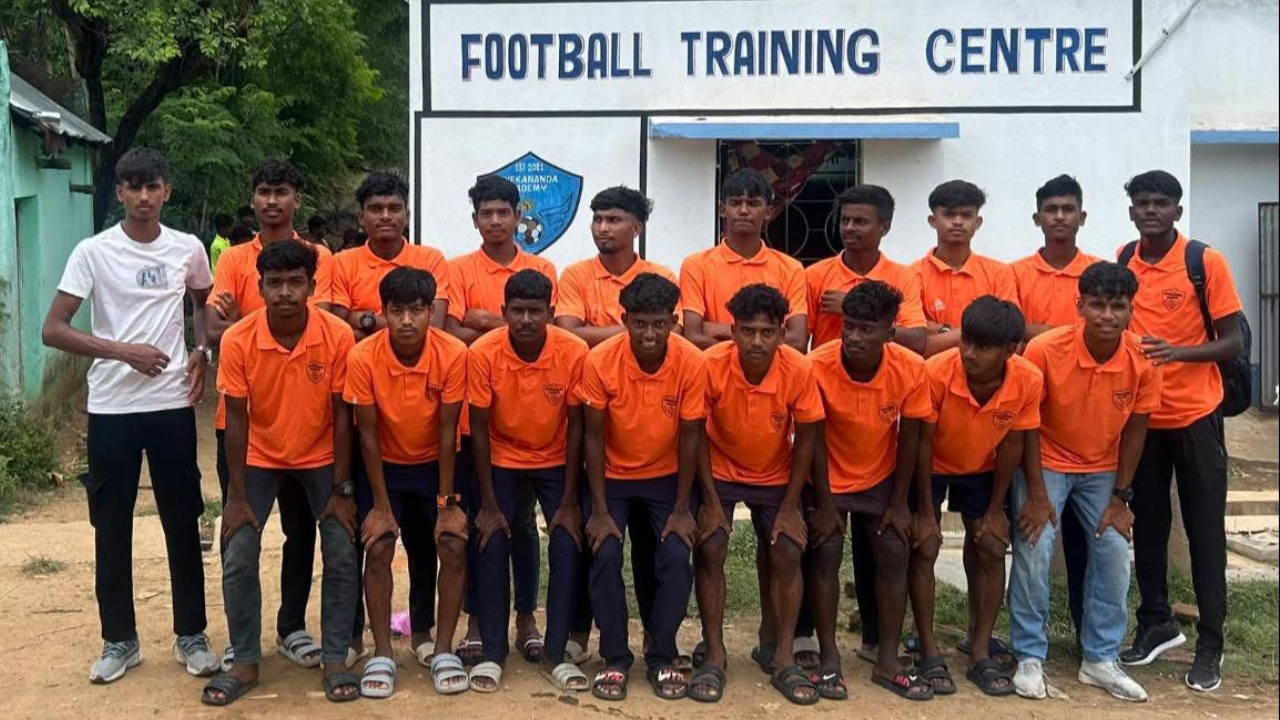
The Moment They Knew They Were on the Right Path
The academy’s efforts began to gain attention when one of its graduates, Subal Tudu, received a call-up to the Kerala Blasters youth team.
Subal, who was born in Jhargram, came for trials in 2021. He was selected and trained at the academy for six months. Soon after, he got the opportunity to play in the Reliance Youth League for Adamas United, which opened doors to bigger opportunities.
Today, Subal is part of the Mohun Bagan Super Giant reserve team, playing in the ongoing Reliance Football Development League (RFDL).
His journey, however, is also a reminder of how difficult the path can be.
“Subal Tudu rode a bicycle for 30 km from his village to catch the only night train available to reach Kolkata Maidan for his trial,” Mahato says.
More Than One Success Story
Subal is not the only success story from the academy.
Marshal Hembram has played for East Bengal’s U-17 team. Sekhar Sardar went on to become the top scorer for East Bengal youth. Bijay Murmu currently represents the East Bengal reserve team in the RFDL and is also playing for West Bengal in the ongoing Santosh Trophy.
There are others too.
“Apart from Subal and Sekhar Sardar, we have players representing Diamond Harbour FC and United Sports,” Mahato says. “More than 40 players from our academy are playing at Kolkata Maidan.”
For a rural academy in Purulia, these numbers reflect not just talent, but the scale of its ambition.
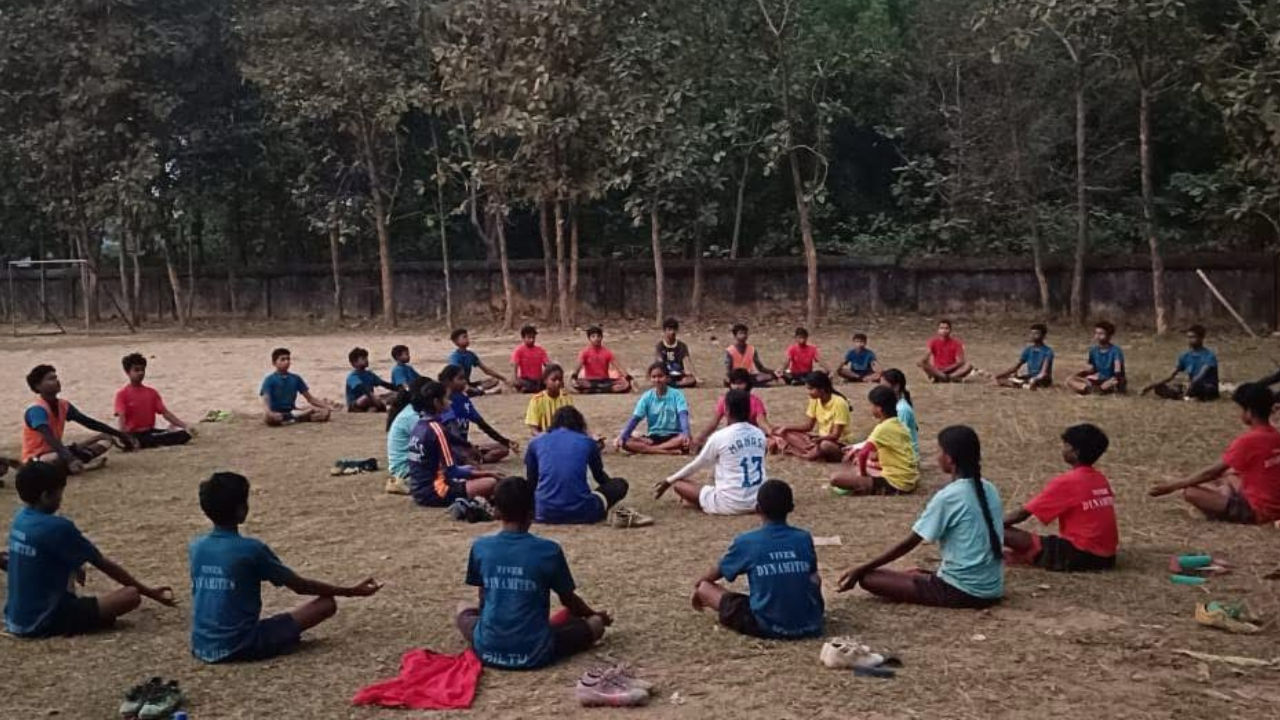
Jangal Mahal’s Football Passion — and the Lack of Facilities
Mahato believes the region’s passion for football is unmatched.
“People in Jangal Mahal love football,” he says. “Their energy and passion for the game are extraordinary, but they lack proper facilities.”
Even basic resources can be a challenge.
“In a practice match with the ball, we played against Mohun Bagan,” he adds. “Our boys had never played with such a high-cost ball before.”
Last week, the academy team played a practice match against Mohun Bagan’s senior side, largely comprising U-21 players. They lost 6–0, but for the academy players, the scoreline did not define the experience.
For some, it was a once-in-a-lifetime moment.
“Some of our players are ardent Mohun Bagan supporters,” Mahato says. “They even worship Jason Cummings and Dimitri Petratos. So it was a dream-come-true moment for them. I am grateful to Mohun Bagan for giving us this opportunity.”
A Battle Beyond the Field
Despite the progress, challenges remain. Convincing parents to allow their children to pursue football seriously is still difficult, especially in a region where stability often matters more than dreams.
But the academy draws hope from examples like Bijay Murmu.
“It is sometimes difficult to convince parents,” Mahato admits. “But Bijay Murmu from our academy is playing in the Santosh Trophy, where he stands a chance of securing a job. We want more such players so that we can inspire many more children.”
The academy survives with support from well-wishers – school alumni groups, the Arsenal Bengal Fans’ Club and even individuals from abroad. However, this support is not consistent.
“We do receive help, but it is not stable or sustainable,” Mahato says. “That is why we are looking for CSR funding that can support us in the long term.”
Small Academy, Big Dreams
For now, Vivekananda Football Academy continues its work quietly and steadily, fuelled by belief. It is not a glossy set-up, nor does it boast grand infrastructure. But it has something far more valuable: children who show up every day, ready to run, learn and fight for their dreams.
As Mahato puts it, the academy’s mission is simple – to create a springboard for talented children who might otherwise never get the chance. Because in Manbazar, football is not just a game. It is a way forward.
Also Read: Mithila Ramani: Balancing Academics, Football and India’s First Women’s Futsal Dream