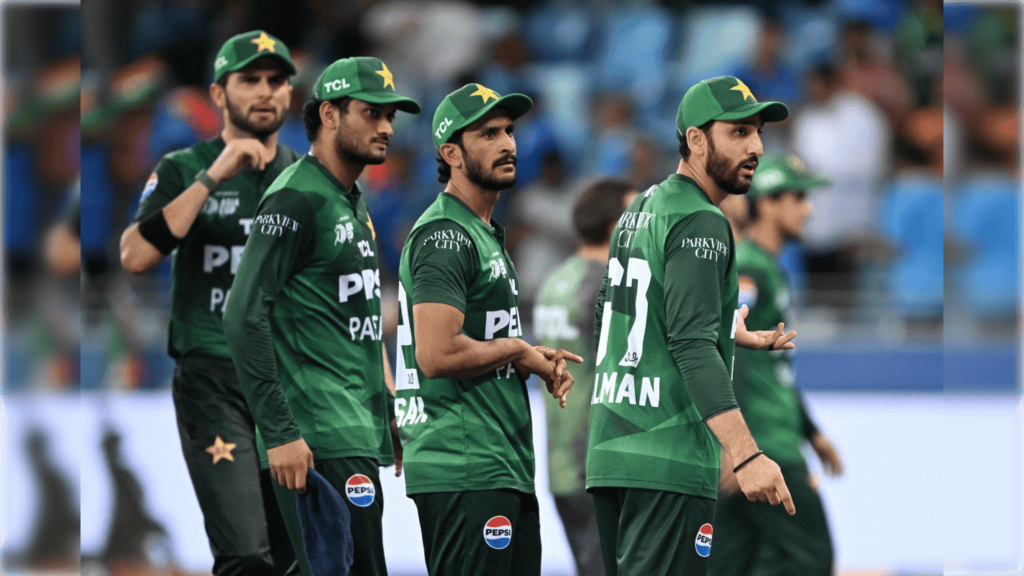






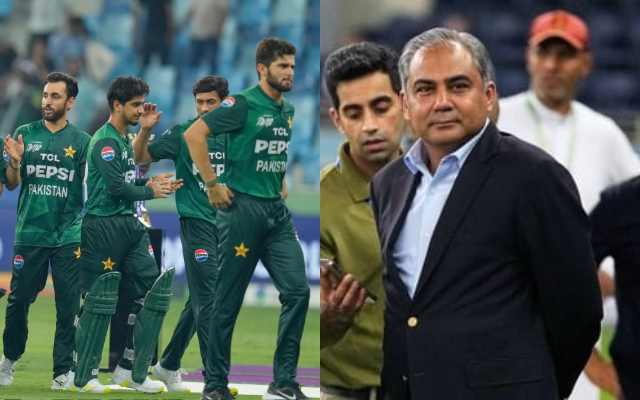
Cricket has never been completely free of politics, especially in the subcontinent. But it has traditionally drawn a firm line on one thing, which is, teams do not forfeit matches unless there is a credible and genuine security threat.
Walkovers are a rare incident in the sport, but whenever they have occurred, they were born out of fear rather than defiance. Whenever a walkover has materialised in cricket history, they have been treated as reluctant exceptions. Which is why Pakistan’s decision to boycott the T20 World Cup match against India feels less like history repeating itself and more like a line being crossed.
To look back at such moments in history, in the 1996 World Cup, Australia and West Indies refused to travel to Sri Lanka following a bomb explosion in Colombo in the civil-war torn country. Security concerns in this case were immediate and credible. The International Cricket Council (ICC) accepted those fears and awarded Sri Lanka the full points.
Interestingly, India and Pakistan, to show solidarity, formed a combined team under the banner ‘Wills XI’ consisting of the likes of Sachin Tendulkar, Wasim Akram, Waqar Younis and led by Mohammad Azharuddin. The team played a one-off ‘Wills Solidarity Cup’ match against Sri Lanka.
In 2003, the situation was even grim, but the principle remained intact. England declined to play Zimbabwe citing political tensions with the Robert Mugabe regime. New Zealand refused to travel to Kenya after terror attacks in Mombasa. Both teams asked to play in neutral venues, ICC declined and awarded walkovers to Zimbabwe and Kenya. These, once again, came after credible security threats and complete diplomatic breakdown between the countries involved.
While these episodes are rare, they established an imperfect but consistent precedent — security concerns could bend the rules, politics alone could not.
Unfortunately for the Pakistan Cricket Board, Pakistan’s current stance does not fit that template. The match against India is scheduled at a neutral venue under a hybrid model that the Pakistan Cricket Board itself agreed to. It was conceptualised by their own Najam Sethi. The government of Pakistan, through its official X handle, approved the national team’s participation in the tournament while striking off one specific fixture. No official security threat has been cited. While this is selective participation, it is without the usual justification.
It boils down to one question: If a team can accept a tournament but refuse a particular opponent without any credible security threats, does the idea of a fixed, enforceable schedule not begin to dismantle? Today it is India-Pakistan, tomorrow it could be any other geopolitical rivalry.
When it comes to Bangladesh, who have been ousted from the ICC T20 World Cup 2026, owing to their refusal to travel to India citing “security reasons”; which were later quashed by the ICC, the situation took a different turn.
The Bangladesh Cricket Board or the Bangladesh government were unable to provide evidence of a credible security threat following ICC’s ‘low-to-moderate’ security threat rating in India. With no plausible or just reason to demand a shift in venue at such a short notice, the ICC “proceeded with its established governance and qualification processes to identify a replacement team”, as mentioned in the official statement.
Football under FIFA has repeatedly compelled countries with strained diplomatic relations to face each other to avoid turning tournaments into political battlegrounds. Cricket, on the other hand, has relied on mutual understanding. This flexibility has suddenly become its weakness.
This has left the ICC in an unenviable position. A soft response could mean an invitation to future boycotts, a hard stand could deepen an already volatile standoff. But doing nothing would be signalling that fixtures are now negotiable based on political convenience.
Walkovers are meant to be emergency exits, only to be used when no alternative is left. When they become statements rather than safeguards, the sport stops managing risk and starts managing precedent, and precedents are rarely contained.