




Over time, sport has been used in politics in multiple dimensions, to perhaps convey a strong message, to showcase a protest, or to fuel a revolution and more. For instance, Mohun Bagan’s IFA Shield triumph over East Yorkshire Regiment in 1911 or the Black Power Salute by Tommie Smith and John Carlos in the 1968 Mexico City Olympics — sports have always been more than just the game.
Some 86 years ago, on this day, January 1, 1940, when World War 2 was at its peak, something strange yet powerful happened in Edinburgh, Scotland. Today, it might seem to be a funny story, but the plot was perhaps not.
The Hibernian versus Hearts, the famous Edinburgh derby on New Year’s Day 1940, would perhaps be one of the most bizarre football matches in the sport’s history.
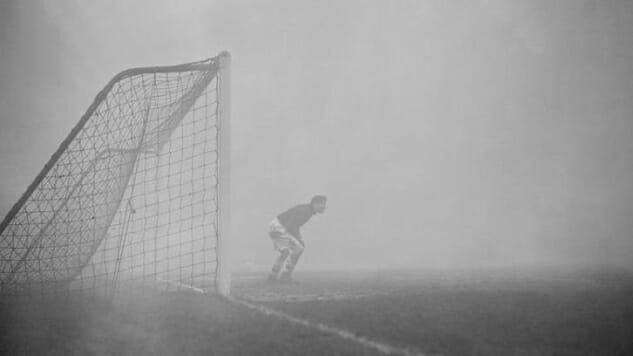
Reportedly, an eleven-goal thriller with a tremendous amount of action, brought to life by BBC’s Bob Kingsley, the radio commentator that evening. The true scenario was, however, different. The 14,000 spectators could barely see ten feet ahead of them, due to fog, as thick as pea soup, since the morning.
However, the match had to go on as the live BBC broadcast was scheduled for the British troops serving in the war, and any mention of the fog blanket could alarm the Germans, and Leith could be under threat.
Though Avery Brundage’s stance of ‘the show must go on’ after the 1972 Munich Olympics massacre was yet to come, 32 years before, the BBC’s head of broadcast, Leo Hunter, instructed Kingsley to carry on with the commentary and not to mention the fog.
Kingsley imagined the entire scenario and carried on with the commentary for the entire 90-minutes, looking at the blanketed ground. He could only see Hibs’ right-wing John Gilmartin and Hearts’ left-wing John Donaldson.
Kingsley had a makeshift team of runners who informed him about the important moments like corner kicks or free kicks, and took the help of the crowd to mention the goal, while the description was based on his own imagination.
The match officially ended 5-6 in favour of the visitors, but none of the newspapers the next day could describe the goals properly. A brief report by The Scotsman mentioned that Hibs were ahead at the interval due to ‘clever play’ and ‘teamwork’ while ‘individual strength’ took Hearts to victory in the second half.
Adding to the fog, the darkness made the situation worse, and after the final whistle was blown, many remained confused and continued to struggle for a vision of the match, unaware that the match had concluded. Kingsley, even, continued with his commentary for 15 minutes after the match had finished, according to a report by The Scotsman.
The Hearts’ players, who were already back in the dressing room, came back to know the whereabouts of their teammate, Donaldson, who didn’t return to the dressing room. He was found, scrutinising his flank, waiting for the ball to arrive from the haze.
As we celebrate the New Year 2026, that bizarre evening, almost a century ago, in Edinburgh, reminds us how humanity has overcome adversity and turned it into triumph, and sport has played a major role in it.


For more such stories, follow RevSportz