

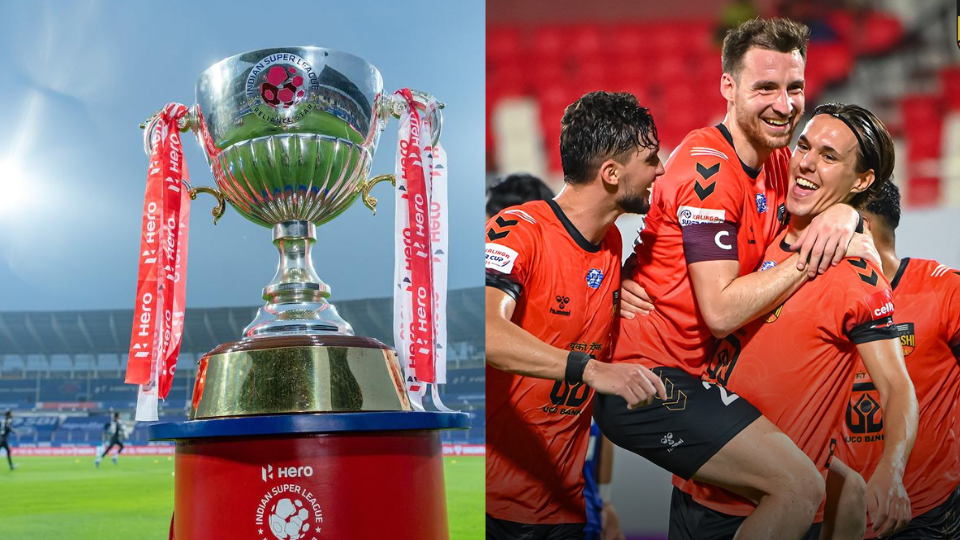
Finally, on Tuesday, January 6, the Indian football fraternity received its New Year’s gift in the form of certainty around the Indian Super League (ISL) 2025–26 season. The 14-team league, to be played on a single-leg home-and-away basis, will begin on February 14 and run for four months. After months of uncertainty, this decision by the Union Sports Ministry came as a sigh of relief for the entire fraternity.
Yet, one overarching question remains: when will India finally have a promotion–relegation-based league?
For a country of this size, with so much money involved in the tournament, this six-month-long mishap drew considerable media attention from across the globe. Odisha FC defender Carlos Delgado, in a conversation with RevSportz, mentioned, “Top newspapers in Spain, like Diario AS and others, have been covering Indian football for more than a decade.”
With so many Spaniards involved in Indian football, it is only natural that there is sustained interest in Spain. “But it is very hard to explain the situation to them,” said Delgado. “They haven’t seen anything like this and can’t quite understand what’s going on.”
Coming to the moot point in this discussion: while Inter Kashi will enter the top tier as the newly promoted I-League champions, there is still no clarity on whether the league will feature relegation.
Although the new AIFF constitution mentions relegation, it remains doubtful whether the new commercial partner would agree to it. If relegation is introduced, the relegated side would still have to absorb losses after paying the ₹1 crore participation fee, which could increase once the new 20-year agreement is finalised. And, who knows, that could create another round of confusion, going against the AIFF constitution.
This leaves a lingering question: will the agreement, expected to be submitted by March 20, include a promotion–relegation-based league structure going forward? Under the earlier roadmap, the league might have adopted this format from this year. But with everything now being reshuffled, the new commercial partner – whoever it may be – might choose not to implement it, at least in the initial years.
Perhaps a league with a larger number of teams could be proposed down the line, after more I-League clubs are promoted, and only then would relegation be introduced.
From a purely sporting perspective, just as the ambition of promotion motivates teams to perform better, the fear of relegation works in the same way. With relegation in place, even a century-old club like East Bengal would have gone all out to avoid finishing at the bottom.
For the betterment of Indian football, the league needs promotion and relegation. One can only hope that the new commercial partner brings a clear, long-term vision for the league’s future.


For more such stories, follow RevSportz