




The All India Football Federation (AIFF) convened its Executive Committee (ExCo) meeting and Annual General Meeting (AGM) on Saturday, December 20, 2025, at Football House in New Delhi. Both meetings were chaired by Kalyan Chaubey, AIFF President.
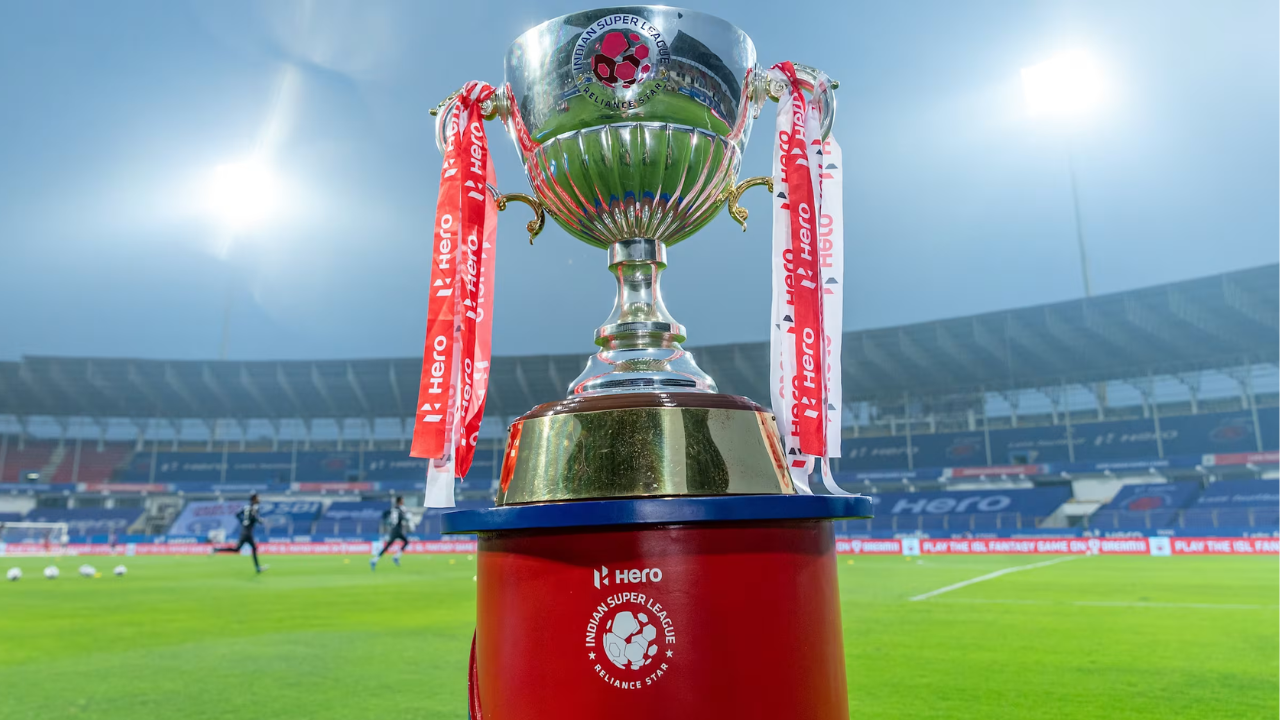
During the AGM, a proposal concerning the future structure of the Indian Super League (ISL), submitted by 10 clubs, was presented by Mohun Bagan Super Giant CEO Mr. Vinay Chopra. As the clubs’ demand to manage the league in perpetuity evoked mixed reactions from the house, the federation decided to constitute a three-member committee to explore a consensus.
The committee comprises Kerala Football Association President Mr Navas Meeran, Goa Football Association President Mr Caitano Fernandes, and Indian Football Association (West Bengal) Honorary Secretary Mr Anirban Datta, with AIFF Deputy Secretary General Mr M Satyanarayan serving as an ex-officio member. The panel will hold discussions with representatives of five clubs – Chennaiyin FC, Mumbai City FC, Delhi SC, NorthEast United FC, and Mohun Bagan Super Giant –between December 22 and 29, with the aim of arriving at a resolution that aligns with the AIFF Constitution as framed under the directions of the Hon’ble Supreme Court of India.
The two committees are expected to submit their reports by December 29. These findings could then be forwarded to the Ministry of Sports and placed before the Supreme Court when it reconvenes on January 5 after the winter recess.
However, two key questions have emerged from the developments.
The first concern revolves around AIFF’s financial health. During the AGM, the federation disclosed a budget deficit of ₹25.88 crore for the period between January and May 2026, highlighting the financial constraints it continues to face.
Despite these challenges, a senior federation official indicated that AIFF remains inclined to organise domestic leagues independently. This stance emerged after several members expressed reservations about proposals that offered guaranteed revenues to clubs—₹10 crore annually from the 2026–27 season in exchange for perpetual ISL rights, and a cumulative ₹50 crore for I-League clubs over a 15-year cycle with incremental annual payments.
AIFF is understood to have a fixed deposit of ₹50 crore, though it remains unclear whether the Federation will draw upon this reserve amid the current financial strain.
An ISL club official questioned the feasibility of AIFF running the leagues independently, noting that the Federation’s budget makes no specific provision for the ISL, while only ₹3.5 crore has been allocated collectively for the I-League and its lower divisions.
Another concern revolves around Mohammedan Sporting. The club’s eligibility for the ISL remains uncertain if the AIFF moves towards implementing the new Constitution and AFC guidelines. Mohammedan finished at the bottom of the ISL table last season with 13 points, and under the proposed framework, the club could face relegation. According to sources, the prolonged uncertainty surrounding the league has allowed the club to clear outstanding salaries and dues, leading to the lifting of most transfer bans. Sources further reveal that Mohammedan Sporting are at an advanced stage of finalising an investor, which could enable them to continue competing in the top tier.
Meanwhile, there is cautious optimism among ISL club CEOs who were part of the joint proposal sent to the AIFF President. Though the proposal seeking a club-owned league with perpetual commercial rights was neither approved nor rejected at the AGM, it has not been dismissed outright. Instead, the Federation’s decision to form a committee following the mixed response from the house has left room for further negotiations.
Sources suggest that the ISL clubs believe a club-owned model – where commercial rights are vested with the clubs while AIFF retains control over rules, regulations and governance – remains a realistic possibility.
However, uncertainty persists over the participation of East Bengal. The century-old club has strongly opposed the idea of a club-owned league. According to sources, during the AGM at Football House, the IFA Secretary formally presented East Bengal’s letter objecting to the proposed structure.
With domestic football yet to resume, ISL clubs are keen for swift clarity. Sources indicate that once the green signal is received, the clubs are prepared to kick off the league within 45 days.
Also Read: AIFF General Body approves committees to fast-track ISL and I-League within Constitutional framework