



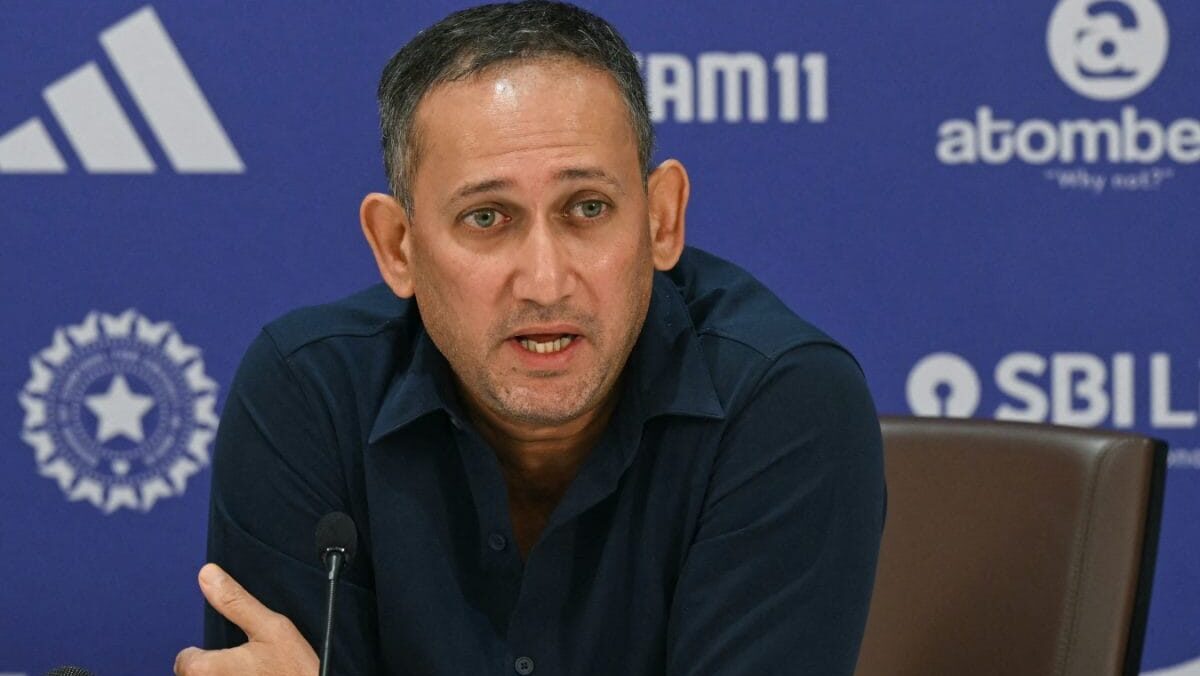
December 4 is Ajit Agarkar’s birthday. Once a celebrated India fast bowler who took nearly 300 ODI wickets, he is now the man sitting in perhaps the most uncomfortable chair in Indian cricket: the chief selector. It is ironic that a career known for crisp outswingers and rapid-fire cameos is now defined by judgment calls, scrutiny, and the relentless evaluation of others.
If a selector’s career had a scoreboard, it would show a strange imbalance: success gets quietly filed away; failure lights up the front pages. Under Agarkar, India have celebrated significant success in white-ball formats, lifting trophies and refreshing the squad with younger, fearless talent. Yet the narrative today is not that of victory parades; it is the persistent glare on India’s struggles in red-ball cricket.
Each Test loss becomes an accusation: wrong picks, wrong balance, wrong vision. This is the selector’s paradox.
Agarkar’s tenure has featured bold, refreshing decisions in limited-overs cricket. Several younger players have been backed to take on leadership roles. India appear lively, aggressive, modern – a side that embraces data, improvisation, role clarity, and fearless skill. But the longer format exposes fragilities. A Test batting ecosystem once known for technique and temperament suddenly feels thin. Domestic performers raise their hands, the crowd loudly supports them, and the nation demands accountability. In the court of Indian cricket public opinion, “deserving” becomes a powerful word.
Agarkar is living the realities of one of sport’s most complex transition phases. A generation of icons is either retiring or being phased out. Productivity windows are shrinking. Players juggle three formats, leagues, central contracts, and workload management – and everyone expects perfection.
Agarkar’s detractors say he doesn’t attend enough domestic games. They argue that deserving Ranji performers are ignored. They claim there is inconsistency in messaging and selection. Some of this may be true. India’s player pool is so large that a selector’s job is equal parts opportunity and minefield. When you back youth and it works, you’re a visionary. When the same youth misfires, you’re clueless.
Great selectors – the underrated architects of eras – are not those who pick the best eleven players on paper, but those who pick the best squad for a philosophy. They must have clarity of vision: what kind of team should India be in each format? That blueprint must guide every decision, even the unpopular ones. They must gauge temperament, adaptability, and mental resilience. Averages don’t tell you who will bat through pressure at the Gabba or Lord’s. They also need to stay connected to the domestic ecosystem. Grassroots scouting, continuity, and succession planning are non-negotiable. Bench strength doesn’t build itself.
Agarkar knows all this, but execution is harder than theory. The Indian cricket system is a giant ocean; one man steering the ship will not suffice. Communication, transparency, and deeper engagement with domestic cricket must become institutional strengths, not individual habits. On this day, perhaps the fairest gift to Agarkar is perspective: the job he has taken might be the loneliest in cricket.
He will be blamed more than he is praised. His best decisions may only be appreciated years later. His legacy won’t be measured in tweets or uproar, but in whether India emerges as a fearless white-ball superpower and a red-ball force reborn. In a sense, selectors shape eras – quietly, thanklessly, and always under fire.
And if Agarkar can master this balancing act, his second cricket life may yet surpass his first.


For more such stories, follow RevSportz