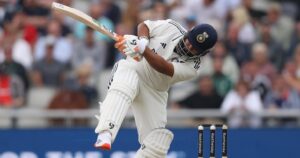





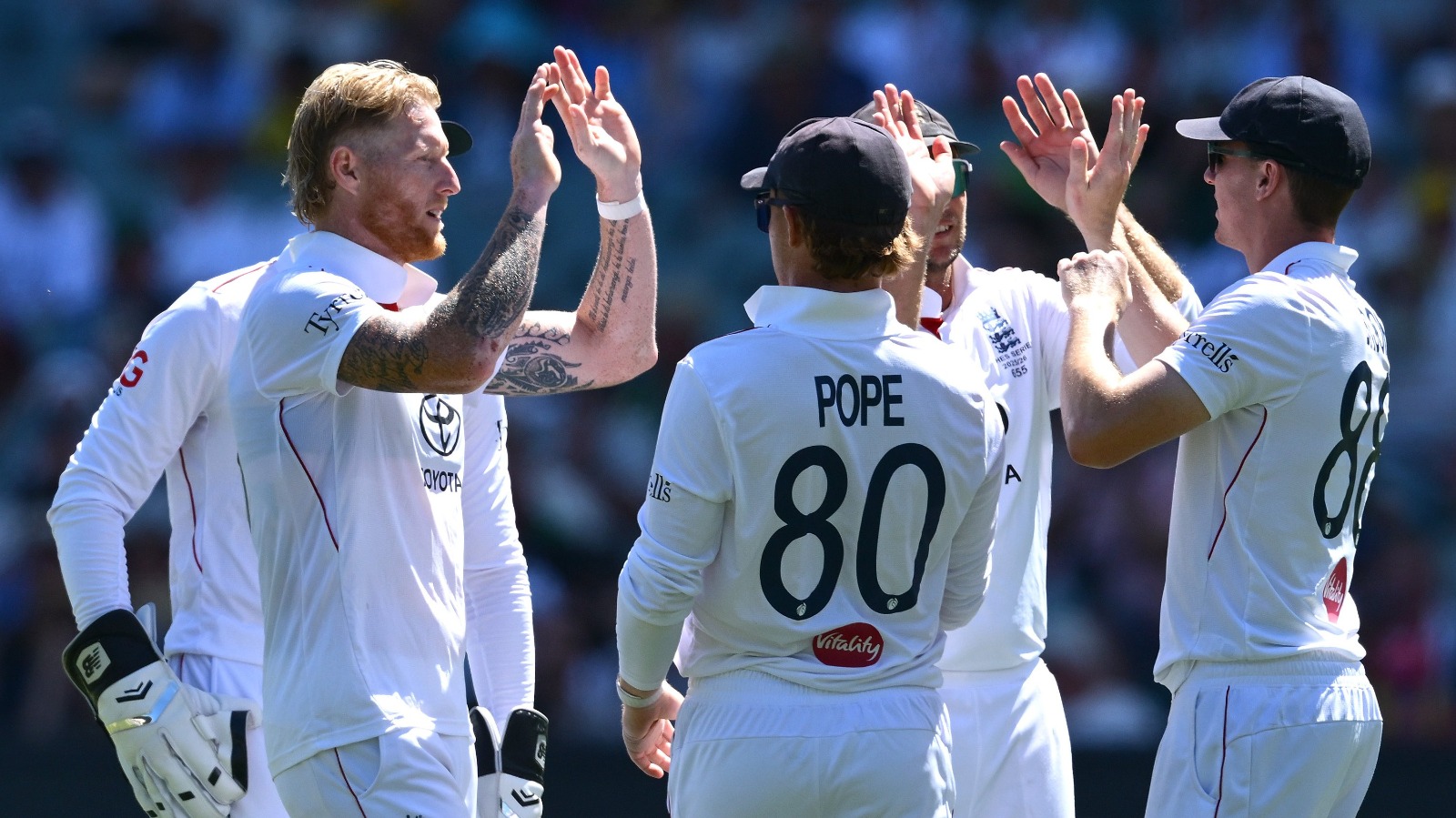
A famous quote from another time is apt for England’s continued failures in Australia: “They always say time changes things, but you actually have to change them yourself.” In this context, England haven’t won a single Test in Australia since beating their arch-rivals at the SCG in 2010–11. If you go further back in time, it took them around 24 years to win another Test rubber after beating Australia 3–1 in 1986–87. Their performance in the ongoing Ashes has been no different — played three, lost all three.
A mere glimpse at the results could make you wonder whether there is a huge gap in quality between the two teams. Or perhaps it is about England’s inability to handle the bouncing ball in Australia. It could also be about mistakes made by England’s think tank. All of these are the nuts and bolts of England’s debacle. But there is one more underlying factor, and that is probably a lack of belief in the camp.
Glenn McGrath, the legendary Australian cricketer, said this to BBC Sport: “I don’t believe England’s long barren run in Australia is down to the quality of their players. It must be down to mentality. Joe Root and Ben Stokes, the cornerstones of this England team and two of the greatest to ever play for England, have never won a Test here.”
McGrath has hit the nail on the head with his quote. There has to be a reason why England seem to lose almost every crucial moment of an Ashes series in Australia. Consider this: in the second innings of the first Test in Perth, England were 105 runs ahead with nine wickets still in hand. In the blink of an eye, they slid to 76 for 5.
In the second Test, despite bowling some ordinary stuff, England clawed their way back, reducing Australia to 292 for 5. From there on, they dropped four more catches, and Australia ended up with a match-winning total of 511.
In the Adelaide Test, England complained about the Snicko technology with regard to Alex Carey getting a reprieve over a caught-behind decision. For a moment, if you leave aside the error-prone technology, England still had a few opportunities to take the ascendancy. Alas, they wasted all of them. Jofra Archer and Josh Tongue, England’s two most talented fast bowlers in the present group, watched in dismay as Usman Khawaja and Travis Head received reprieves in the first and second innings respectively. Khawaja added 78 runs to his tally, while Head collected 71 more runs.
Now contrast this with the Australian Test side, who don’t just grab most of their chances but create opportunities out of virtually nothing. Steve Smith’s blinder to dismiss Will Jacks in Brisbane, and a couple of superlative catches snaffled by Marnus Labuschagne in the second innings in Adelaide exemplify the point.
There is an old adage that your slip catching (or fielding in the gully region) has to be top-notch in Australia. The logic behind it is that Australian wickets offer more bounce, so you’re bound to see more catches behind the wicket. In one innings alone, England dropped five catches, and by now they have fluffed over ten.
Generally, over the last three decades, England have had modest slip cordons in Australia. Who can forget Devon Malcolm being resigned to his fate at the WACA in 1994, with a slew of catches going down? The only time during that phase that England had a pretty good slip cordon in Australia was in 2010–11. Incidentally, they won that series. Although James Anderson may still whisper that he lost out on taking a five-for or two in that series due to grassed chances.

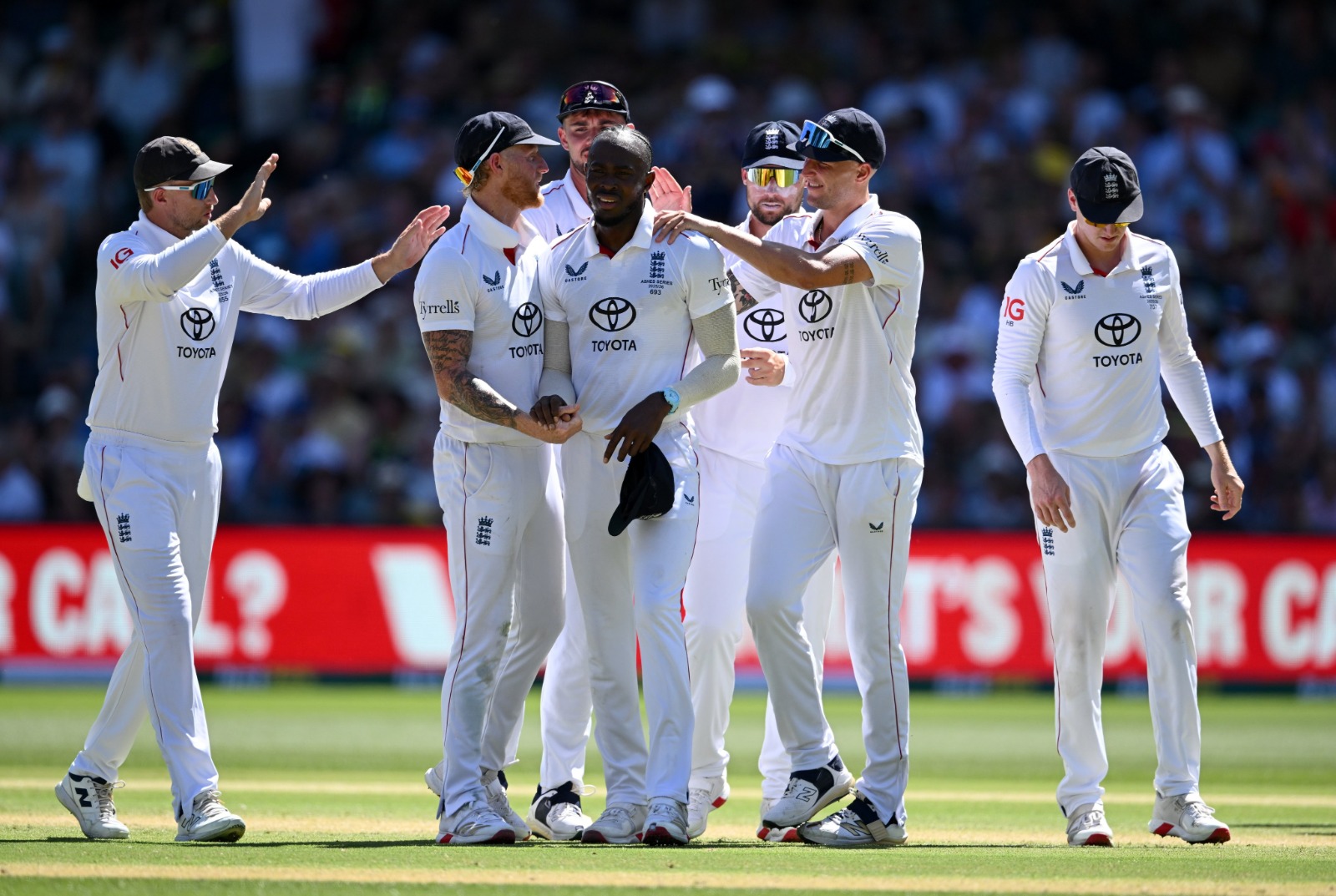
Obviously, England’s gung-ho approach with the bat hasn’t always helped. For example, Jamie Smith was going great guns in the second innings in Adelaide, but he attempted one shot too many, gifting his wicket away in the process. Smith likes to play fearless cricket. Now, that isn’t the wrong way to go about his business, especially while batting at No. 7. Just that there is a caveat attached to it: picking the right ball to hit. Before trying to slog Mitchell Starc across the line in Adelaide, he had already smashed enough boundaries. That particular delivery wasn’t meant to be tonked over midwicket.
Harry Brook and Zak Crawley’s dismissals in the first innings at the Gabba, a string of batters trying to drive on the up against the moving ball and extra bounce in Perth, and Smith himself attempting too many pulls in the first innings in Adelaide can all be added to the list of reckless batting. Compared to England’s timid efforts during 2021 and early 2022, they seem to be in a relatively better place over the last couple of years. However, they are unable to find the middle ground between attack and defence.
There are question marks over England’s preparation too. It didn’t make much sense to play a warm-up game at Lilac Hill. The conditions there were batting-friendly and nowhere similar to the Perth Stadium. Moreover, most of England’s main players didn’t feature in the warm-up game in Canberra. The track for that pink-ball game was once again batting-friendly, but at least the players could have gained some muscle memory of fielding during the twilight phase. According to reports, England also rejected the option of playing a practice game at the MCG.
On paper, England do have enough in their pace artillery to dent Australia in certain conditions. There is, however, a rider attached to that. The attack is largely inexperienced and lacks a leader of the pack. When Archer is switched on, he is a fine Test-match bowler, but he doesn’t come across as an attack leader. Simply put, at the Gabba, we hardly saw Gus Atkinson, Brydon Carse, and Archer communicate with each other to devise plans. Everything can’t be left to Ben Stokes to draw up strategies. The inexperienced pacers also seem to go searching too much for wickets.
There were selection issues as well. Ideally, Tongue’s two best bets in the series were Perth and Brisbane, yet he was left out of both games. On a flatter deck in Adelaide, he came across as the most impressive of the England pace quartet. The tall pacer clocked a fastest ball of 151 kph and blended it with extra bounce and awkward angles.
These were precisely the attributes that could have helped England, especially in Perth. To the naked eye, he looks more skilful than Mark Wood, a better version of Carse, and more of a wicket-taker than Atkinson in Australia. It is not surprising that he has 36 wickets in just seven Tests, despite England dropping numerous catches off his bowling. In the last 18 or so months, England have had to name three different bowling coaches/consultants. It couldn’t have helped a bowling group that is still learning the tricks of fast bowling.
England picking Will Jacks at No. 8 in Adelaide didn’t help their cause either. Ideally, they could have asked Jacks to bat at No. 3, with Shoaib Bashir selected as the lone spinner. Whatever the merits and demerits of Bashir’s off-spin, he should have played on the most spin-friendly deck in Australia. On the batting front, Ollie Pope could have been left out after the Perth Test, given his limited success in Australia.
The larger question is whether England have an issue against the bouncing ball. To an extent, that could be one of the mitigating factors, but the counter-argument is that England perform much better in another Southern Hemisphere country — South Africa. Maybe, just maybe, it again comes down to a lack of belief in the camp.
So, should the ECB sack Brendon McCullum and Robert Key? There is no doubt that the head coach and the director of cricket must shoulder a large share of the responsibility for this disastrous campaign. But the essence of England’s problems in Australia is multifaceted. With that as the foundation of the argument, sacking McCullum and Key could be a tricky decision. In simple terms, England’s issues in Australia go beyond just a captain, coach or an administrator.
Follow Revsportz for latest sports news