



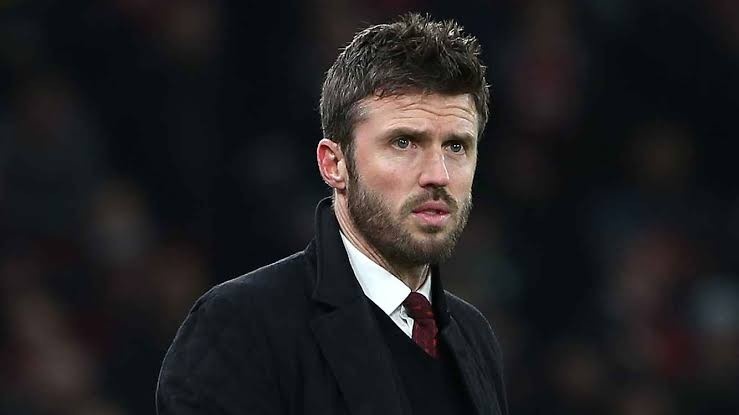
As Michael Carrick moves into the Old Trafford hotseat, millions of Manchester United fans around the world are left scratching their heads. How did it get to this? Ruben Amorim was supposed to represent the brave new world, a finally promising post-Ferguson future. Erik ten Hag was meant to do the same, like Jose Mourinho before him, and Louis van Gaal before that. You get the picture.
There has been so much garbage said and written in recent weeks and months about the United DNA that Messrs Watson and Crick would be pinwheeling in their graves. What is this United DNA? It’s a figment of people’s imagination. It’s nonsense. It doesn’t exist.
Consider this. Carrick is the 32nd manager/head coach/minion to occupy the most important job in British football. Of those, only three have ever won the First Division/English Premier League. Ernest Mangnall won his two in the years before the Great War and United then had to wait 41 years for the first of Sir Matt Busby’s five titles in 1951-52. Between Busby’s last triumph and the first of Ferguson’s 13 successes, there was a 26-year gap. There is no DNA, just three exceptional individuals who can’t be cloned.
Ferguson was aware of United’s history when he came down from Aberdeen, but did that mean he tried to play like Busby? He couldn’t. United in the 1980s were primarily a cup side that lacked the consistency for a proper title tilt. They were miles off Liverpool, Everton, and later, Arsenal.
Ferguson did what he did because the board(s) then kept faith. They weren’t subject to the pressure of millions of idiots online and moronic hashtags in cyberspace. They got Ferguson because they saw how he had elevated Aberdeen to elite status, and they trusted his vision.
The war cry now is to go back to the Fergie ways. How? Even Ferguson changed tack multiple times. The 4-4-2 of the first championship years, with Andrei Kanchelskis and Lee Sharpe flying down the wings with a young Ryan Giggs gave way to a more thoughtful tempo once success in Europe became the goal. The final title in 2012-13, won mostly by the brilliance of Robin van Persie, bore no resemblance to the first 20 years earlier. Ferguson’s greatness was that he evolved.
If the aim is to go back to that era and trust in academy products like United did in the mid-1990s, then it makes sense to invest in someone like Carrick. After 464 appearances in the famous shirt, he gets the club, as does Jonny Evans – one of his assistants. Darren Fletcher would be a similar sort of pick, albeit without the experience Carrick has.
If the intention in the summer is to go in another direction with a high-profile name, understand that there will be no ‘United way’. When he came to Liverpool, Jurgen Klopp was extremely respectful of the history and the legends like Kenny Dalglish still around the club. But did he set up his teams to play Dalglish’s had in 1987-88? Of course, he didn’t. He did things his way, and the ownership and decision-makers trusted his judgement.
If Jim Ratcliffe, Jason Wilcox and Omar Berrada think that a Xavi, a Thomas Tuchel, a Julian Nagelsmann or Zinedine Zidane will come to Old Trafford and try to be Ferguson Lite, they’re more delusional than their recent decisions make them appear to be. A big name means a big ego, and a determination to carve out their own niche.
Right now, United have to make that choice – do they keep on searching for some DNA that doesn’t exist, or do they properly embrace the future and a new direction?


For More Sports Related News: Follow RevSportz