







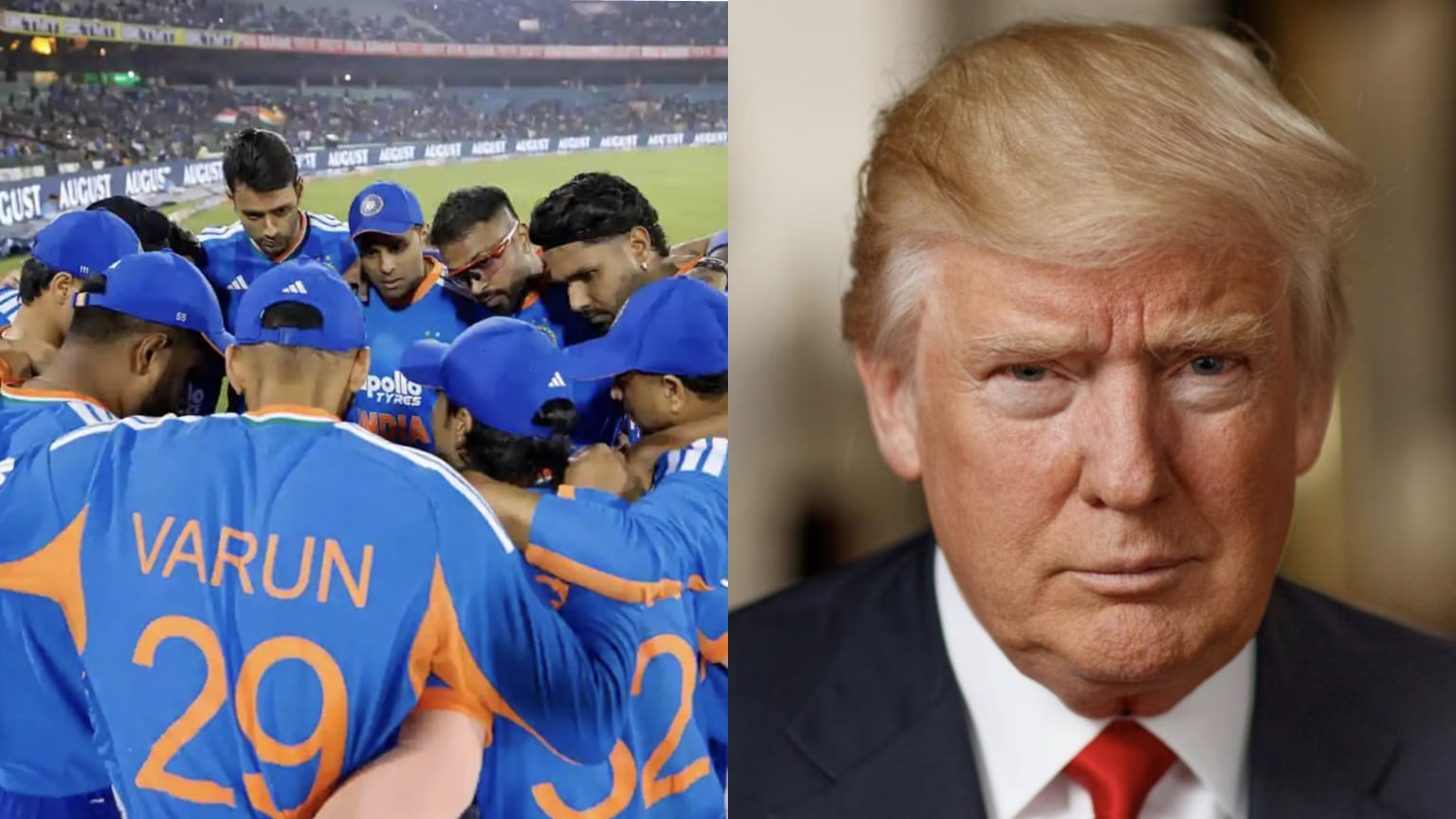
We live in a time where leadership is expected to look absolute, even when it is not. From politics to sport, the age of algorithms has created a strange contradiction. Decisions are increasingly shaped by invisible systems, predictive models and scenario planning. Yet the public still craves the image of a strong, instinctive leader — someone who looks in control, speaks with certainty and performs authority. Cricket, especially in the T20 era, sits squarely inside this contradiction.
On the surface, the modern captain appears more powerful than ever. He commands camera attention, orchestrates on-field movements, and is praised or blamed within seconds on social media. But beneath that theatre lies a quieter reality: horror of horrors did I hear you whisper…many of the most important decisions have already been made before the toss!
Ben Jones and Nathan Leamon, in Hitting Against the Spin, describe how modern teams no longer “read” the game as it unfolds. They map it. Through match-up databases, phase-based scoring models, and win-probability simulations, cricket is increasingly pre-scripted. Every over exists inside a decision tree. If this batter is on strike, use this bowler. If the run rate crosses this threshold, accept this level of risk. If this wicket falls, accelerate here. The captain’s role, in many moments, is not to invent… but to execute.
This is where the “Trump era” parallel becomes revealing. Modern leadership across domains has become performative. It is less about quiet system-building and more about visible certainty. The leader must look in charge, even when the system is doing the thinking.
The T20 captain is now a symbolic authority figure standing atop a data engine. He gestures, rotates bowlers, moves fielders, and addresses the team but the logic behind many of those actions is algorithmic.
Yet fans, commentators and even boards still speak the language of instinct: “He felt the game.” “He sensed momentum.” “He trusted his gut.” In reality, momentum is often a statistical illusion … a temporary deviation from expected outcomes that eventually corrects itself. What looks like chaos is frequently probability normalising. I wonder sometimes if cricket has become less intutive.
This is where the captain’s relevance is reborn — not as a tactician, but as a human being who makes sense of things. In the second T20 match that India played against New Zealand in Raipur, one saw India captain Suryakumar Yadav back up his bowlers even when wicketkeeper Sanju Samson seemed to indicate that it was missing the stumps. That call definitely seemed over indulgent… but for a reason.
In an age where players are reduced to match-up percentages and phase efficiency scores, the risk is not losing matches. The captain must now protect the emotional ecosystem that allows the data to function. He must absorb pressure so others can perform. He must create trust where the system creates distance. Which is where Surya with that unflappable temparament, bordering on lightheartedness both on and off the field and giving an air of not taking himself too seriously seems to work.
The less strategic power the captain holds, the more emotional authority he must cultivate. He is less of a chess player and more of a glue that binds everyone together. Cricket in the T20 era is no longer a game of instincts reacting to moments. It is a game of scenarios responding to probabilities. The leader’s job is to ensure that within this machinery, human belief does not collapse.
For more updates, follow REVSPORTZ.