


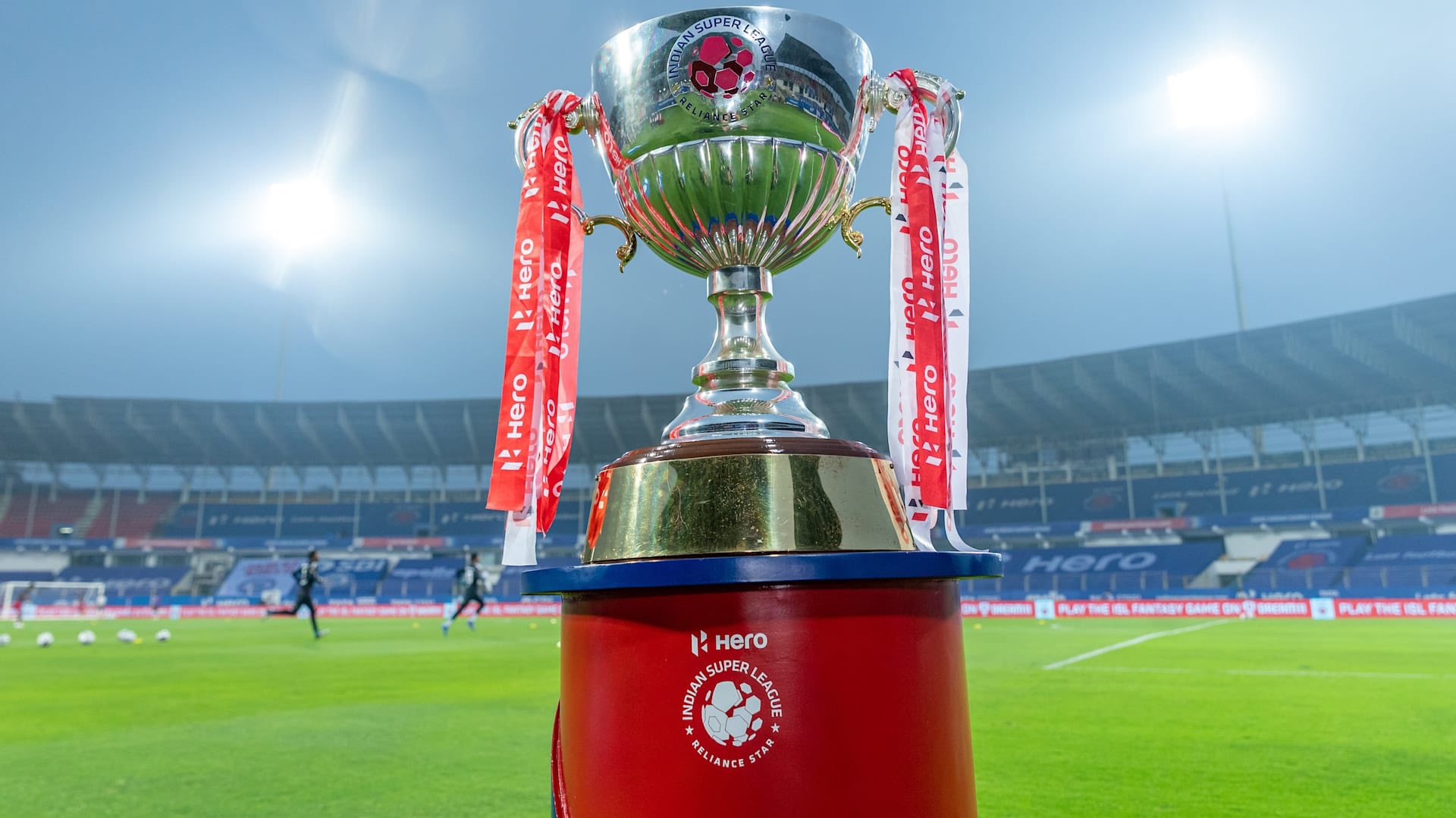
The recent intervention by the Union Government culminating in the announcement that the Indian Super League and the I-League will begin on February 14 is more than a scheduling update. It is a moment of economic and institutional reset for a sport that had drifted into uncertainty.
The significance of the announcement lies not just in the start date, but in what it represents. With the top tier of Indian football delayed by legal disputes and commercial ambiguity, the absence of a clear pathway had created anxiety across the ecosystem – clubs, players, staff and fans alike. The Sports Minister’s statement that “sports in India should not suffer” acknowledges a fundamental truth: competitive sport cannot survive in limbo. Athletes need continuity. Clubs need certainty. Economies need predictability.
With over ₹10 crore allocated for the ISL, additional funding for the I-League, and full support for the Indian Women’s League, the federation and the government are, in effect, underwriting continuity at a moment when commercial capital hesitated.
This intervention, however, should be seen for what it is – a stabiliser, not a solution.
Federations and governments are not designed to permanently fund professional leagues. They can enable, regulate and protect, but sustainable sports economies are built on recurring revenues, disciplined costs and deep-rooted local relevance. If Indian football treats this moment as rescue rather than reset, the same vulnerabilities will resurface.
The crisis has exposed a long-standing flaw in Indian football’s economic model: over-centralisation. Too much of the ecosystem’s viability rested on a single commercial arrangement, with clubs structurally dependent on league-level revenues rather than their own economic engines. When that spine weakened, the system had no redundancy.
This is where Indian football must fundamentally rethink scale.
The future of football economics in India does not lie in chasing national homogeneity; it lies in embracing regional and hyper-local depth. Football, unlike cricket, thrives on proximity. Derbies, neighbourhood rivalries and regional identity are not marketing constructs – they are the sport’s natural currency. A league system that meaningfully empowers regional and zonal competitions reduces costs dramatically while increasing emotional relevance.
Zonal leagues cut travel and logistics costs, allow local sponsors to participate meaningfully, and make regular attendance viable. They also create a dense playing calendar for athletes – essential in a country where too many footballers play too few competitive matches.
Hyper-local leagues are not a step down; they are a step inward. They embed clubs in schools, colleges and communities. They allow sponsors to see football as a community platform rather than a distant broadcast asset. Most importantly, they create pathways – sporting and economic – that do not collapse if national-level revenues fluctuate.
From an economic lens, this bottom-up approach matters deeply. Matchday revenue in Indian football has always been under-leveraged because the stadium has not yet become habitual. Local leagues change that. A fan may not travel across the country for a national fixture, but they will show up on a Sunday evening to watch their city, their district, their neighbourhood. Scale in football is earned through repetition, not imposed through ambition.
This logic applies equally to player development. A wider regional league pyramid increases minutes, sharpens competition and turns talent development from a cost centre into a strategic investment. Sustainable football economies are built not on imported solutions but on domestic pipelines.
The government’s intervention has bought Indian football time. What it must now buy is courage – the courage to accept that sustainability will look different from global templates, that slower growth is not failure, and that local indispensability matters more than national noise.


Follow Revsportz for latest sports news