


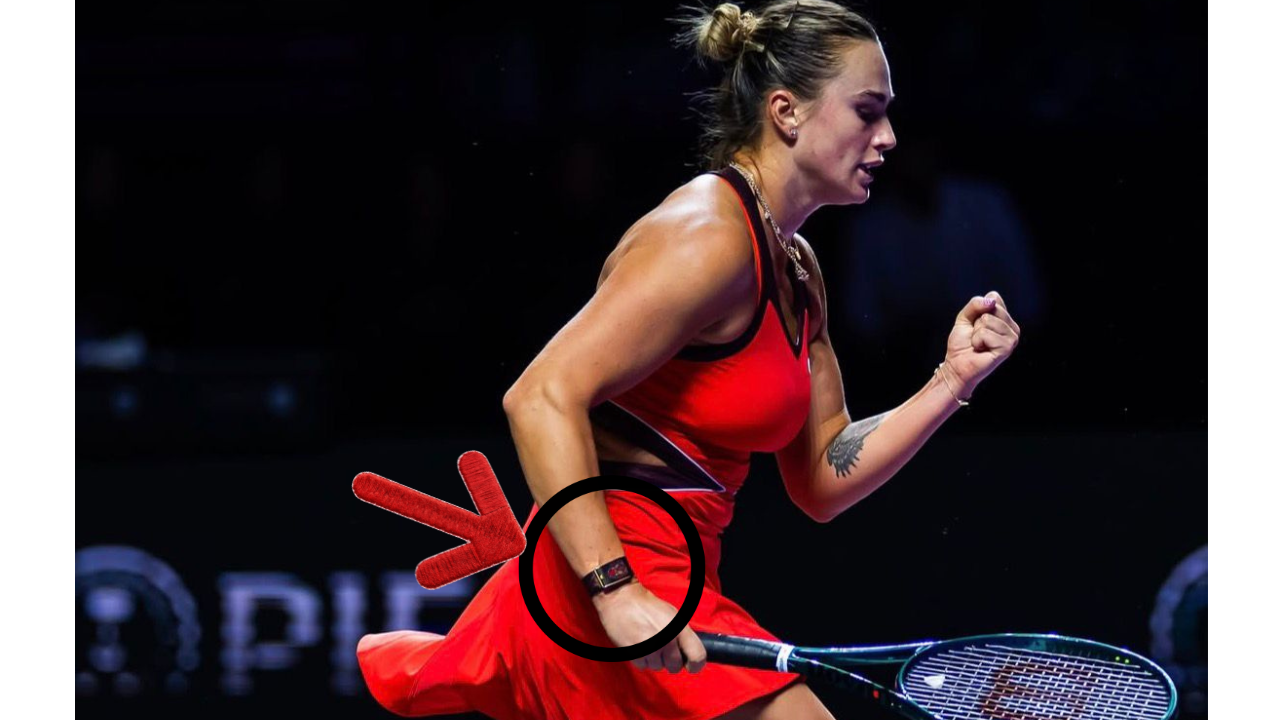
When Aryna Sabalenka, Carlos Alcaraz and Jannik Sinner were asked to remove WHOOP bands at the Australian Open, the tournament may have assumed it was enforcing a tidy equipment rule. Nothing more. A small device. A simple instruction. Move on. But the story didn’t move on because this wasn’t a gadget dispute. It was a sovereignty dispute.
Will Ahmed, WHOOP’s CEO, didn’t respond like a vendor pleading for permission. He responded like a platform challenging a governing body’s jurisdiction. WHOOP would ship “WHOOP Body” undergarments with embedded sensor pods, he said, and if the Australian Open wanted to stop athletes from wearing them, “it’s going to take a strip search” to do it. That line…provocative, theatrical, impossible to ignore, was the point.
The subtext is blunt: you can ban a wristband, but you can’t ban the athlete’s body from producing data. Tennis administrators will argue this is about competitive integrity. Real-time biometrics could, in theory, become a backdoor coaching channel or create an uneven playing field if some athletes have richer live insights than others.
For the athlete, biometric data is no longer “training information.” It is the operating system of career longevity: workload management, heat stress, recovery, injury prevention, illness detection. Blocking wearables at the moment of maximum physical stress feels, to many players, like forcing professionals to go back to analogue in the most demanding environment.
For WHOOP, this is bigger than access. A tournament ban isn’t merely a lost logo moment. It is a threat to product truth: “track 24/7” except when it matters most, under the brightest lights. And for the Australian Open there’s an uncomfortable commercial mirror here: organisers increasingly want “official” data systems and controlled pipelines because data now powers broadcast enhancements, sponsor storytelling, gambling ecosystems and proprietary fan products.
If your body generates the data, the cleanest moral logic says the athlete is the primary owner. But today, ownership is fragmented: device companies process and model it, teams build performance IP on top of it, leagues/tournaments police what appears on the field of play.
This is why the WHOOP “undergarment” move is so strategically sharp. It reframes the wearable as apparel — an extension of the athlete’s bodily autonomy. It also dares administrators to enforce a rule in a way that looks intrusive, outdated, and frankly absurd in a global entertainment product.
So what could a pragmatic solution to this dilemna look like? Athletes are the primary owners of the data and consent governs sharing. The tournament needs to define what can be captured during play, what must be delayed, and what cannot be accessed courtside in real time. There needs to be one coherent rule across all tournaments, else there will be discrimination and this is unsustainable. And finally, there has to be transparency in the sense if tournaments monetise performance data, athletes must be stakeholders.
The Australian Open may think it is protecting the sport from devices. In reality, it has accelerated the inevitable: the next rights revolution in sport will be about data!
Also Read: Why Sports Marketing Is the Most Underrated Growth Engine for Brands