

In India, conversations around children and sport often begin too late and aim too narrowly. We tend to ask whether a child can become the next Virat Kohli or Neeraj Chopra, rather than whether the child can run well, jump confidently, throw accurately, or simply enjoy moving their body. This is where the concept of physical literacy becomes not just relevant, but urgent.
Physical literacy refers to the motivation, confidence, physical competence, knowledge, and understanding that enable individuals to value and take responsibility for engaging in physical activities throughout their lives. At its core, it is about learning to move well before learning to play well. It is the foundation upon which both sporting excellence and lifelong health are built.
Yet in India, physical education in schools has traditionally been treated as an afterthought – an unstructured “free period” dominated by random games, limited participation, and inconsistent learning outcomes. The result is a generation of children who may know the rules of sport but lack the basic movement skills and confidence required to participate meaningfully, let alone pursue excellence.
From a sporting perspective, physical literacy is the invisible pipeline. Most elite athletes do not emerge because they specialised early, but because they developed a broad base of movement skills – balance, agility, coordination, and spatial awareness – before narrowing their focus. In India, the rush to early specialisation, often driven by parental pressure or school competitions, has paradoxically reduced participation and increased dropout rates.
Equally significant is the impact beyond sport. While only a small percentage of children will pursue professional athletic careers, physical literacy equips all children with transferable life skills—discipline, teamwork, perseverance, problem-solving, and self-confidence. These capabilities are foundational across careers, whether in leadership, entrepreneurship, defence services, healthcare, or the creative economy.

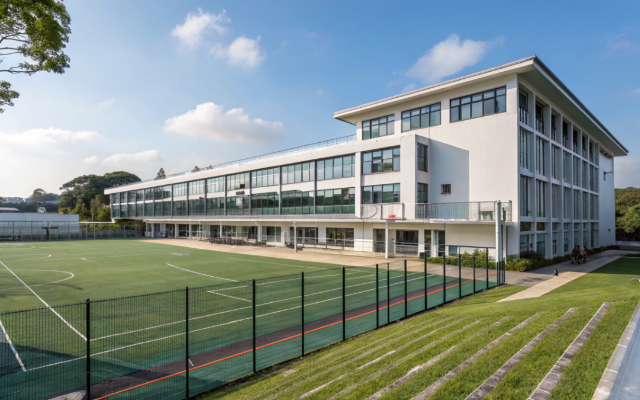
India’s National Education Policy (NEP) 2020 explicitly calls for a shift from rote learning to holistic, multidisciplinary education – recognising physical development, well-being, and experiential learning as essential to a child’s growth. Physical literacy treats movement as a learnable skill – just like reading or numeracy – with age-appropriate outcomes, progressive milestones, and measurable development. Instead of selecting a few “talented” children, it focuses on building competence and confidence in every child. Participation is universal, improvement is visible, and inclusion becomes non-negotiable.
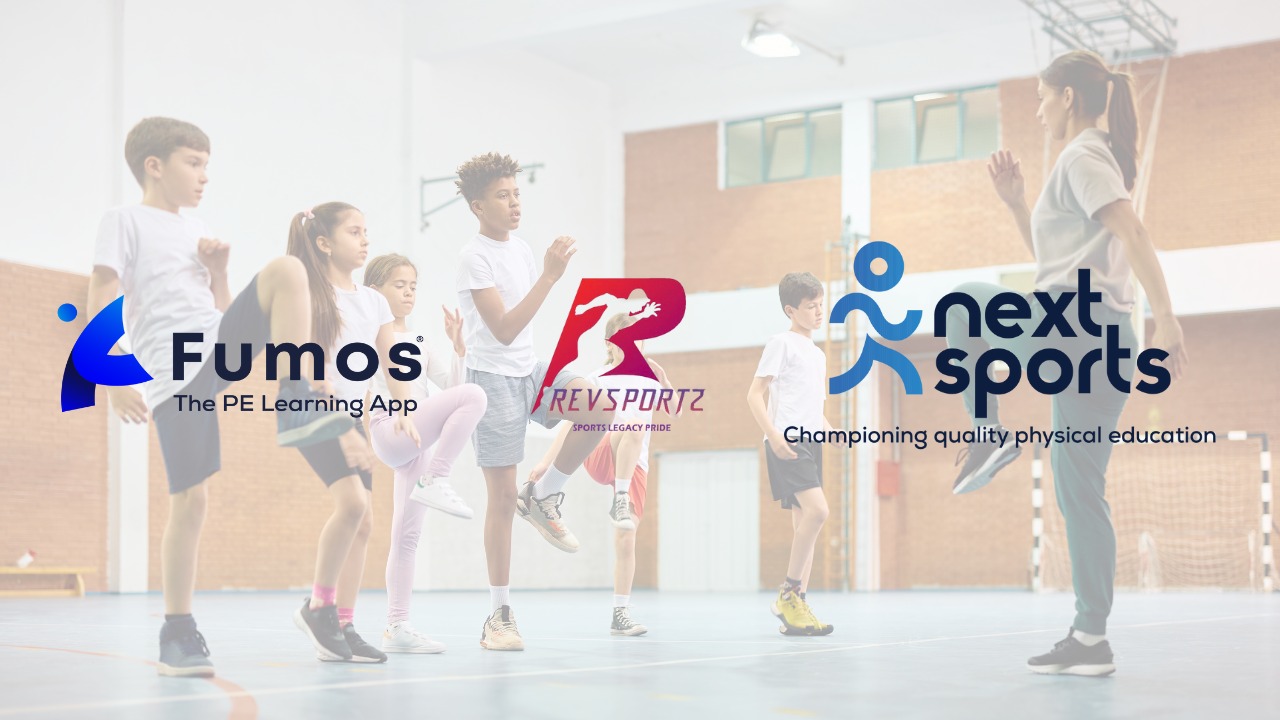
This is where Next Sports Education’s vision, through FUMOS (Future of Movement and Sport), becomes both timely and transformative. FUMOS is designed as a comprehensive digital platform and curriculum for children from Kindergarten to Grade 7, focused squarely on building physical literacy. It brings structure, progression, and joy into physical education – moving beyond random play to intentional movement learning.
By breaking down physical activity into fundamental movement skills – running, jumping, balancing, hopping, throwing, and catching – FUMOS ensures that children build competence step by step. Sports such as football, cricket, gymnastics, and tennis are introduced as vehicles for exploration and enjoyment, not early specialisation or performance pressure.
Crucially, FUMOS leverages technology to address one of NEP 2020’s central challenges: scalable quality. It supports teachers with clear lesson plans, provides children with engaging and age-appropriate content, and offers schools a PE curriculum that is as systematic and outcome-driven as Mathematics or Science.
Platforms like FUMOS demonstrate how policy vision can be translated into classroom reality. Ultimately, the success of physical literacy will not be measured only in medals or podiums, but in playgrounds where every child feels confident to move, classrooms where focus and well-being improve, and adults who carry a lifelong relationship with physical activity.


For More Exciting Articles: Follow RevSportz