



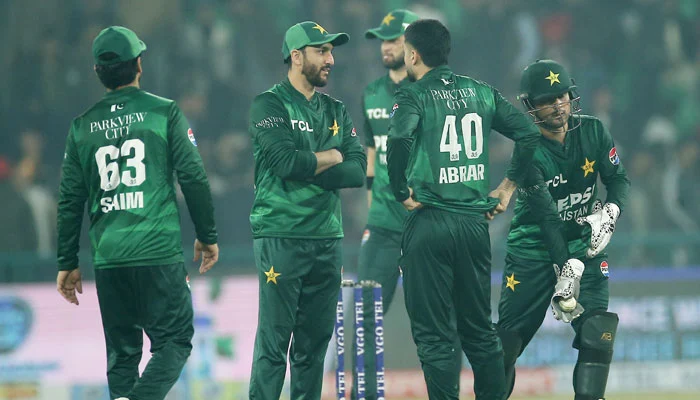
Many people have told me that Pakistan’s call should not be taken seriously because they are a weak T20 side and were never realistic contenders at the World Cup. That it is much ado about nothing, merely an attempt to appease the local electorate that underpins Mohsin Naqvi’s power.
They may well be right from a purely cricketing standpoint. On the field, Pakistan do not stand a chance against India. Suryakumar Yadav famously dismissed talk of rivalry during the politically charged Asia Cup in Dubai: “8–0 can’t be a rivalry,” the Indian captain said. But the truth is that this has never been a cricketing rivalry. From the very beginning, India–Pakistan has been defined by politics. That is what draws the money and sustains the spectacle – and that is precisely what Pakistan is banking on.
Pakistan is not banking on the team; they know the side is not good enough. They would have entered this format as heavy underdogs against India and, in all likelihood, would have lost. What they are leveraging instead is the political nature of the rivalry, using it to attempt to disrupt the tournament itself.
The second argument doing the rounds is bluster from across the border claiming that this decision will financially cripple the BCCI. Only those with no understanding of cricket’s economics could believe that. The BCCI, by far the richest board in the world, earns sums from the IPL that no ICC World Cup can ever match. The US$ 6.2 billion generated by the IPL dwarfs any revenue from an India–Pakistan encounter. In the broader scheme, such earnings are irrelevant to the BCCI.
Why has the Pakistan Cricket Board not formally communicated their intention of boycotting the match against India?@BoriaMajumdar reveals Pakistan’s game-plan as the team travels to Colombo. pic.twitter.com/aIfbmNOHMY
— RevSportz Global (@RevSportzGlobal) February 2, 2026
However, they matter enormously to associate members supported by the ICC. Revenue from marquee fixtures is used to sustain these nations and to fund the women’s game. In effect, Pakistan is not harming India at all. For the BCCI, it barely registers. Instead, the real damage is inflicted on smaller cricketing nations and on the ICC itself – the very body of which Pakistan is a member. That is where the PCB risks isolation.
This is not a fight with India. India will move on; a single IPL season earns the BCCI many times what a World Cup generates for the ICC. For smaller nations, however, the PCB’s stance is a betrayal. It undermines the financial health of global cricket and will inevitably force the ICC to intervene. While the ICC can recalibrate to protect its members, how will the PCB protect its own finances and its cricket?
With bilateral tours drying up and international stars increasingly absent from the PSL, how does Pakistan cricket remain financially stable? Instead of celebrating imagined consequences for the BCCI or the ICC, social-media revolutionaries would do well to consider the future of Pakistan cricket itself. Does it even survive, or has it been dealt a fatal self-inflicted blow?
Finally, spare a thought for Pakistan’s Under-19 team. If the T20 World Cup is being boycotted, why not the Under-19 World Cup as well? It is a World Cup, after all, and abstaining would at least have spared Pakistan the embarrassment of another defeat to India. Instead, Pakistan played the Under-19 tournament while choosing to boycott the T20 event.
Exclusive: Way ahead for ICC Broadcasters & PCB – Emergency meeting called – what’s the solution for the game on 15th between Ind Vs PAk
Former Media & Communications Head, ICC & PCB, Sami Ul Hasan, speaks exclusively to @rohitjuglan about the Pakistan government’s stance on… pic.twitter.com/8T6DpOIa00
— RevSportz Global (@RevSportzGlobal) February 2, 2026
It is a bizarre display of inconsistency, showing little empathy for its own players and embracing a form of self-destruction that defies logic. But then, when has Pakistan’s approach been about prudence or rationality? It has always been about politics and short-term posturing – and the naïve chest-thumping only underlines that reality.
For more updates on the ICC Pakistan issue, follow RevSportz