



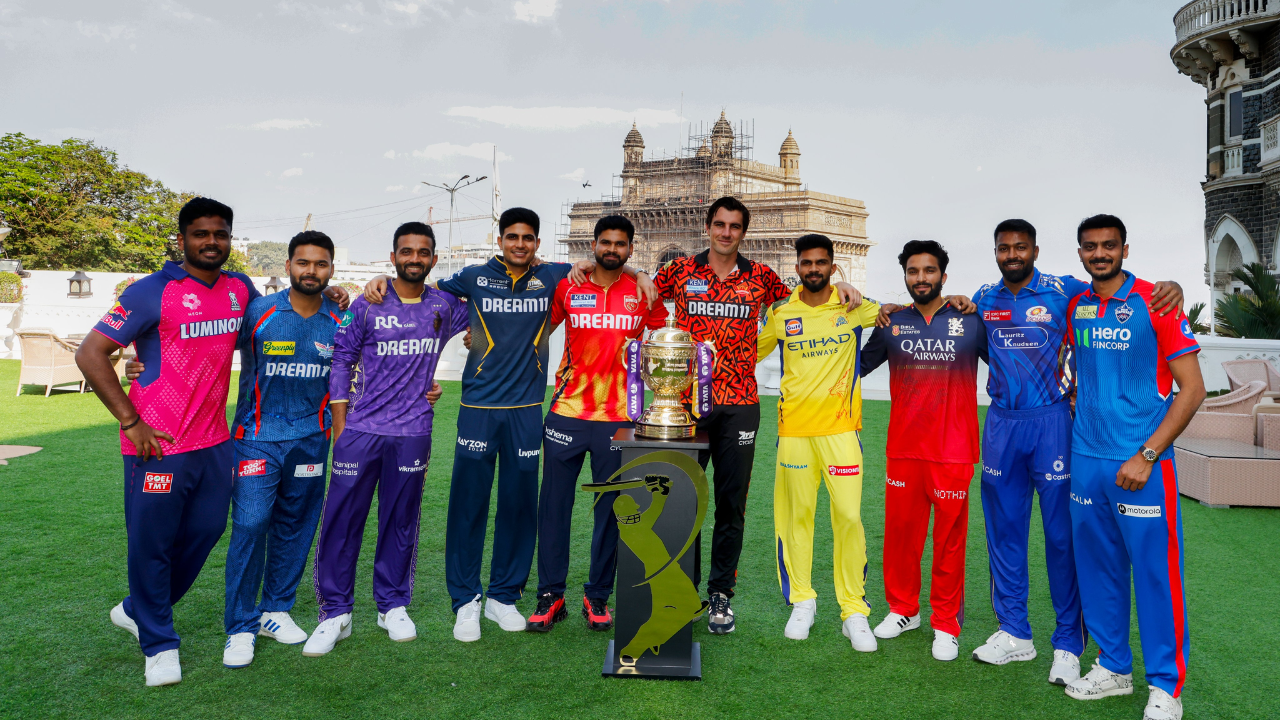
As I laze around in the Bangalore winter sun, I asked myself how the Indian Premier League will continue to grow going forward given that the media rights have now been disaggregated in a 2 x 2 matrix – domestic vs international and linear vs digital. At the end of 18 years, the IPL has been a phenomenal case study in brand building, reaching an enterprise value of $18.5 billion. More importantly, the brand has proven to remain resilient to controversy, locational shifts and conflict of interest. Even more importantly, the quality of the cricket has continued on an upward trajectory and shows no sign of abatement. With a unique reach of over 650 million viewers, the IPL is now watched by half of India. The Superbowl just for comparison has unique viewers less than 200 million.
So then, back to the question. Will the league continue to grow? We already know that on a per match basis, the IPL at $16.8 million is next only to the NFL at $36.8 million. Will the IPL become equal to the NFL and hence the biggest sporting league in the world? What factors will enable this and what will impede it?
Why does the IPL have ten teams? And remember we started with eight and added on the last two in a sustainable manner only in 2022. If the world’s biggest leagues can comfortably operate with 20, 30 or even 32 teams, why shouldn’t the IPL follow suit and double in size?
On paper, the contrast is stark. The English Premier League runs with 20 teams across a nine-month season, each club playing 38 matches in a slow-burning narrative of title races, European qualification and relegation battles. The National Football League has 32 teams, but each plays only 17 regular-season games, turning every Sunday into appointment viewing. The NBA and MLB sit at 30 teams apiece, spreading their value across 82 and 162 games respectively, while Major League Soccer is inching towards 30 teams through calibrated expansion.
The IPL, however, is built on the opposite principle. Its power comes not from duration but from compression. Every match matters. Every night must deliver. Stretching the league, or multiplying teams, would fundamentally alter the product. This is the first and most important distinction often missed when comparisons are made with European football or American sports.
The English Premier League can afford 20 teams because it sits atop a deep, ruthless pyramid. With over 90 professional clubs beneath it, promotion and relegation act as a natural quality filter. Poorly run teams fall away; ambitious, well-managed clubs replace them. The IPL has no such correction mechanism. It is a closed league by design, centrally controlled to protect parity and financial stability. Expansion in such a system risks locking in mediocrity rather than weeding it out.
Then comes the question of talent density, the single biggest argument against doubling the IPL. At ten teams, the league already consumes the very best of global T20 cricket. With four overseas players per side, the IPL currently showcases around 40 international stars at any given time. Doubling the teams would mean finding 80 overseas players of comparable quality. Quite simply, that depth does not exist. The danger is not theoretical. The IPL’s greatest strength lies in its guaranteed match-ups: elite fast bowlers versus the world’s best power-hitters, night after night. Dilute that certainty and the league risks becoming ordinary.
Fan behaviour further complicates the expansion debate. In England, football allegiance is inherited, geographic and tribal. An Everton or a West Ham supporter watches regardless of league position. The product survives even when quality dips because loyalty is unconditional. The IPL’s fandom, while passionate, is different. It is player-led, success-sensitive and moment-driven. Viewers tune in for the spectacle, the stars and the stakes. Reduce intensity, and attention shifts quickly in an increasingly crowded entertainment market.
Yes, in time, media rights will grow at the GDP growth rate say 7% and the IPL will need to increase teams, number of matches, perhaps a second season in the year, perhaps playoffs in a second window? Maybe the answer is in better monetising the international media rights. But the answers have to emerge basis the intrinsic proposition and not based on global leagues and their doings. Where the Premier League monetises frequency, the IPL monetises urgency. One model cannot simply be grafted onto the other without consequences.
In summary, this is a happy problem to have and there are multiple leverage points … I do believe that the next phase of growth for the IPL will be equally fascinating.


Follow Revsportz for latest sports news