





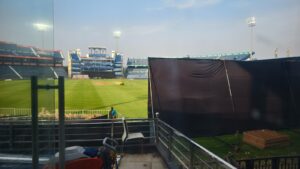
As you step into the Barabati Stadium, the venue for Tuesday’s T20I series opener between India and South Africa, your eyes will inevitably be drawn to the expansive stretches of concrete stands. When modern seating facilities are a norm across most of the cricket stadiums, this venue has invited strong criticism with regard to lack of spectator-friendly experience. Forget about fan experience, the view from the press box with huge pillars in between is horrible, with the sightscreen blocking a sizeable portion of the ground.
The murmurs over the stadium not having bucket chairs have been going around for long. One of the oldest stadiums in the country, Barabati wore a dilapidated look on Sunday, with several temporary works being carried out before the opening fixture of the five-match T20I series.
The BCCI gives each state association significant funds every year. Even a fraction of that would be sufficient to give most stadiums a major upgrade. But the Odisha Cricket Association has failed miserably to upgrade the facilities. There have been reports that the OCA is planning a massive ₹600 crore redevelopment plan to demolish the old structure and build a new 60,000-capacity stadium over the last three years.


This correspondent has been to all Test playing nations including Australia, England, South Africa and New Zealand. Fan experience in stadiums like Melbourne Cricket Ground, Lord’s, Wanderers and Eden Park are top class, including wheelchair access. But in India, you may not always get easy access to drinking water, good and not overpriced food, and a comfortable watching experience.
With more state-of-the-art modern stadiums coming up across the country, the number of international matches has dried up at this venue. The last time an international match was played here was the second ODI between India and England at the start of this year, on February 9. The venue is no longer a regular Test centre and has hosted only three T20Is till date. The last time India played a T20I at this venue was against South Africa in June 2022.
There have been several complaints with regard to safety concerns raised by fans, officials and media but no one in the OCA seems to be bothered about it. Even during the ODI between India and England in February this year, the directorate of Fire Services flagged serious concerns over lack of fire safety measures in the stadium.
One of the biggest drawbacks at this venue is inadequate emergency exits. The OCA in the past has often relied on temporary safety certificates. A prominent issue was a floodlight malfunction during the second ODI between India and England, which caused a 25-minute delay, and prompted the Odisha government to seek an explanation from the OCA.
Spectators have often criticised the lack of basic amenities, including insufficient drinking water provisions and non-functional or unclean bathroom facilities. There was a stampede-like situation a few days back for offline ticket sales. Now, just add allegations that the stadium is sometimes filled beyond its official capacity and that a large number of complimentary passes contribute to black marketing issues.
The stadium, which hosted the third ODI played in the country back in 1982, saw some historic milestones including Kapil Dev’s 300th Test scalp. But due to its deteriorating facilities and outdated infrastructure, the venue has steadily slipped down the pecking order.


Follow Revsportz for latest sports news