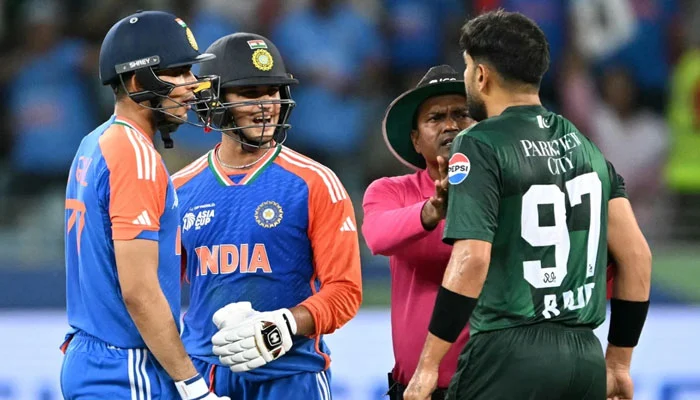







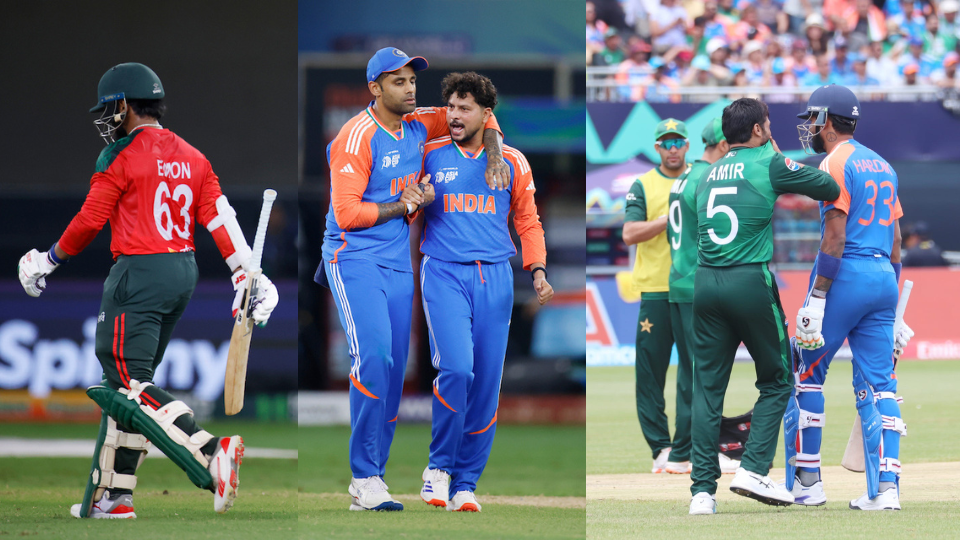
Over the last few days, I have seen a number of pieces suggesting that the India–Pakistan and India–Bangladesh situations are similar – that if neutral venues could be arranged for India and Pakistan, why not for Bangladesh? Some have even suggested this is an example of the ICC’s double standards.
The truth, however, is very different. Those equating the Bangladesh situation with Pakistan’s manoeuvring are either ignorant of the facts or being wilfully obtuse. What happened with Bangladesh was largely triggered by a BCCI–IPL decision, itself the result of months of political turmoil across the border. Had security assessments suggested that Bangladesh’s cricketers and support staff were in grave danger in India, their matches would indeed have been rescheduled, regardless of the inconvenience. But once experts concluded that the security threat was slim to non-existent, there was no justification for overhauling the entire itinerary at considerable cost and with knock-on effects for nearly every participating team.
For the record, I had no issue with Bangladesh taking on the BCCI over the Mustafizur issue. Where Bangladesh went wrong was in turning a bilateral dispute into a matter of national prestige against the entire cricketing world. India’s fight soon became the ICC’s, and Bangladesh stood no chance.
Bangladesh ultimately missed out because its political class – pulling the strings even as the cricket board issued statement after statement – failed to understand that the greater common good will always trump the grievances of one aggrieved party. The 14–2 verdict at the ICC board was proof enough.
Pakistan’s case is entirely different. Like Loki in Norse folklore, Mohsin Naqvi and company seem to revel in fomenting trouble for its own sake. Months before the itinerary was released, India and Pakistan had already agreed to playing their matches at neutral venues until at least 2027. The BCCI had consented to Sri Lanka hosting Pakistan’s matches, just as the UAE served as India’s base during the 2025 Champions Trophy.
Naqvi has no leg to stand on. There is no security threat of any kind on the island, and he knows full well that the India–Pakistan match is the centrepiece of any ICC event. That is precisely why the pragmatic decision to use neutral venues was taken in the first place. If Pakistan were to boycott the India match – and one struggles to find a logical reason for such a move – the host broadcaster would send the ICC a hefty compensation bill. That money would ultimately be deducted from the shares of all participating nations. For India, it would be a drop in the ocean. For many others, it could mean the difference between sustaining an Under-19 or women’s programme and shutting it down.
Should Pakistan deliberately sabotage the event, there will be consequences, and it would not just be the BCCI demanding accountability. Every other board stands to lose, and in an uncertain economic climate, few will tolerate Naqvi’s adventurism. Both the PSL and BPL are crucial to keeping their boards solvent. If the ICC were to instruct member boards to deny NOCs for those leagues, the damage would be severe.
As explained, the two situations are hardly comparable. Pakistan threatening withdrawal in the name of solidarity with Bangladesh is, at one level, laughable. The problem is not Pakistan’s, and yet they want to withdraw. Perhaps because they encouraged Bangladesh and led them up the garden path. Now they find themselves caught between the devil and the deep sea. Play the World Cup and alienate Bangladesh, who will cry foul; refuse to play and risk pushing the ICC towards serious sanctions.
For all the drama, Pakistan knows this is not an easy position to be in. Poking the bear may look entertaining – until you become dinner.
For more updates on the Men’s T20 World Cup, follow RevSportz