

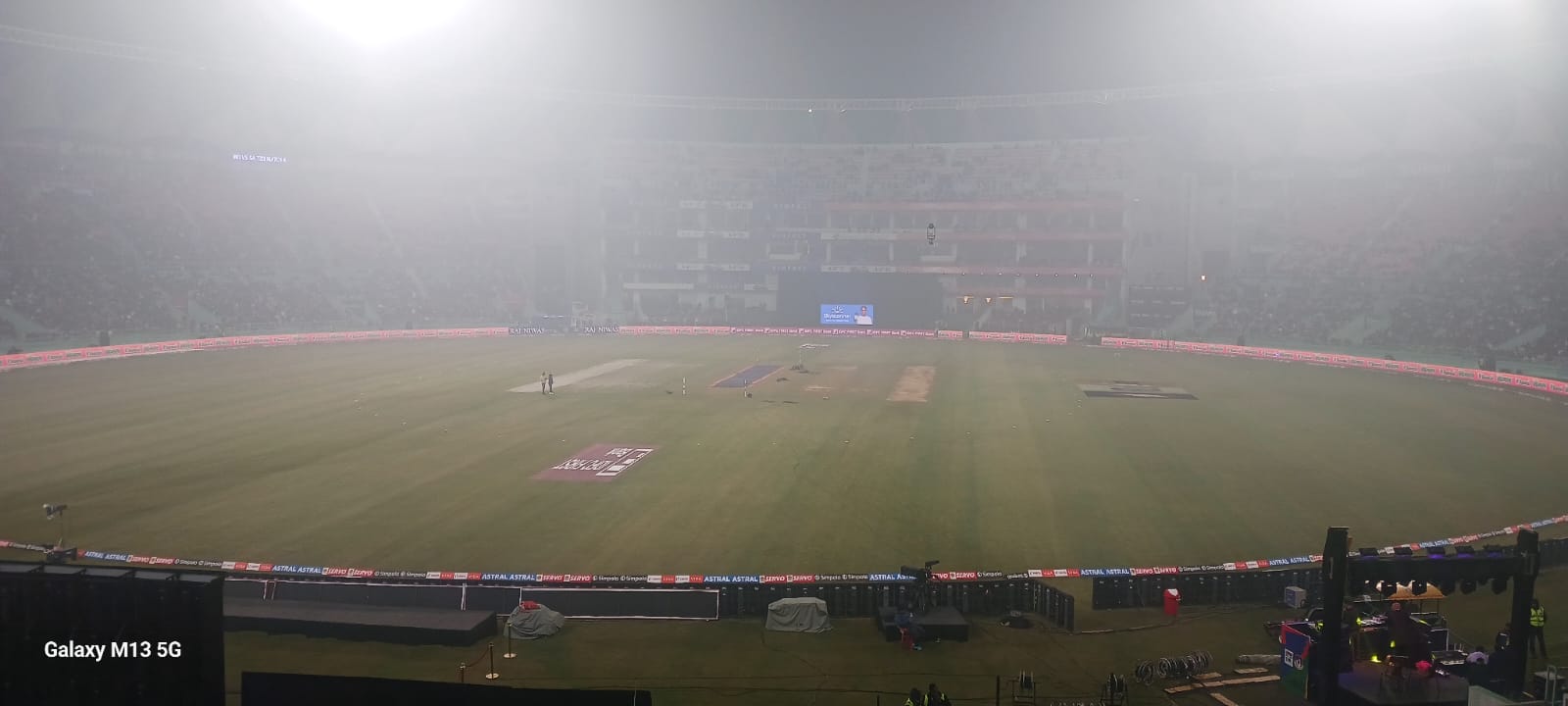
The 4th T20I between India and South Africa, scheduled at the Ekana Stadium in Lucknow, had to be called off due to excessive fog. Understandably, fans were upset by the decision, but there was only so much the authorities could do. After multiple inspections, the umpires decided it was best to call off the game around 9:30 pm, and fans returned home heartbroken. Fog wasn’t the only issue; so was the Air Quality Index (AQI), with the number hovering close to 400. Some players were even spotted wearing masks on the field while warming up.
Social media bubbled over with frustration at the scheduling of the match. Fans questioned the BCCI’s decision to host a match in the northern part of the country during winter, when fog, poor air quality, and excessive dew are common factors. The episode reopened a familiar debate around venue selection.
To understand why the Ekana Stadium was selected in the first place, one has to introspect on the BCCI’s venue-rotation policy. The policy aims to ensure that international cricket in India does not remain the privilege of a few traditional centres. There are multiple venues across the country that are capable of hosting international matches, and the board rotates those venues so that newer and smaller associations also get their share of big games. It is about equity, spreading matches across regions, and rewarding infrastructure investment. It is also about taking the national team closer to fans who might otherwise only see them on their TV screens.
Of course, rotation is not a rigid formula, and it operates alongside commercial demands, broadcast requirements, and other considerations. In recent years, we have seen the BCCI hand high-profile fixtures to venues that might not otherwise be expected to find a place in the international calendar. In that sense, Ekana hosting a T20I was not an anomaly but a consequence of policy.
The problem arises when rotation is applied without enough importance being given to context, geography, and season. Northern states in winter bring predictable challenges such as fog, dew, and hazardous air quality. When those risks materialise, as they did in Lucknow, the policy starts feeling less like inclusion and more like oversight. Rotation may explain why a venue was chosen, but it cannot always justify when it was chosen.
This forces us to wonder: should certain venues be avoided at certain times of the year? Can rotation be carried out while keeping climate and air quality in mind? Scheduling should also prioritise safety, and place fans at the centre of the sport.


Follow Revsportz for latest sports news