





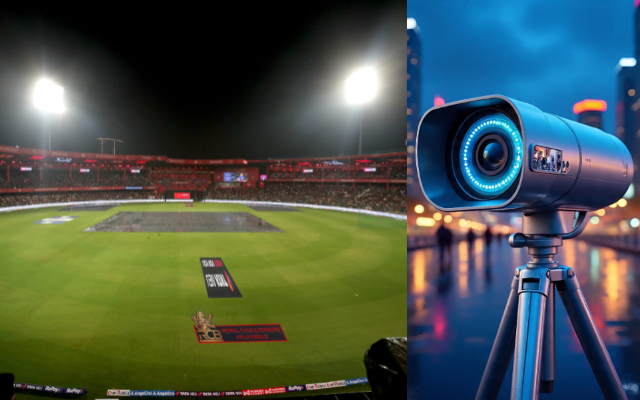
In the same week that bird droppings halted play at the India Open badminton tournament, Royal Challengers Bengaluru proposed an AI-driven video analytics system to manage crowds at M. Chinnaswamy Stadium. One incident was mildly absurd, the other quietly radical. Together, they tell us something deeply uncomfortable about Indian sport: our ambition has sprinted ahead of our infrastructure.
India today produces world-class athletes, global broadcast numbers and packed stadiums. What it does not consistently produce is predictability. And at scale, unpredictability is not charming. It is dangerous. For decades, crowd management in Indian sport has been treated as a law-and-order issue. Add more barricades. Deploy more personnel. Blow more whistles. React faster. That approach assumes crowds misbehave. The truth is simpler and more unsettling: crowds behave exactly as systems allow them to.
Modern sporting venues across the world no longer rely on instinct or eyeballing. They use AI-enabled video analytics to understand how people move, where pressure builds, when panic can cascade, and which choke points will fail first. This is not surveillance. It is situational intelligence. RCB’s proposal matters because it shifts the conversation from policing to prediction — from reacting to incidents to preventing them.
The Chinnaswamy Stadium sits in a dense urban core, surrounded by narrow roads, emotional fandom and zero buffer space. It is not designed for chaos — and chaos arrives there often. The tragic stampede during last year’s celebrations was not caused by fan passion. It was caused by the absence of real-time understanding of crowd dynamics.

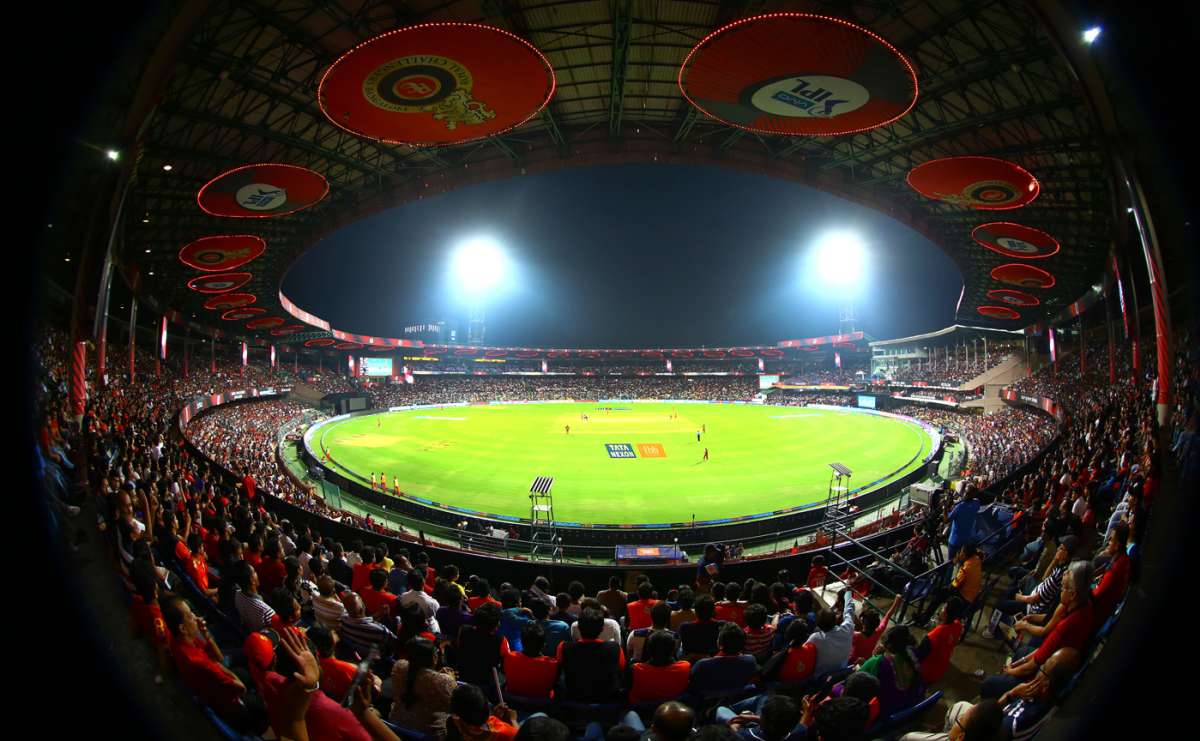
RCB’s willingness to invest in AI analytics is an acknowledgement of an uncomfortable truth: human judgement alone cannot manage mass behaviour at modern sporting scale.
Major stadiums in Europe and North America use AI-driven crowd flow monitoring as part of their standard operating systems. They treat crowds the way broadcasters treat signal transmission — constantly monitored, stress-tested, and corrected in real time. India, by contrast, still treats each sporting event as a one-off logistical challenge, solved through improvisation. Improvisation works, until it doesn’t.
It is tempting to laugh off bird droppings stopping play. But that incident exposed a deeper issue: event readiness in India is fragmented. Elite sport today is not just about athletes and schedules. It is about environment control, contingency planning, rapid response systems and accountability. If we cannot anticipate something as basic as environmental disruption at a global tournament, we should be honest about how far we are from hosting truly complex multi-sport events.
India wants to host more ICC events, bigger ATP, WTA and BWF tournaments and eventually, global multi-sport spectacles. Talent and ticket sales are irrelevant without operational credibility. Global federations don’t ask whether a country loves sport. They ask whether it can manage risk at scale. AI-enabled crowd analytics is not a luxury. It is a minimum qualification.
The next leap in Indian sport will not come from faster athletes or louder fans. It will come from control rooms, not commentary boxes; dashboards, not declarations and systems, not slogans. RCB’s proposal should not remain a franchise initiative. It should become a policy benchmark. Passion can never substitute planning.


For More Exciting Articles: Follow RevSportz