





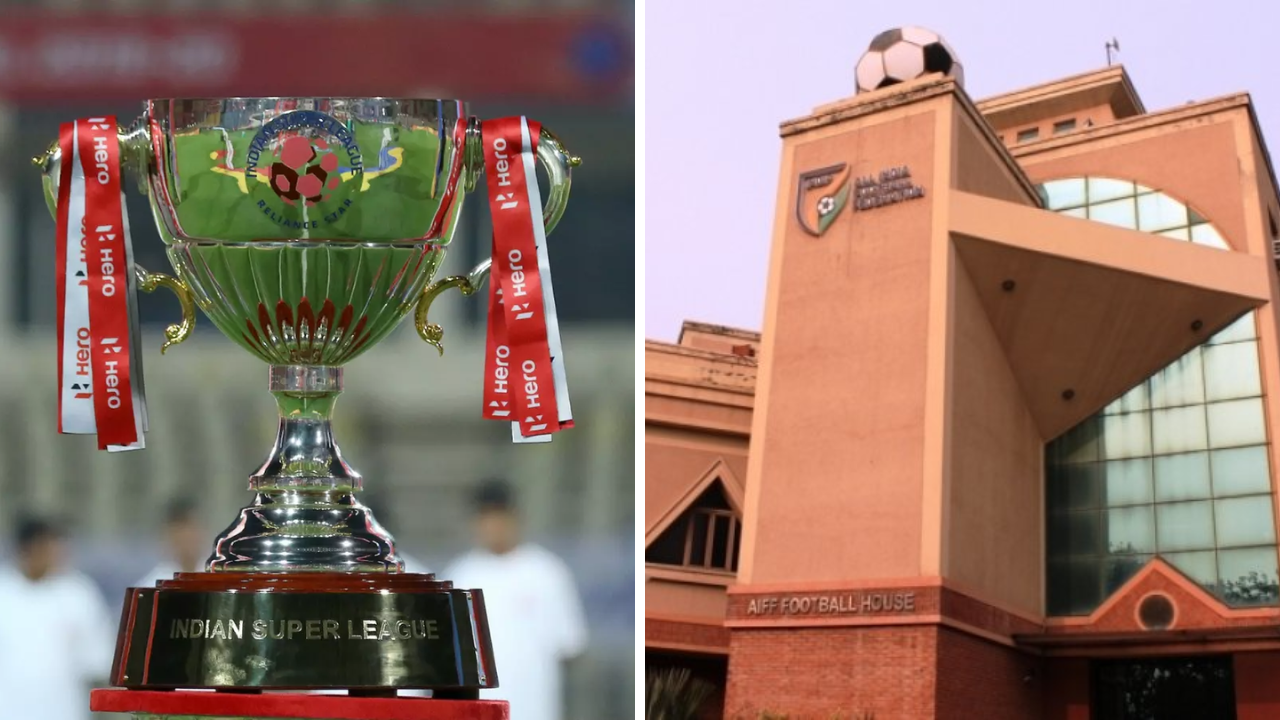
The All India Football Federation (AIFF) on Monday formally approved a new governance structure for the Indian Super League (ISL), putting in place a Governing Council and a Management Committee to oversee the league’s regulatory and operational functioning.
Under the new framework, AIFF will continue to own, organise, and operate the ISL as India’s top-tier men’s professional football competition. The two newly constituted bodies are aimed at ensuring better transparency, stronger oversight, and smoother day-to-day operations, while balancing the interests of the federation, clubs, and commercial partners.
The Governing Council, which will act as the apex supervisory body, will consist of 22 members. It will include senior AIFF office-bearers, representatives from all participating ISL clubs, independent members, and nominees from the league’s rights partner. The AIFF President or Vice President will chair the council.
Its primary role will be to approve the season plan and budget well in advance, supervise the Management Committee, address governance or compliance issues, and ensure that the league operates in line with AIFF’s development objectives and international best practices. The council will also have the power to set up sub-committees for specific matters when required.
The Management Committee, comprising 11 members, will handle the league’s daily operations and commercial activities. It will include AIFF officials, five club representatives, and nominees of the rights partner, with the AIFF Secretary or Deputy Secretary General serving as chairperson.
This committee will be responsible for match operations, regulatory compliance, coordination with clubs and stakeholders, sponsorship and commercial execution, and financial management within budgets approved by the Governing Council. It will also monitor compliance with AIFF, AFC, and FIFA regulations.
Club representation on the Management Committee will follow a defined rotation system. Three members will be elected by the clubs, while two seats will be reserved for representatives of the top two teams from the previous ISL season. This mechanism is designed to ensure wider participation while recognising on-field performance.
Clear voting rules have been laid down for both bodies. Routine operational decisions can be passed by a simple majority, while major commercial agreements, budget deviations, and revenue distribution matters will require higher voting thresholds and mandatory AIFF support.
AIFF has retained exclusive authority over key areas such as league format, number of participating clubs, competition rules, refereeing, and matters related to the Laws of the Game, integrity, and anti-doping.
Officials believe the new structure will bring greater clarity in decision-making and help stabilise the league at a time when Indian football is undergoing significant structural changes. The Governing Council and Management Committee are expected to become operational immediately, ahead of the upcoming ISL season.