



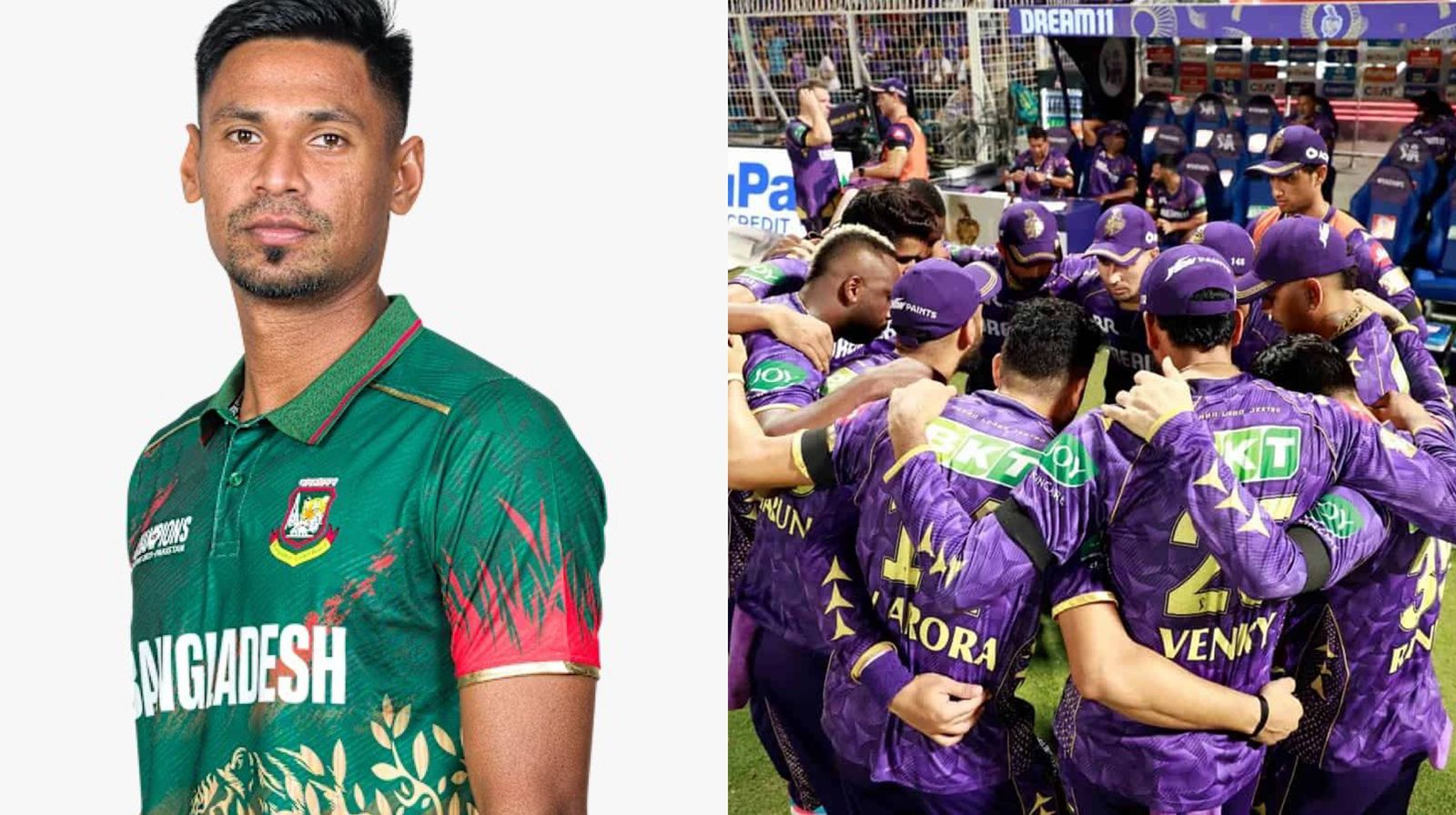
Most media releases from sporting organisations barely merit a second look. This one was different, like a hand grenade tossed into a crowded room.
“BCCI secretary Devajit Saikia said that due to recent developments, KKR has been instructed to release Bangladesh player Mustafizur Rahman, and the franchise will be allowed a replacement,” it said. “He also confirmed that India’s squad for the three-match ODI series against New Zealand, starting January 11, 2026, will be announced after the selectors’ meeting today.”
The second part had been the focus for most cricket reporters over the past few days. But in an instant, it became utterly irrelevant. The cricket board stepping in to ask a privately owned franchise to release a player they spent considerable money on at the recent mini auction in Abu Dhabi was an indicator of how damaged diplomatic ties are between India and Bangladesh. It’s also a move that takes into account the full weight of Indian public opinion – on the streets, on WhatsApp groups and in discussion inside TV studios.
This move has a precedent too. After the 26/11 terror attacks in Mumbai in 2008, Pakistani players’ IPL contracts were torn up. Not one has played in the league since. Then too, the general public didn’t want anything to do with normalising sport in abnormal circumstances.
Politics has always been central to the south Asian cricket narrative. India and Pakistan didn’t contest a single series between 1961 and 1978, and India didn’t tour Pakistan for a Test series for 15 years between 1989 and 2004. The two countries last played a Test against each other 18 years ago, and there hasn’t been a bilateral series in 13 years.
There was tension with Sri Lanka too in the 1980s and later, because of the conflict on the island, but cricketing ties were unaffected. Now, the spotlight is firmly on Bangladesh, who were elevated to Test status largely because of the unstinting efforts of a certain Jagmohan Dalmiya. Since the unrest in Bangladesh last year, lawlessness has taken hold and targeted violence against minorities has prompted the Indian government to act. The BCCI decision is no more than an extension of that.
There will be thousands who say that sport and politics shouldn’t be mixed up, and that Mustafizur Rahman is a victim in all of this. But ever since India played a leading role in outlawing Apartheid-era South Africa from international sport, it’s been clear that sport will always be used for political leverage. Whether it’s 1971 or 2026, that isn’t about to change


Follow Revsportz for latest sports news